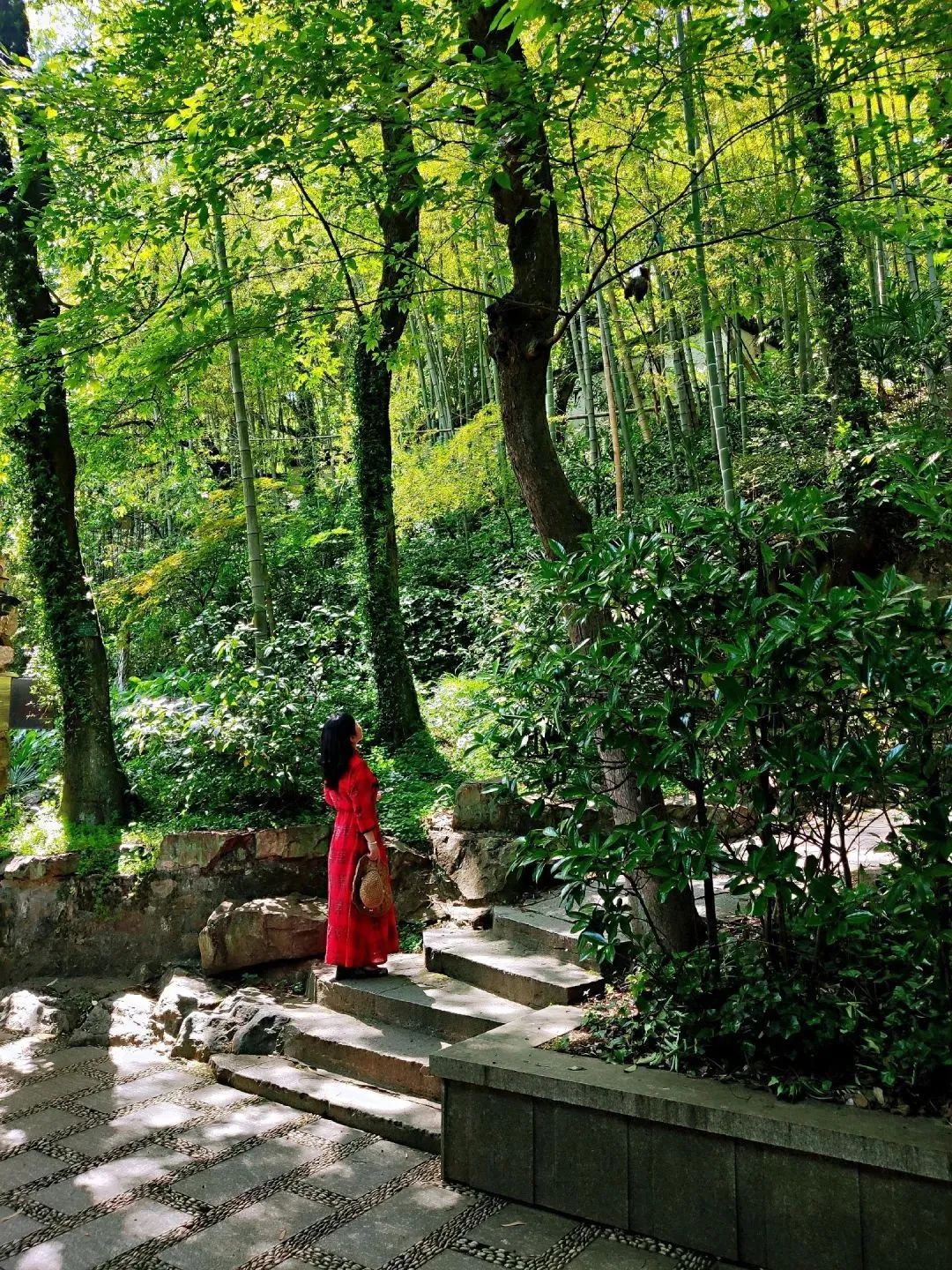
There are two types of people in the world: one who moves the heavens with their efforts, and the other who leaves the heavens indifferent.
When I was young, I thought the world was unfair, but later I realized that the world is unfair, but this unfairness makes you work harder. Bill Gates also said: 'The world is unfair, you need to learn to accept it.' Is heaven fair or not? Maybe it's an unsolvable question, or maybe it has multiple interpretations.

There are two types of people in the world: one silently and persistently works to change things, regardless of the hardship, and ultimately touches the heavens; the other complains endlessly and blames fate, and eventually achieves something, but makes the heavens speechless and indifferent.
Setting aside whether heaven is fair or not, we might gain some inspiration from the following two short stories. This world can be gentle or cruel, even if it closes one door, it will open another window – sunshine, rain, or storms, there will always be a way out, and people must keep moving forward.
One day, a person had a dream, dreaming that he was walking on a beach with a bodhisattva. Suddenly, his life's moments flashed across the sky⋯⋯

He found that in every scene, there were two pairs of footprints on the beach: one pair was his, and the other pair was the bodhisattva's⋯⋯
When the last scene ended, he looked back at the footprints on the beach, but found that several times, there was only one pair of footprints on the beach, and those times were precisely when he was at his lowest and most painful⋯⋯
He was puzzled and asked the bodhisattva: 'You promised me, saying you would listen to my pleas and help those in need, and if I vowed to follow you, you would always walk beside me and protect me; but I found that when I was most troubled and painful, there was only one pair of footprints on the beach, I don't understand why, when I most need your comfort, your compassion abandoned me?'

The bodhisattva responded with compassion and gentleness: 'I remember you, protect you, and I will never leave you. When you are most difficult and painful, you only see one pair of footprints, because I am holding you as I walk⋯⋯'
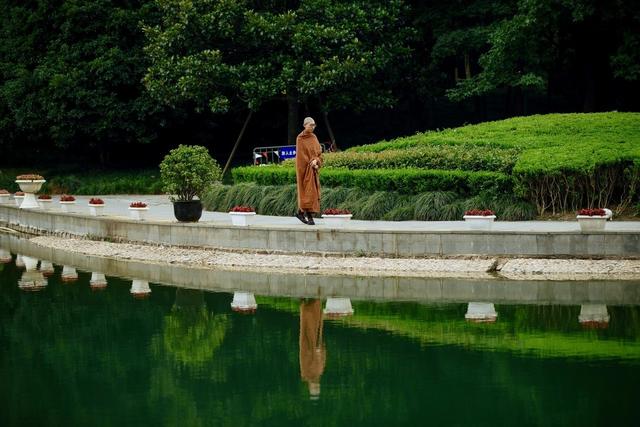
Its two: One evening, Master Hai Cheng walked outside the temple, seeing a young boy and a woman in a vacant lot.
The boy was using a very crude slingshot to hit a glass bottle standing on the ground, about seven or eight meters away from him. Sometimes the bullet would deviate by a meter, and it would rise and fall irregularly.
Master Hai Cheng stood behind him, watching the boy play with the slingshot, because he had never seen a child play with a slingshot so badly. So Master Hai Cheng walked up to the mother and said, 'Let me teach him how to play better?'
The boy's mother smiled at Master Hai Cheng and said softly, 'Thank you, Master, no need.' She paused for a moment, looking at the boy, and said again, 'He can't see.'
Master Hai Cheng was stunned, and after a long moment, he said softly, 'Oh⋯⋯, why does he play like this?' The mother said calmly, 'Other children play like this too.' Master Hai Cheng said worriedly, 'But he⋯⋯how can he hit it?'
'I told him, he will eventually hit it.' The mother continued calmly, 'The key is that he made an attempt.'
Master Hai Cheng was silent. He gradually realized that the boy was playing with a very regular pattern. He shot one, and he moved a little to the side, shot another, and then moved a little again, and then slowly moved back to the original position.

He only knew the general direction⋯⋯
After a long time, as the night fell, Master Hai Cheng could no longer see the outline of the bottle, so he turned to walk back to the temple.
Not far from there, Master Hai Cheng suddenly heard a crisp sound of a bottle breaking behind him. (