Leg Raises and Sit-Ups for Abdominals ~ Be Careful Not to Overstrain Yourself
For most people, sit-ups should have been a companion since student days, and it has always been considered a classic exercise for training abdominal muscles. When you want to build six-pack abs, your friends will definitely tell you to do sit-ups first.

Actually, it's not like that. Many people don't really understand sit-ups; sit-ups are not just about training abdominal muscles. From a movement perspective, sit-ups involve two parts of joint movement: spinal flexion and hip flexion.
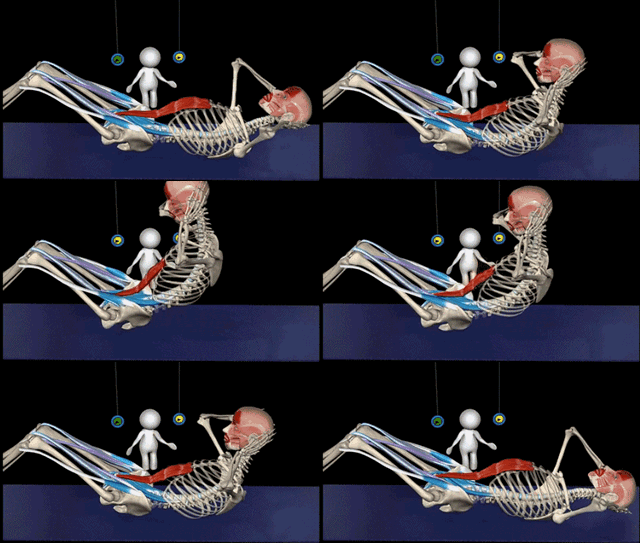
Spinal flexion refers to the first half of the sit-up, where the back transitions from a flat ground position to a curved spine! The muscles responsible for this segment are the well-known six abdominal muscles (rectus abdominis).
The rectus abdominis originates from the 5th, 6th, and 7th ribs at the costal cartilages, extending downwards to the pelvic bone. When contracting inwards, it has two main functions: when the upper part is fixed, it causes the pelvis to tilt backwards; when the lower part is fixed, it causes the spine to curve, and sit-ups utilize the latter!
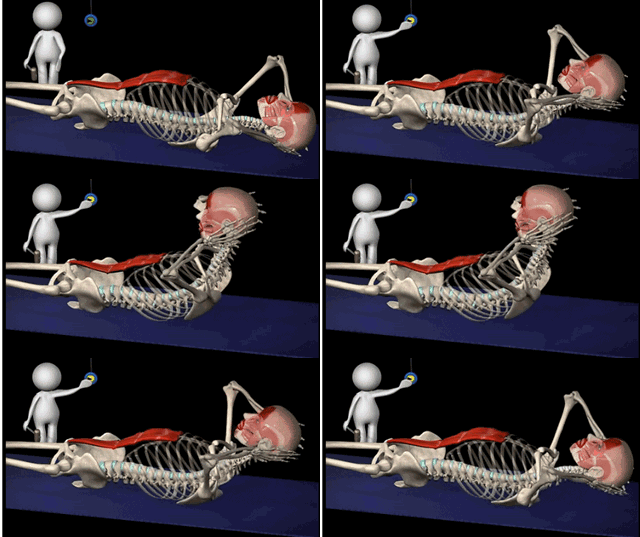
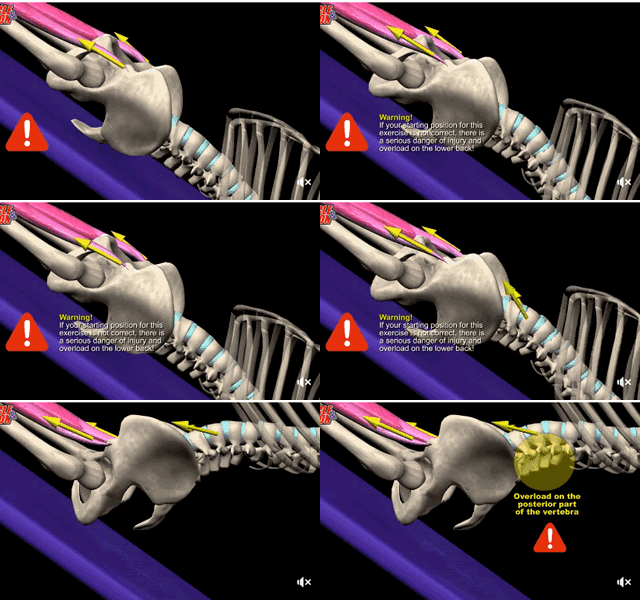
Hip flexion refers to the second half of the sit-up, where the upper body leaves the ground. At this time, the torso and legs are folded approximately at 90 degrees. The muscles responsible for this segment are not the abdominal muscles because the origin and termination point of the rectus abdominis do not cross the hip joint, so the rectus abdominis cannot help you complete the action of sitting up (hip flexion).
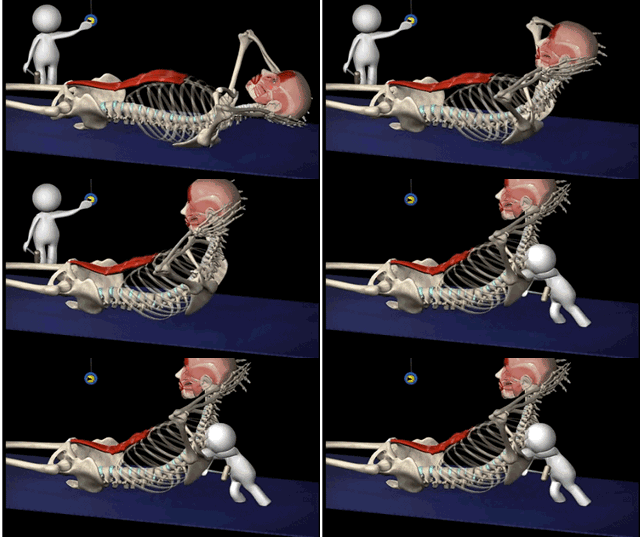
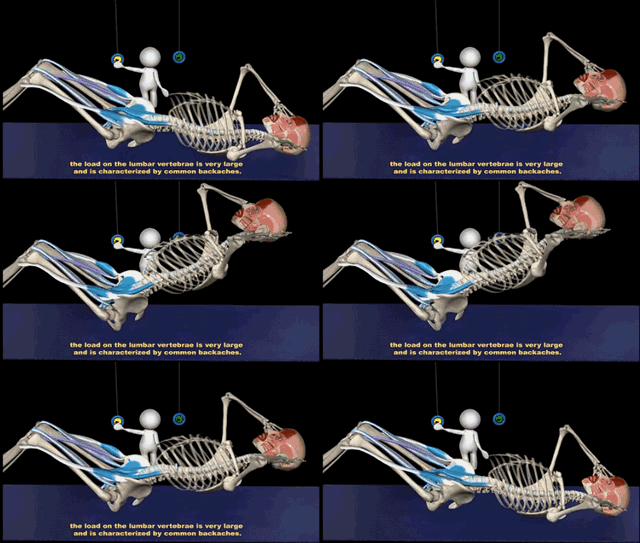
The hip flexor muscle group contraction causes the pelvis to tilt forward, bringing the spine closer to the vertebrae, (not just pulling the vertebrae), while the spine extends upwards to the neck (the entire spine), creating a long lever arm (the longer the moment, the greater the pressure), which puts a huge amount of pressure on the lumbar vertebrae, and easily leads to the back and forth bending of the lumbar vertebrae (as shown in the upper image), and the uneven squeezing of the intervertebral discs is icing on the cake.