Yoga Downward-Facing Dog: Identify and Avoid Common Misalignments for Safe Practice
There's a common observation that yoga teachers frequently use the word 'incorrect' when describing students' poses. The fact is there's no single correct way to do something. Every body is unique, and the interpretations of the same pose are so varied that many people's downward-facing dog poses look very different.
I think we should allow everyone to find the yoga poses that truly resonate with their body and unique needs, without being limited to a definition. So, when I encounter a pose that might need a little more tweaking, I would use the term 'not aligned.'
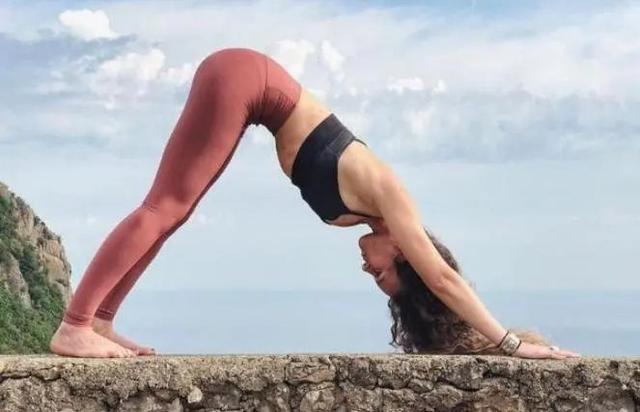
So, why is alignment so important?
In yoga, poses aren't like photographs – they're about how the student *feels* in the pose. When a pose is misaligned, it hinders comfortable, sustained energy flow within the body, and the student will find it difficult to maintain the yogic principle of *sthira sukham asanam*, or 'stability, comfort, pose.'
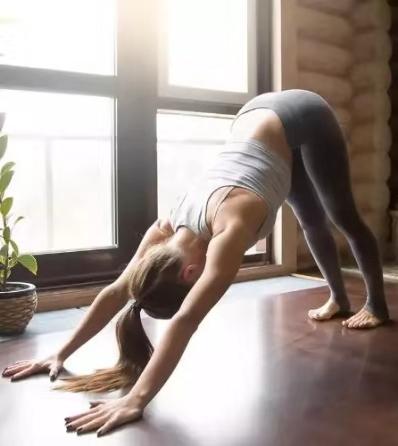
Let's take a look today at some common issues with downward-facing dog pose
As a classic yoga pose, downward-facing dog is often considered a simple pose. This is perhaps why it's so frequently misaligned. However, if we strive to consciously aim for alignment in downward-facing dog, it can become a place where you continually discover more about yourself.
Below, I'll highlight some common issues that beginners encounter when they first start classes.
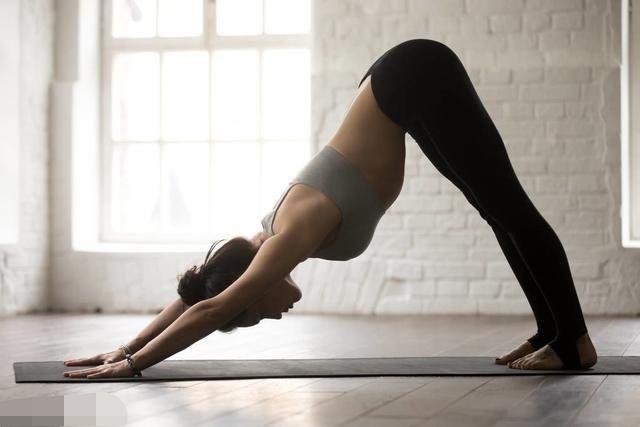
These issues may exist individually or together. Let's explore them to help you avoid the most common misalignments!
Common Issue 1: Unstable Hands and Feet
Hands and feet aren't centered or firmly pressing into the floor, which can put pressure on the wrists or ankles. There's also the issue of the distance between the hands and feet being too close or too far apart.
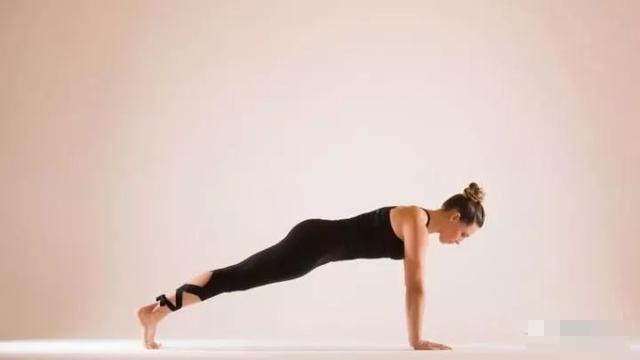
Solution:Start in plank pose, first transitioning from plank to downward-facing dog to check. In downward-facing dog, the distance between your hands and feet should be roughly the same as it is in plank. In plank, bring your shoulders over your wrists; you can also align your index or middle fingers to the inner shoulders (where the arms meet the torso) – whatever feels more comfortable.
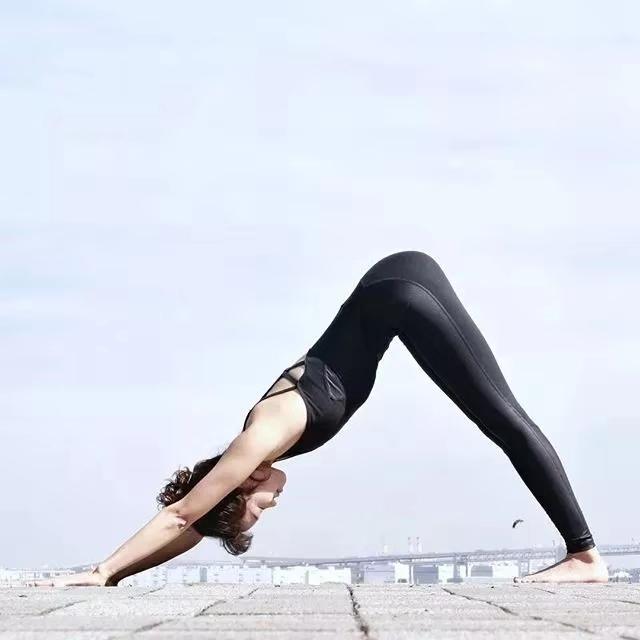
Your shoulders, hips, and knees should form a diagonal line. Without hands or feet, gently move your hips forward and up to enter downward-facing dog. Open your fingers and toes; hands comfortably pressing into the ground. Evenly press down the top two corners of your feet – the big toe and little toe mounds.
Regarding your feet, they can be splayed with the hips wide apart or close together,But remember the key point is that when you look between your legs, you shouldn't see your ankles.
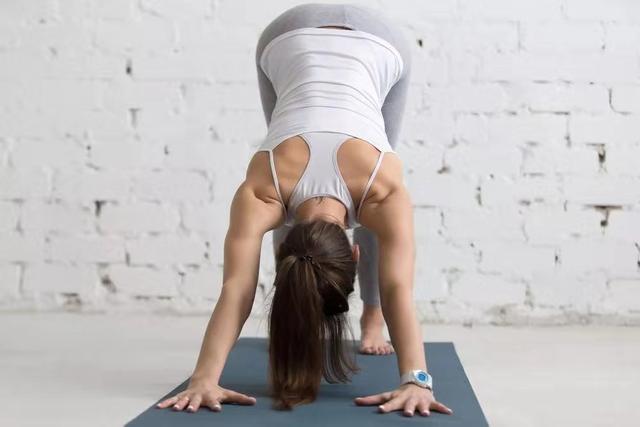
Common Issue 2: Arm and Shoulder Position
Often, when beginners first put their hands and feet onto the floor, it looks quite awkward. It's hard to coordinate the limbs. A frequent problem in downward-facing dog is the shoulders rising toward the ears, or the elbows opening out to the sides, as if they're supporting themselves from falling over.
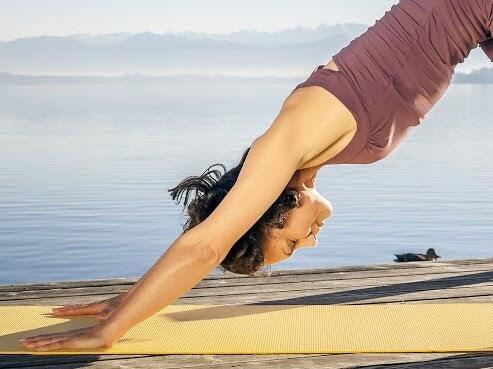
Solution:Pull your shoulder blades back to open up the space in your chest and shoulders. Fix the muscles of the arms to avoid overstretching the elbows, and externally rotate the arms. Feel as if you're trying to point your thumbs forward – but your hands shouldn't move. By doing these movements, you'll feel the triceps contract over the bones, and the elbows will draw in to straighten the arms.
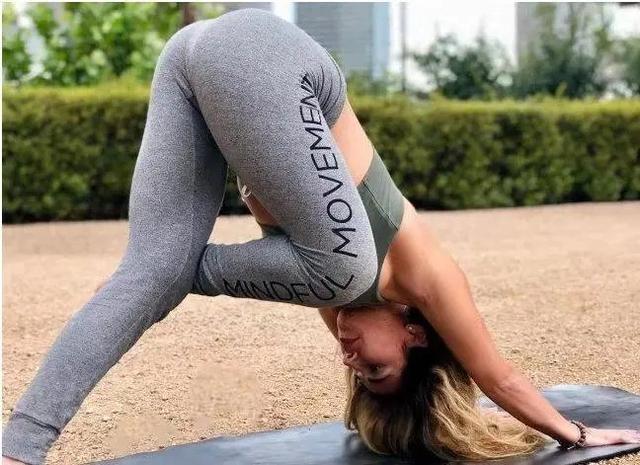
Finally, engage the inner thighs to reduce the weight on the arms, making your spine lengthen. You can also use a yoga strap and a yoga block between your legs to practice.
Common Issue 3: Arching the Back
The third common issue is arching the back (rather than a V-shape) – the spine curves upward, shortening the spine.
This misalignment can be due to the hip flexors being tight, the hamstrings, shoulders, or specific spinal conditions (such as scoliosis or kyphosis), excessive spinal curvature.
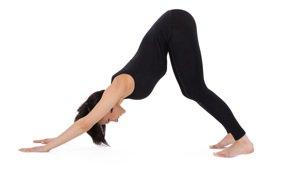
Instead, a more appropriate approach is for super-flexible individuals, where the spine is overly curved. Solution:
Bending your knees can help lengthen the spine, for tight people, patience and consistent practice are key. Maintain spinal extension while your legs lengthen. Shrug your shoulders back to create more space in the neck and shoulders.
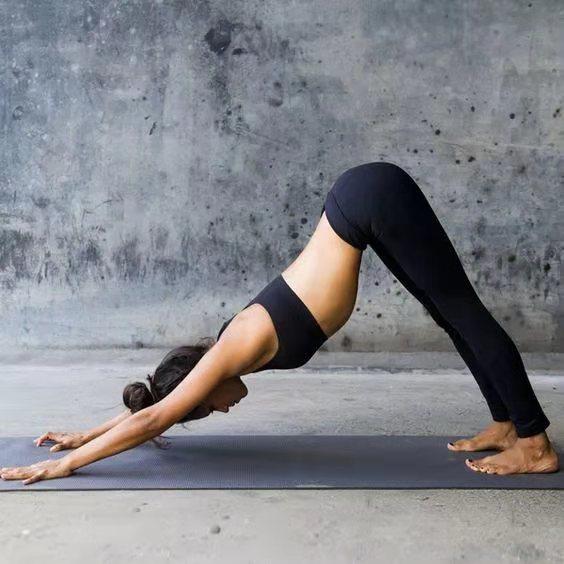
You may need to practice this pose for a long time until your body starts to relax more, allowing your legs to straighten while maintaining spinal extension.
For super-flexible students, cultivate more strength here. Resist the impulse to let your chest hang down over your arms; instead, make your ears parallel to your upper arms, and open your collarbones.
Common Issue 4: Lifting the Heels
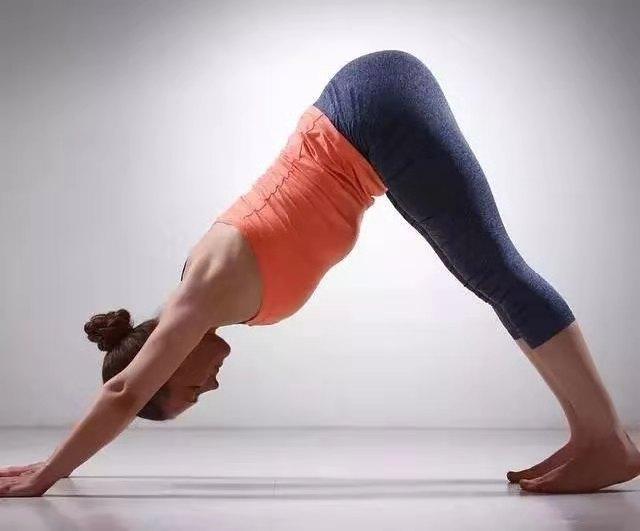
Heels lifted high can indicate tight hamstrings, hip flexors, or calf muscles. It can also mean that most of the weight is being placed on the wrists.Solution:
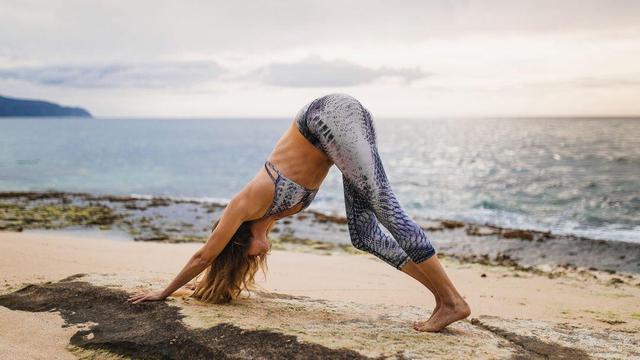
Just as with the arching the back scenario, bending your knees can help lengthen the spine can be very helpful here. While maintaining the feet pointing forward, internally rotate the legs, squeezing them together, and engage the quadriceps, as if someone were pulling you back.
After your body has warmed up, the muscles may be relaxed enough for your heels to move closer to the floor, but don't force it. Wait for your body to agree to deepen. The purpose isn't just to get your heels to the ground, but to allow the whole body to work together seamlessly to achieve this.