Understanding the Principles of Leg Fat Accumulation to Help You Better Lose Fat and Build Slim Legs
Our bodies contain both visceral fat and subcutaneous fat. Subcutaneous fat tends to accumulate in the following order: waist and abdomen, hips and thighs, chest, and arms. It's easy to see that legs are prone to accumulating fat, and having slender legs is every woman's dream. However, excess flesh on the thighs also brings a lot of trouble to girls. This fat is particularly stubborn, no matter how much dieting and exercise you do, it takes a long time to make your legs slim. Today, let's talk about this topic.

Why is leg fat so difficult to lose?
The activity level of fat in the body differs. Some areas have strong fat activity, which makes it easy to consume, while inactive fat is difficult to reduce. Leg fat belongs to the latter. For example, the activity level of metal is also strong and can be oxidized. Similarly, fat with high activity will also be easily consumed, playing a slimming effect.
In conclusion, the characteristics of leg fat determine that it takes a long time to make your legs slim. Trainers cannot eat a fat in one bite, they need to take it step by step. This process requires a combination of reasonable diet, scientific exercise and leg care.

1Reasonable Diet
First, change your usual eating habits, control your mouth, and don't eat greasy and high-sugar food. Ensure a daily intake of 30 grams of protein (animal protein or plant protein), and eat less carbohydrates. Don't completely eliminate the intake to avoid abnormal metabolism, it's recommended to eat low-carbon foods or coarse fiber foods, and drink plenty of water to ensure the body's digestion.
2Scientific Exercise
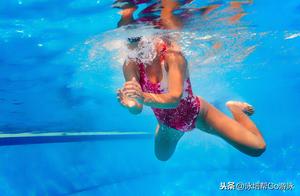
We can do aerobic exercise such as running, swimming and cycling, and also combine strength and aerobic training for fat-reducing exercises, to make our legs slim as soon as possible. Here are some simple leg exercises you can do at home.

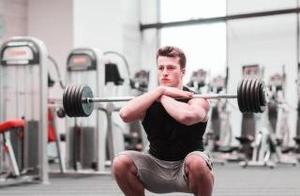
Action one: Resistance band and dumbbell squat
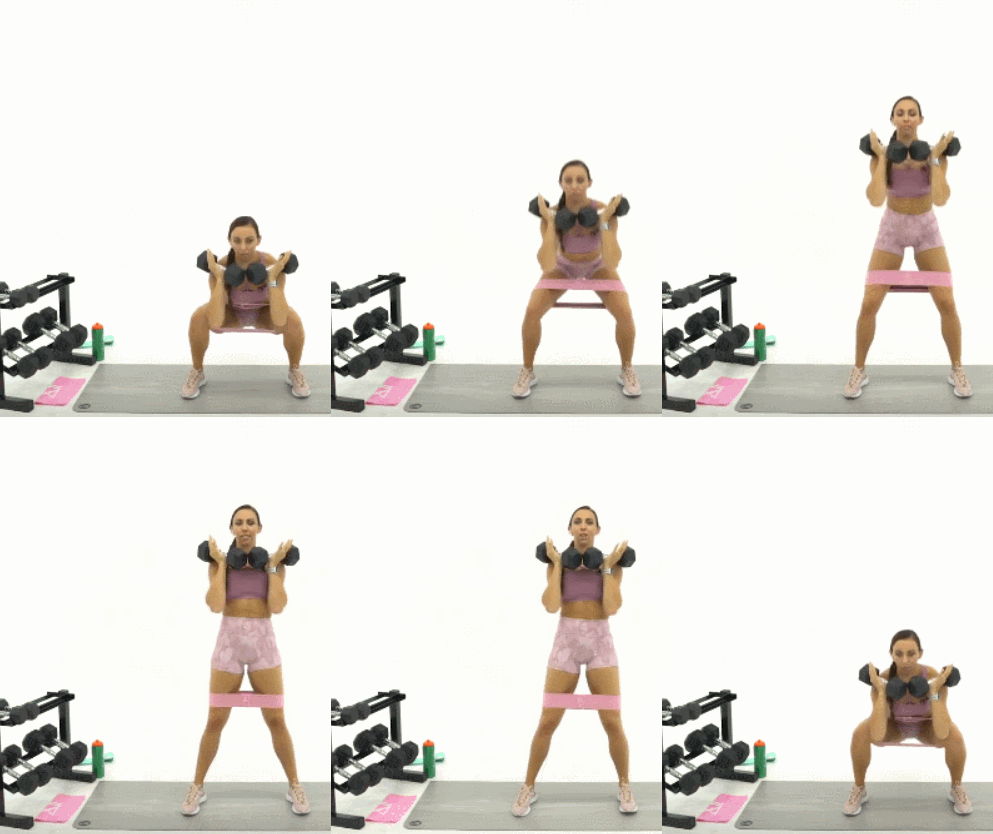
Stand up straight, with the distance between your feet shoulder-width apart, fix the resistance band in the middle of your thighs, bend your elbows with your arms to hold the dumbbell at shoulder height, with your thumb and four fingers between your hands holding the dumbbell, so that the bottom of the two dumbbells touch, the forearms are vertical to the ground.
Tighten your core muscles, squat down, hold the lowest point for 2 seconds, then slowly return to the starting point, repeat the action. It is recommended to train with an intensity of 2-4 sets, and each set does 8-10 times.
Action two: Resistance band single dumbbell wide-stance squat
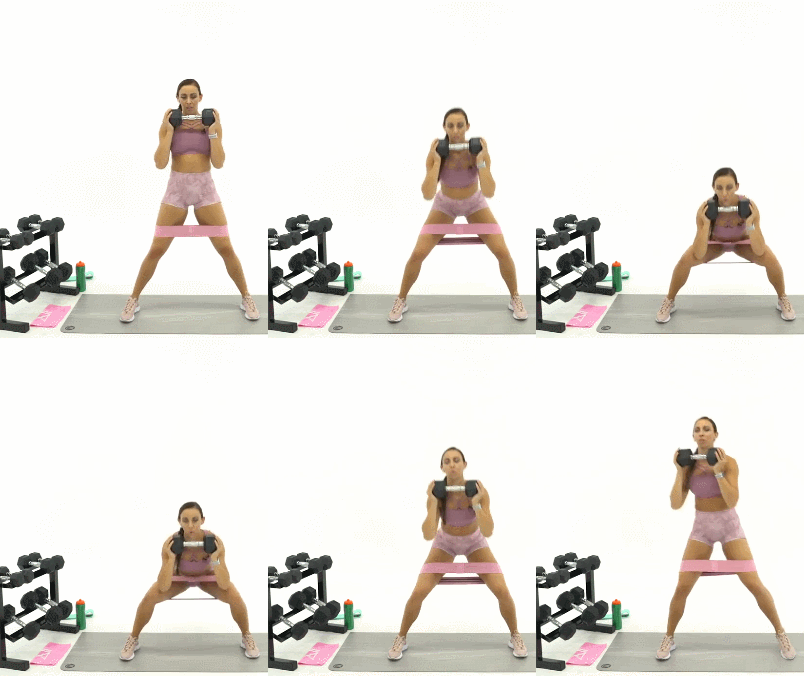
Stand up straight, the distance between your feet is one and a half times the shoulder width, your arms are bent and you hold the ends of the dumbbell, the resistance band is fixed in the middle of your thighs.
Tighten your core, squat down, hold the lowest point for 2 seconds, then return to the starting point, repeat 3-4 times, and each set does 6-8 times.
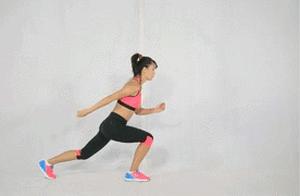
Action three: Dumbbell lunge
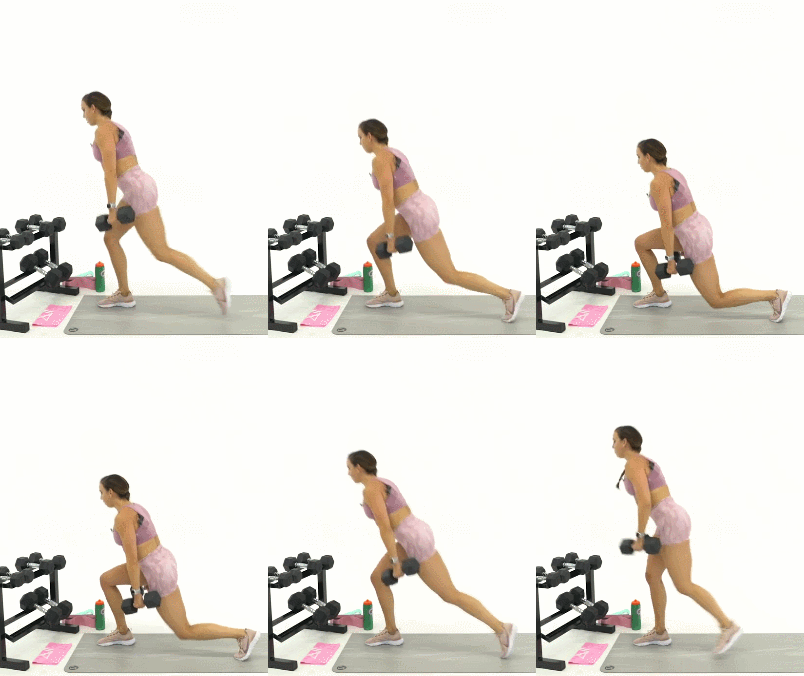
Your legs are spaced apart, your arms hold the bell at the sides of your body, keep your body stable, then do a squatting action downwards, let the knee of the rear leg touch the ground, hold the action for 2 seconds, then return to the starting point, repeat the action. It is recommended to do 2-3 sets, and each set does 8-10 times.
Action four: Dumbbell side lunge
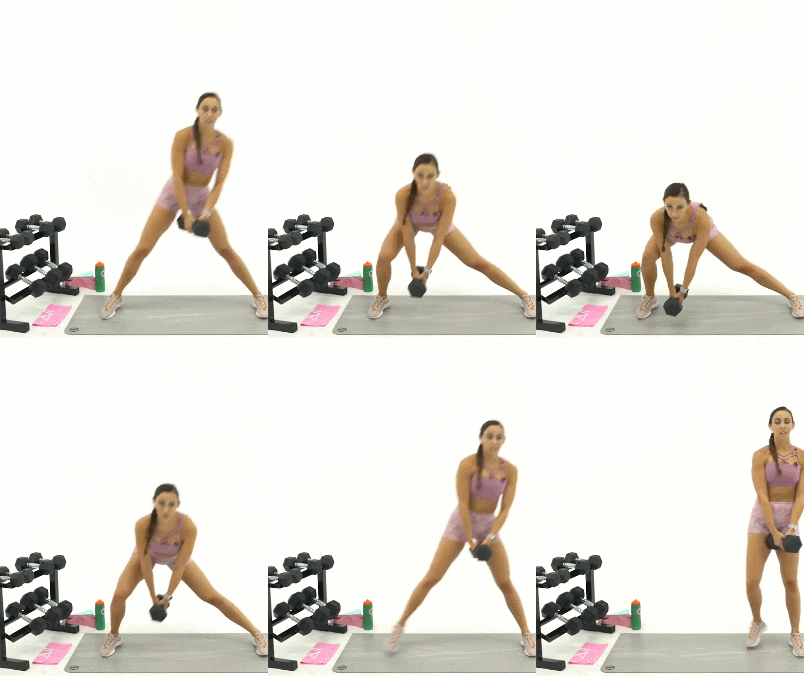
Stand up straight, your arms are extended downwards, your hands hold the bell between your thighs, keep your core tight, then step out one leg to the side, do a straddle squat, hold the lowest point for 2 seconds, then return to the starting point, repeat 2-3 times, and each set does 6-8 times.
3Leg Care Stretching
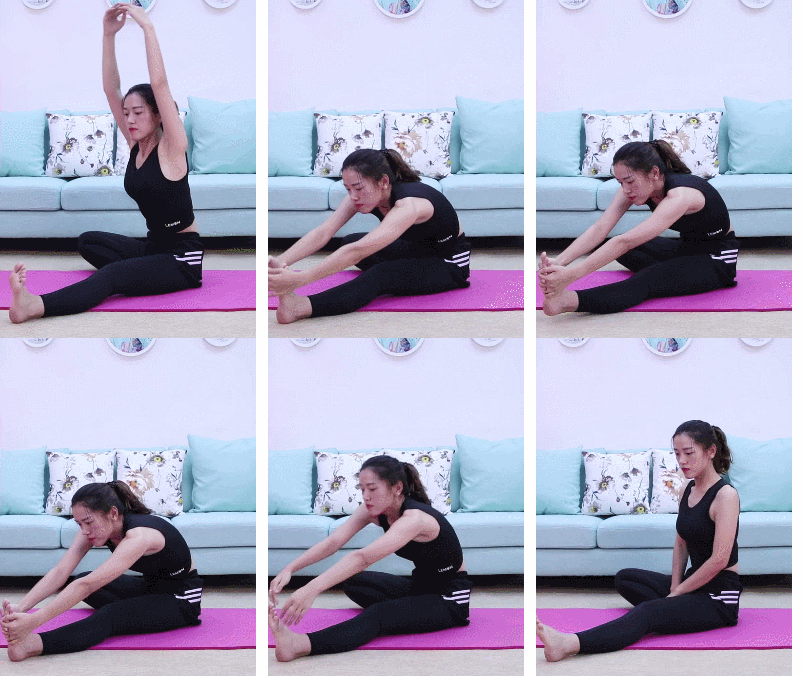
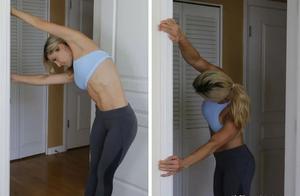
This stage is to relax the tense muscles of the legs, making it easier for the next leg training day. It is recommended to do static stretching and massage.
Stretch action one: do 4 sets, each set does 6-8 times.
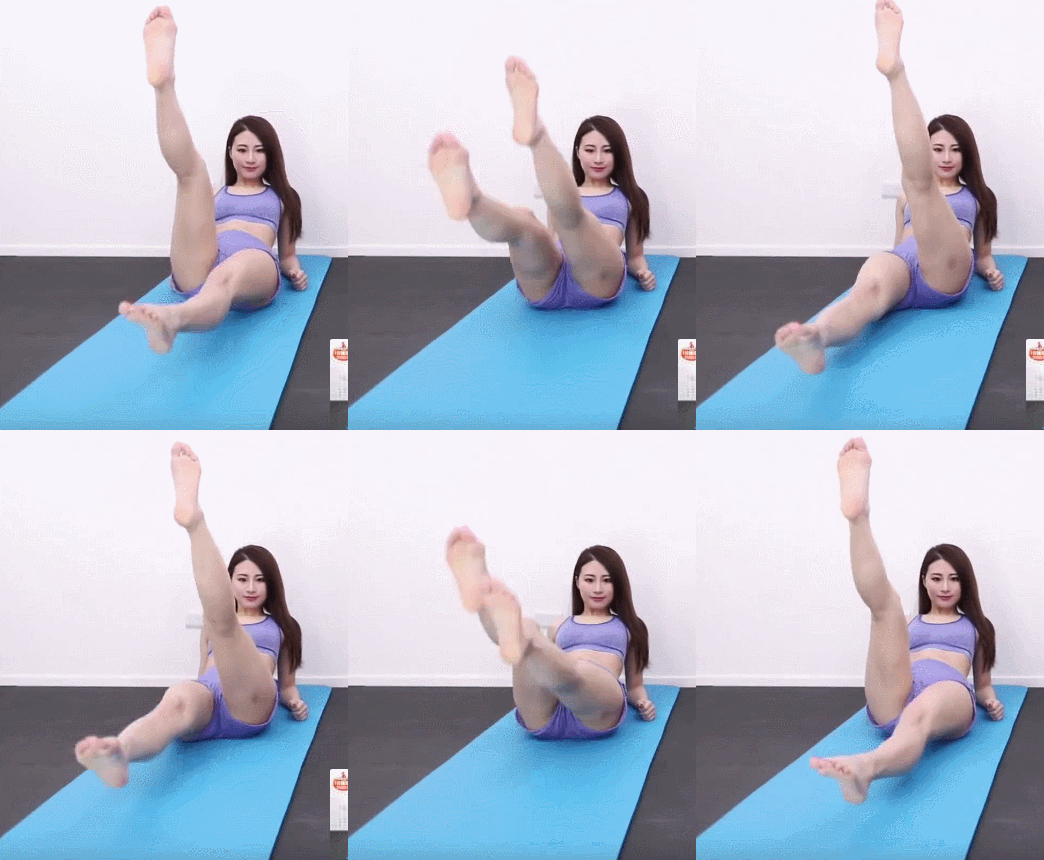
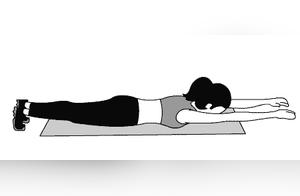
Stretch action two: do 2 sets, each set does 10-15 times.