The Secrets of Shouldering Down and Elbow Bending
Learn Taiji, let the Taiji flow! Click the upper right corner to ‘follow’ us!
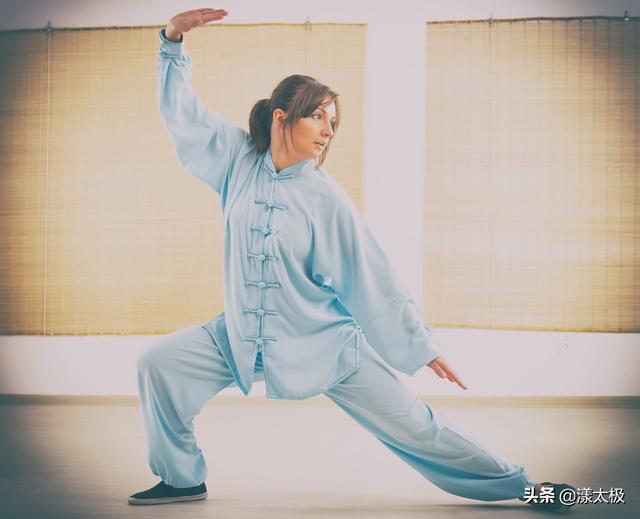
Shoulder Drop and Elbow Bend is one of the important practices in Taiji. The Taiji sinking strength is gradually cultivated from bottom to top. First, cultivate Shoulder Drop and Elbow Bend, maintain Shoulder Drop and Elbow Bend, then cultivate the sinking strength of the waist and hips. Only when you can achieve Shoulder Drop and Elbow Bend can you effectively generate power from the heels, transmit it through the waist, and uplift it through the hands. It’s about the overall sinking strength.
1. The purpose of cultivating Shoulder Drop and Elbow Bend is:
One is to cultivate heaviness in the arms;
Two is to cultivate the supporting strength of the arms;
Three is to cultivate the flow of air in the arms.
Regarding the arms, there are three places where power originates:
One is muscle;
Two is sinew;
Three is joint muscle (the flesh tissue between joints, some call it annular muscle).
Taiji always emphasizes Shoulder Drop and Elbow Bend, aiming to reduce the exertion of muscles, to highlight and increase the exertion of sinew and joint muscle.
Some people think of exerting force and immediately think of muscles, which is a one-sided understanding of the organization of human power.
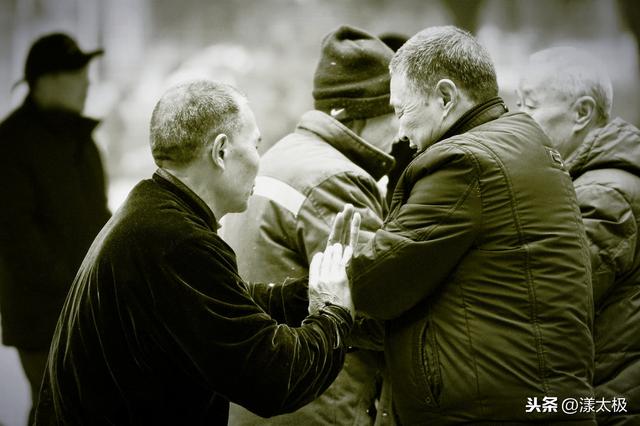
Because sinew and joint muscle are hidden under the influence of muscle force in normal exertion, making it difficult to sense. Through Shoulder Drop and Elbow Bend, we expand the hidden sinew and joint muscle, and gradually reveal their power.
In the practice of Taiji, we continuously reduce muscle exertion to reveal the exertion of sinew and joint muscle, and gradually increase the power of sinew and joint muscle.
As sinew and joint muscle gradually decrease muscle force, while sinew and joint muscle gradually increase their force.
I always emphasize Shoulder Drop and Elbow Bend, and when you do it, your arms will feel heavy, which is the manifestation of highlighting sinew and joint muscle while reducing muscle exertion.
At this time, it’s like sinew drives bone to perform the action, while muscle is like a sandbag wrapped around sinew and bone. Once you cultivate sinew and joint muscle, you will feel the weight of the sandbag.
2. What is Supporting Strength?
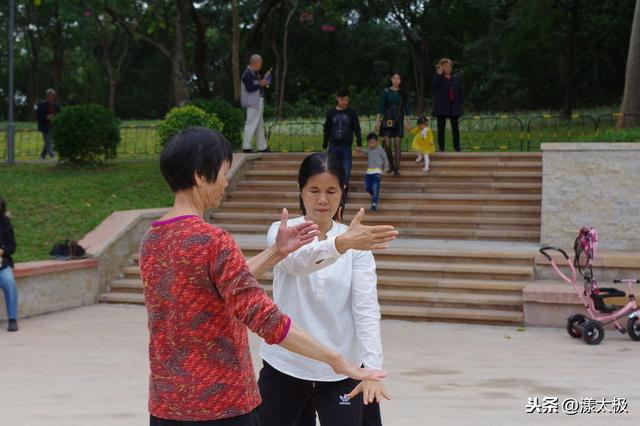
Because heaviness is cultivated in the arms, the shoulders will drop down, the relaxed shoulders will pull down the spine, like a heavy arm hanging on the spine.
Because the armpit requires an opening, causing the arms, especially the elbows, to turn outward, the downward force of the heavy arm combined with the outward force of the elbow, and the combined force of the inward expansion of the chest and back, forms Supporting Strength.
Cultivating heaviness in the arms will make you feel that the shoulder joint has opened. Then, when the shoulder joint opens, you will feel that the joint muscle and sinew are guiding the arms to perform the action.
3. Arm Cultivation Methods:
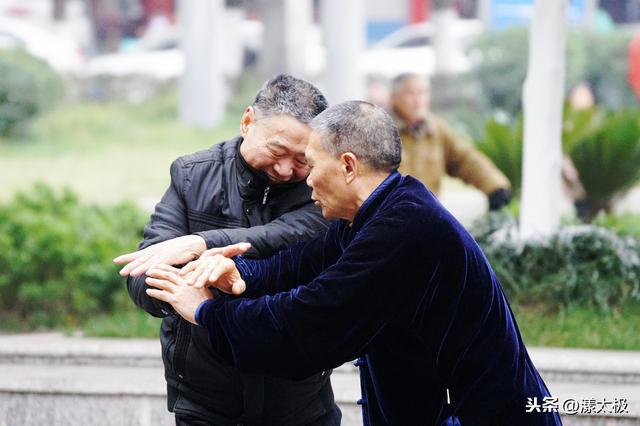
Use the ‘Fishing’ demonstration to explain. Fishermen know that when they raise the fishing rod, they only lift the part of the rod they hold in their hand. This allows them to feel the size of the fish being caught. Use this method to raise your arms during the ‘Fishing’ demonstration. At this time, focus on raising your arms, let your little arms rest, as if you are holding a fishing rod.
Perform the action as described above, with your whole body relaxed, just focus on raising your big arms, don’t exert force, spend about 4-5 seconds raising your arms.
Note: Keep your whole body relaxed, and your brain should only focus on raising your big arm, don’t worry about your body, practice repeatedly. This is a speculative method, primarily to quickly feel the heaviness of your arms.
Article compiled from the internet, aiming to promote and spread Taiji. If there is any infringement, please contact to delete. The article is for Taiji enthusiasts to enrich their knowledge, reference and learning purposes. If you have a master guide or your own practice system, you don’t need to completely change it based on the text, just reference and learn from it.