Beginner Chest Trainers, Experienced Back Trainers – Here Are 3 Ways to Build a Broad Back
In fitness circles, there's a saying: 'Newbies work chest, experienced hands work back.' Many people focus most on the pectoral muscles when starting to exercise, because the chest muscles can be directly seen in the mirror. However, the back is often ignored by many trainers because it's difficult to see the development of the back muscles in the mirror.

If you want your waist to look thinner, you not only need developed deltoid muscles, but also broad and developed latissimus dorsi. Training the latissimus dorsi is often more difficult because it involves many actions, more complex grip and grip width, which makes it easy for many people to lose direction.
And in the content below, we will provide 3 techniques for latissimus dorsi training, so that everyone can have winged latissimus dorsi.
1Correctly find the activation of the latissimus dorsi
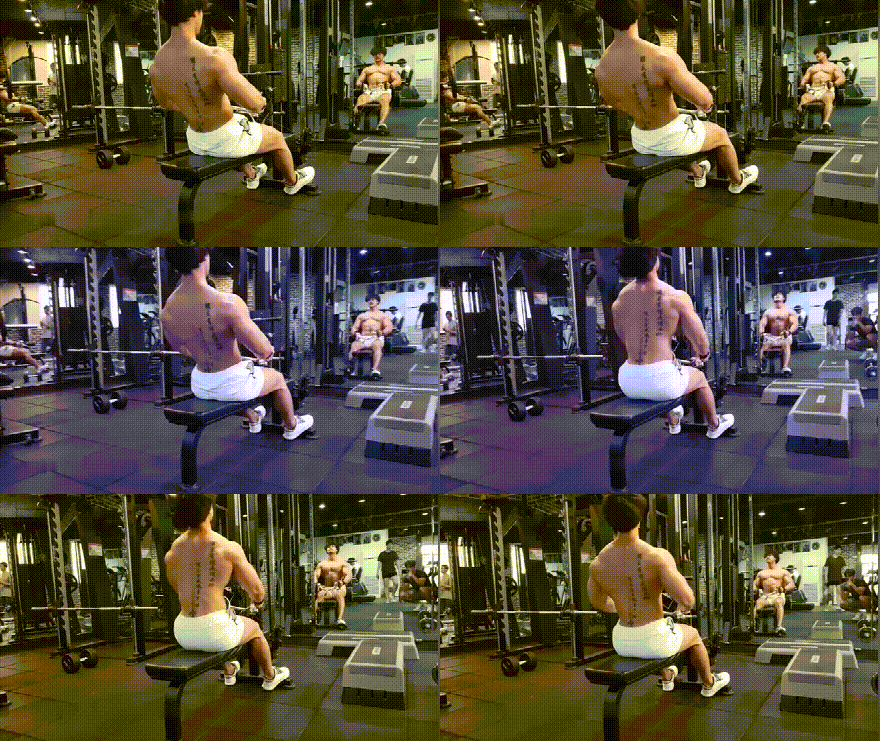
First, you need to ensure that you can maximize the activation and feel the activation of the latissimus dorsi, which is very crucial.
For most trainers, it's difficult to find the feeling of activation of the latissimus dorsi in back training. If you can't master the way of activation, other muscle groups will help, such as the forearm, biceps or trapezoid muscles.
This is not ideal for the long-term development of the back because in a 2018 study, it was found that establishing a strong neuromuscular connection seems to accelerate muscle growth. Researchers found that in an 8-week resistance training, subjects who focused on muscle contraction grew faster on the elbow flexors, and similar results also appeared in the quadriceps.

Therefore, if you don't feel the strong contraction of the latissimus dorsi in different back training, you need to improve. I prefer to use different functional properties of the latissimus dorsi to help feel its activation,2Stimulate the upper and lower parts of the latissimus dorsi
Secondly, you need to ensure that you fully stimulate all muscle fibers of the latissimus dorsi.
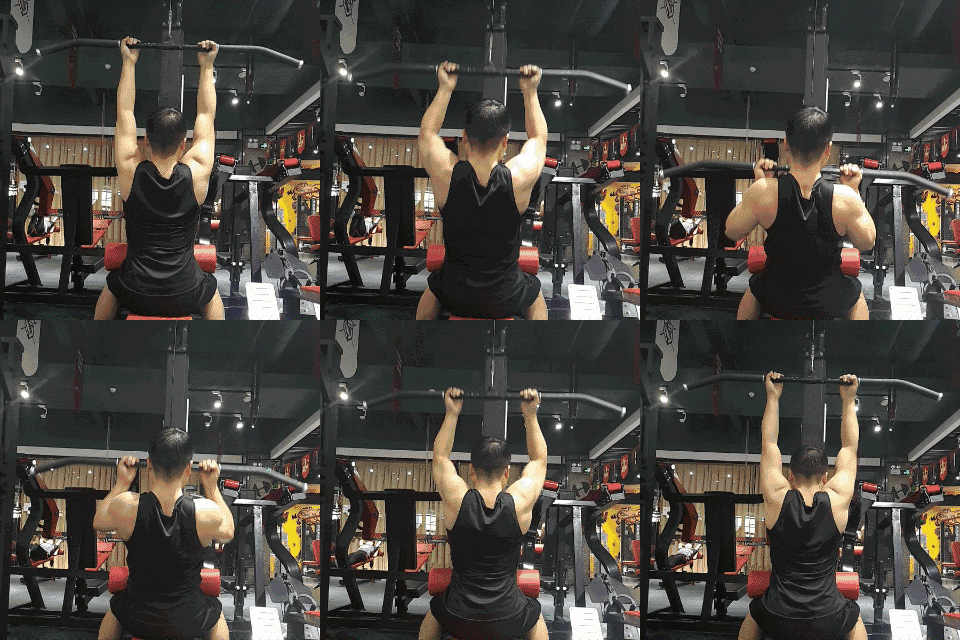
Many people don't know that anatomical studies show that the latissimus dorsi is composed of the upper and lower parts. Therefore, if you want to maximize the strengthening of your back width, you need to reasonably stimulate these two areas in training. Many people haven't done this, which is also the reason why their back is not wide. However, we can achieve this by observing the fiber direction of the latissimus dorsi.
For example, the muscle fibers of the upper latissimus dorsi are almost horizontal: including more shoulder adduction movements, can more effectively stimulate this part, such as pull-ups or wide-grip high pulls.
However, the lower muscle fibers of the latissimus dorsi move more vertically: therefore, actions such as narrow-grip pulls, reverse grips and narrow-grip rows can more effectively stimulate this part.

If you find that one part of your body is weaker, give more training to that part, and the other part will correspondingly reduce training.
3Pay more attention to the latissimus dorsi when rowing
Different training techniques will lead to different stimulation of the area.

Let's take seated rowing as an example. If you row with a seated posture, if your elbows are open and away from the sides of your body, and each repetition focuses on squeezing the shoulder blades, you can train more lower trapezoid muscles, middle trapezoid muscles and rhombus muscles.
Conversely, if you clamp your elbows, bring them closer to your body, and pull them slightly lower, imagine pulling your elbows down and back, you can more effectively train your latissimus dorsi.
If the action is done correctly, these two different differences will look like two completely different actions.
Try this back training artifact, carve back muscle curve!