Corrective Training for Hip Joint Movement Dysfunction
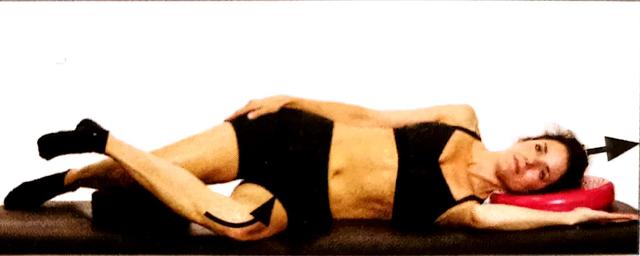
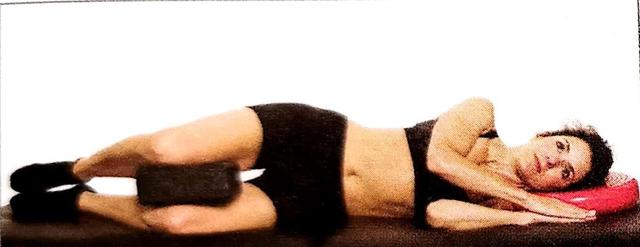
One, Open-shell clamshell
It is effective in improving hip flexibility awareness and improving hip rotation in the early stages of recovery, but this mode cannot effectively improve hip axial alignment, and cannot coordinate with other buttock muscles that help maintain single-leg standing stability.
① Side lying, with the spine maintained in a neutral position, the legs are placed in a overlapped position, the hips are flexed to 45 degrees, and the knees are bent to 90 degrees. Activate the core and maintain it during this period.
② Raise the above knees from bottom to top as high as possible, without changing the position of the pelvis. Maintain this position for 1-3 seconds, then slowly return to the starting position.
③ The coach can apply resistance to the above knee joint, or use a knee sleeve with resistance band, to ensure no destructive movement.
④ Fully feel that the upper buttocks are activated, and maintain a stable pelvis/spine throughout the entire pattern.
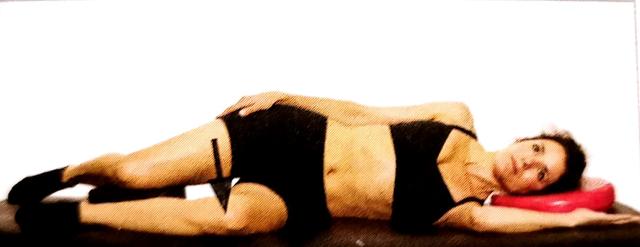
Two, Clamshell exercise
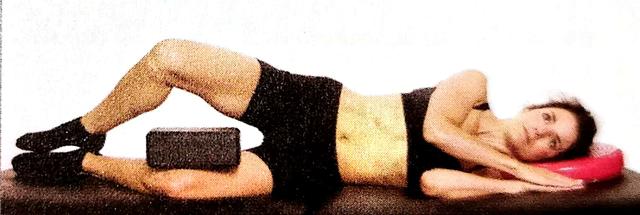
For any patients who participate in rotations such as tennis, golf or throwing, they need to guide the hip to have obvious internal rotation in the later stages of the exercise. Clamshell training is a direct method to restore hip internal rotation, especially for the function of the fascia lata and the anterior fibers of the gluteus medius.
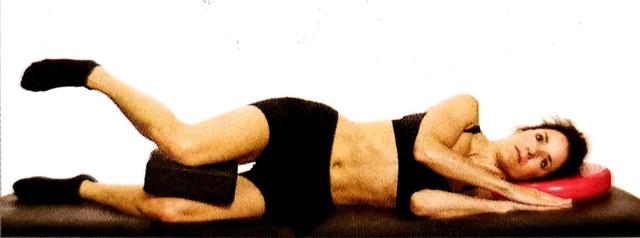
① Side lying, with the spine maintained in a neutral position, the legs are placed in a overlapped position, the hips are flexed to 45 degrees, and the knees are bent to 90 degrees, and a small ball and towel are placed between the knee joints. Activate the core and maintain it during this period.
② Rotate the above feet towards the ceiling by rotating the hips, try to raise them as high as possible, and do not change the position of the pelvis. Maintain this position for 1-3 seconds, then slowly return to the starting position.
③ The coach can apply resistance to the above knee joint, or use a knee sleeve with resistance band, to ensure no destructive movement.
④ This mode is only used for patients who particularly need internal rotation, and can only be used to activate before specific activities. Excessive adoption of patients with poor hip stability may increase the tension of the fascia lata.
Three, Closed clamshell exercise
Closed clamshell exercise activates the hip flexor muscles (primarily the quadratus lumborum), the posterior fibers of the gluteus medius, the hip external rotator muscles (iliopsoas, obturator internus, piriformis) and improves the progress of hip axial alignment and stability. It is one of the most effective hip axial alignment and stability exercises.
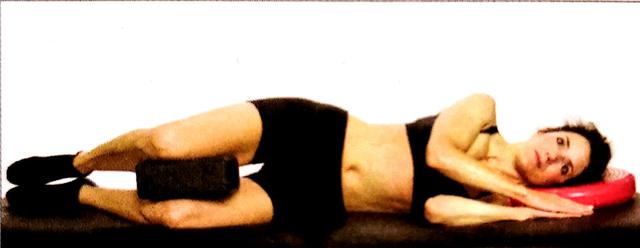
① Similar to traditional clamshell exercise, but the top leg is moved to the back of the bottom leg and supported on a manchester or pillow.
② The hip and knee joints of the bottom leg are bent at 90 degrees, and the core is activated.
③ The bottom leg’s knee pushes down on the bed, and the feet and toes rotate from the bed to raise, the knee joint must keep pressure on the bed. Maintain this position for 5-10 seconds, then slowly return to the starting position.
④ The coach can apply resistance to the bottom leg’s knee (hip extension) and ankle medial (hip internal rotation) to help activate properly. The position of the pelvis/spine has not changed.