How to Prevent or Relieve Physical Injuries Associated with Running
As people's awareness of health increases, running has become one of the most popular sports. However, with running also comes physical injuries, which is the biggest problem for runners.
Experienced runners will conduct targeted training to prevent running injuries, but many runners are not clear which targeted training can prevent running injuries, and what role these targeted training plays. To this end, today we will analyze some common training methods that can prevent running injuries, and the role of these training methods. Let's get it!

Knee-chest stretch
Runners often realize the pain in the lower waist back after feeling pain in the lower waist back, which is one of the important components of running posture. It may not be too late to correct it at this time. This exercise can provide the lower waist and hip with the necessary flexibility and strength. After targeted training, especially when running on uphill roads, it will bring effective benefits. When the back adapts to different slope changes, it can improve the flexibility of the hip and lower waist, which can extend the running stride.
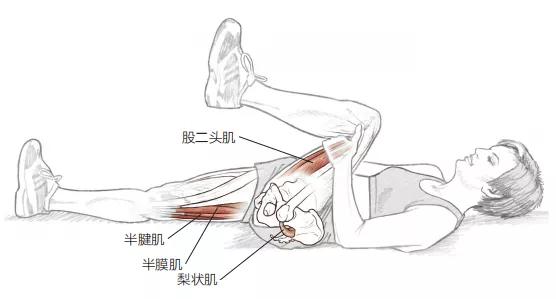
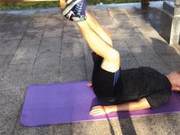
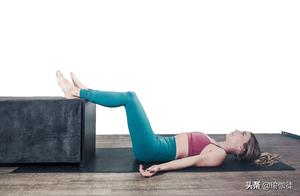
1. Lie on the ground, use the strength of the quadriceps muscles to lift the knees, and bend the knees at a 90-degree angle.
2. Use your hands to grasp the back of your knees, pulling your knees towards your chest, feeling the pull between your lower back and hips. At this time, resist the force of the hip on the other side and keep the hip close to the ground.
3. Maintain this posture for 15-30 seconds, repeat no more than 5 times; then switch legs to practice. You can do 2-3 rounds per day.
Sitting Iliotibial Band Stretch
Tight iliotibial band is often caused by excessive retroversion, not excessive anteversion; and inward foot rotation causes the calf muscles to tighten, knee side pain and iliotibial band tightness. Even if the anterior muscles are corrected through wearing stable running shoes or orthotics, it is easy to cause problems if the rotation is not enough. The iliotibial band is a very thick soft tissue attached to the lateral side of the greater trochanter of the femur. Runners can prevent problems by stretching it by standing or sitting. This stretching can be repeated daily. The following is an example of sitting.
1. Sit on the ground, straighten one leg, cross the other knee over its knee and arch the knee, ensuring that the sole of the foot is flat on the ground. The straight leg side hand supports the knee joint.
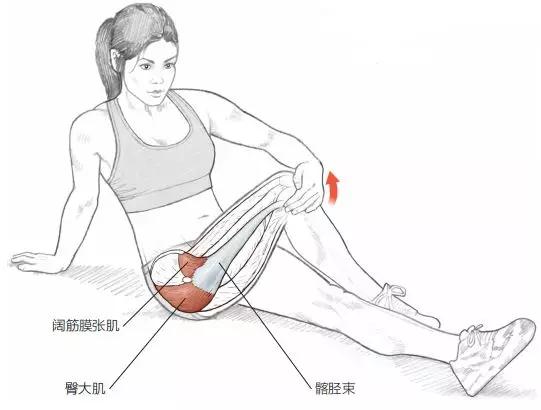
2. Gently press the outer side of the arched knee with the shoulder of the arm on the straight leg side. Maintain a static stretching posture for 15-30 seconds, and repeat multiple times after switching legs to continue the exercise. Each repetition should be 2-3 rounds per day.
Standing Calf Stretch
Normal internal rotation or insufficient internal rotation of runners often suffers from the pain of tight calf muscles. This stretching helps relieve chronic pain caused by tight calf muscles, and also prevents calf muscles from being injured by maintaining muscle flexibility.
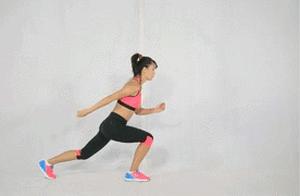
1. Stand facing the wall, extend one leg backward, and put the foot flat on the ground. Bend the other leg, and put the sole of the foot flat on the ground under the heel of the straight leg. Extend your arms straight forward, with the same distance as the top of your chest and shoulder-width apart. Hold your hands at arm's length on the wall.
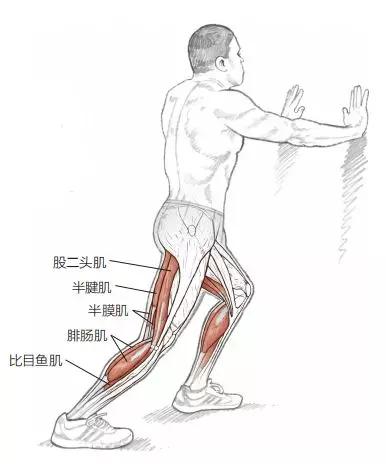
2. Gently press your hands against the wall, stretch your leg slowly by pressing the foot towards the ground, and feel the stretch of the calf muscle. Maintain a static stretching posture for 15-30 seconds, and repeat multiple times. Then switch to the other side to continue the exercise. Each repetition should be 2-3 rounds per day.
Sitting Straight Leg Stretch
Many runners are too concerned about the overall training of the quadriceps muscles, and they neglect to explore the importance of the inner muscle of the thigh for stabilizing the knee and preventing pain in the hip and thigh joints. This exercise provides the best way to increase muscle strength and power, and can prevent knee pain.
1. Sit on the ground, put your arms behind you to support your body, and extend one leg straight.
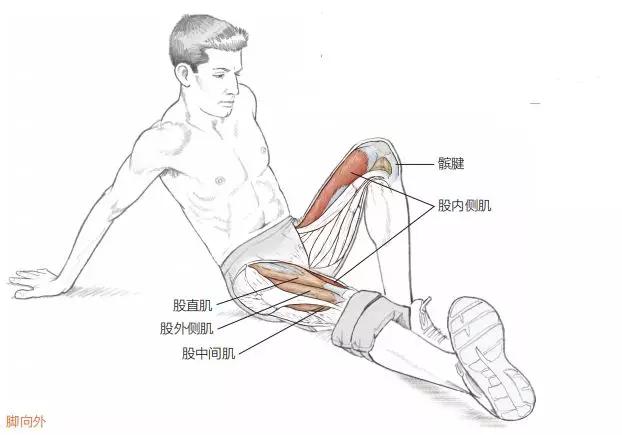
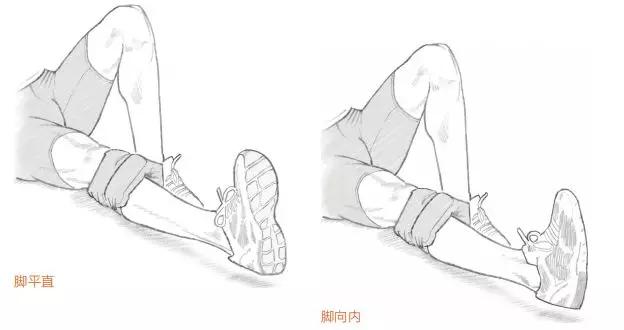
2. Turn the foot outward, slowly raise the leg, keep it straight, but do not overstretch the knee until it does not exceed 15 centimeters. Maintain for 10 seconds, and then slowly return the heel of the foot to the ground, rest.
3. Repeat 10 times for each foot, and 30 times in total. The change of foot posture can evenly train the quadriceps muscles.
Ankle Dorsiflexion
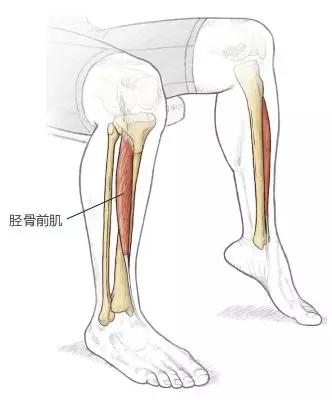
The importance of the anterior tibialis muscle is to provide flexibility for the foot and leg when running, because the anterior tibialis muscle is responsible for adjusting the position of the foot and leg when running, when runners run on uneven surfaces, the anterior tibialis muscle can improve stability.
During long-distance uphill or undulating road running, the anterior tibialis muscle is frequently in motion. If not targeted to strengthen the anterior tibialis muscle, it will soon fatigue, and then increase the risk of running speed and foot injury. When the anterior tibialis muscle is strengthened, it can effectively limit the amplitude of the foot's inward and outward rotation.
1. Sit upright on a chair with a hard backrest. Start by training the leg, with the soles of the feet flat on the ground, the knee bent at a 45-degree angle, and adjust the posture to suit the height of the chair. Lift the foot to leave the ground, and press the toes down, maintaining a 15-second hold. Repeat 10 times, and practice 2-3 rounds per foot every day.
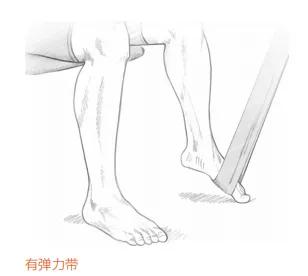
2. Prepare a chair, and fix a elastic band to an immovable object on the wall. Sit on the chair with the same posture as in step 1, and then pull the elastic band around the arch of the foot, and try to pull the foot away from the wall as much as possible, maintaining a 15-second hold.
Roll Ball
If you have plantar fasciitis, or when you wake up and start standing or walking, you feel the arch of the foot tighten or the heel pain, you can use the rolling ball to perform pre-rehabilitation exercises.
1. Extend your arms at your sides, and maintain a good body balance. Use one foot to press a ball firmly.
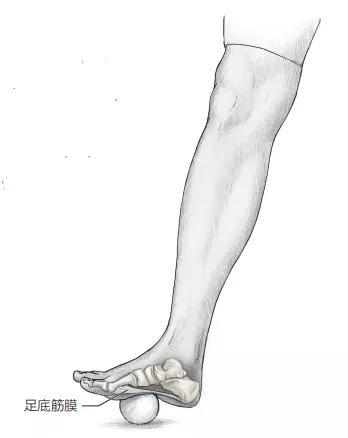
2. Roll the ball under your foot, you can roll it forward, backward, left or right. Pay attention to training the arch of the foot at the top of the metatarsal bone, especially pay attention to the heel. Roll the ball for 30 seconds for each foot, and switch feet every day.
Push Wall
Pain or tightness in the calf or the mid-calf part of the calf is often related to soft tissue or bone (especially the tibia). These problems are often caused by excessive internal rotation. This exercise can effectively prevent the muscle of the mid-calf from causing pain, and it is suitable for practicing multiple times every day, and the effect of regular practice is better.
1. Stand about 45 centimeters away from the wall, with your feet shoulder-width apart and facing the wall, and put the sole of your feet flat on the ground.
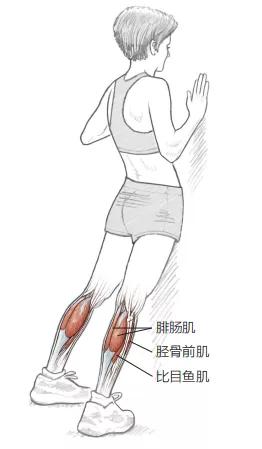
2. Press your pelvis towards the wall, and adjust the distance between your body and the wall and the angle of the foot so that the muscle is stretched optimally. Keep a static stretching posture for 15-30 seconds, and repeat multiple times. Then switch to the other side to continue the exercise.
Today's content is shared here... Want to learn more about running knowledge, please pay attention to
~2

2