Ignoring the Anterior Serratus Can Make Your Upper Back Muscles Bigger
Do you have such a situation? Despite never consciously training the upper back muscles, you may even have a lot of stretching and relaxation of the upper scapula, and pay attention to daily and action avoidance of hunching shoulders to avoid any actions that require the upper back muscles to exert force, yet the upper back muscles have not become smaller, but instead become larger.
This article, we will analyze why this happens. First, we need to recognize a muscle – the anterior serratus.
What does the anterior serratus look like
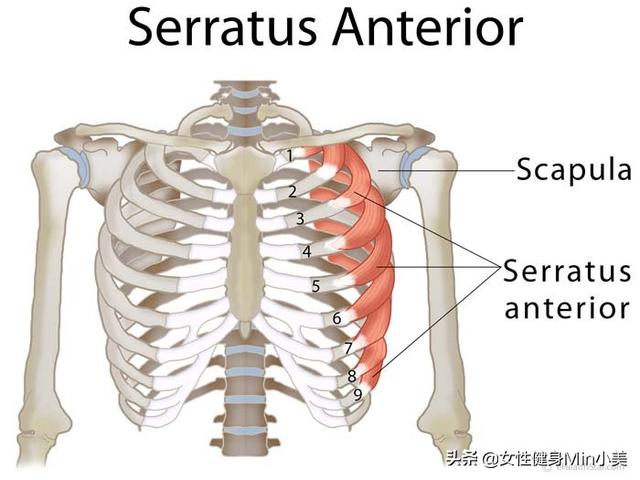
The anterior serratus is about how long it is
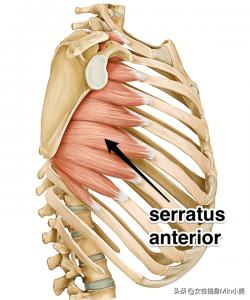
The anterior serratus is located on the outer side of the rib cage, and is named because it is serrated. The anterior serratus is composed of 3 sets of fibers. The upper fibers attach forward to the first and second ribs, and attach backward to the acromion, the fiber direction is parallel to the lower ribs; the middle two fibers attach forward to the second and third ribs for half the length, and attach backward to the spine of the acromion, closely adhering to the ribs with a 45-degree angle; the lower five or six fibers attach forward to the fourth to eighth or ninth ribs, forming a 1/4 circle fan shape, intersecting with the rib attachment of the external obliques, and converging backward to the acromion, forming the strongest part of the anterior serratus.
From the anatomy of the anterior serratus, we can see that it is actually a 'dual-adhesive' muscle, one side sticks to our 'shoulder blade', the other side sticks to our 'rib cage'. Take a look, it's like an 'octopus' muscle bundle. And such a 'dual-adhesive' like muscle has its purpose, which is to maintain the stability of the shoulder joint, firmly hold the 'shoulder blade' against the chest wall.
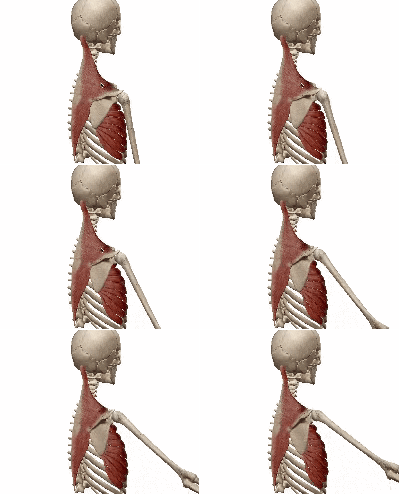
Shoulder blade elevation
In addition to this, the anterior serratus also has a certain function. The anterior serratus stabilizes the shoulder blade, and can rotate the shoulder blade upwards (elevation), which supports the flexion and abduction of the humerus; can make the shoulder blade upwards, outwards and forwards movement.
How does the anterior serratus affect the upper back muscles
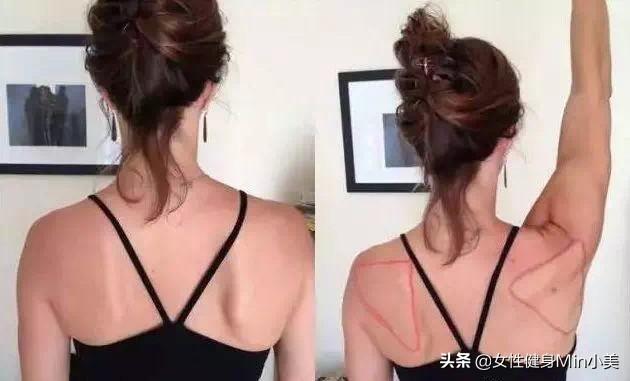
Winged scapula
Static winged scapula
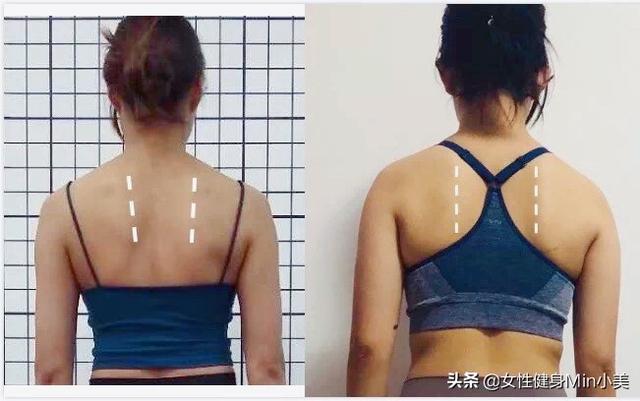
The anterior serratus and a common posture problem – 'winged scapula' are closely related. This posture problem is characterized by the inner/lower corner of the shoulder blade protruding without being firmly attached to the rib cage, like a wing. Many women have this posture problem, and many women also like this shoulder blade state. In fact, the shoulder blade should not protrude, and the weakness of the anterior serratus will lead to such a situation.
The anterior serratus is an important supraspinatus muscle group, and it, along with the lower trapezoid muscle and the upper trapezoid muscle, are collectively known as the shoulder blade elevation force couple. The weakness of the anterior serratus leads to a decrease in the supraspinatus force, so the shoulder blade is easily lowered, commonly known as 'falling shoulder'. Therefore, the people with winged scapula, the inner side of the shoulder blade is often in v-shaped or parallel appearance, presenting the falling shoulder appearance. The upper trapezoid muscle will also appear disproportionately large.
Action process winged scapula
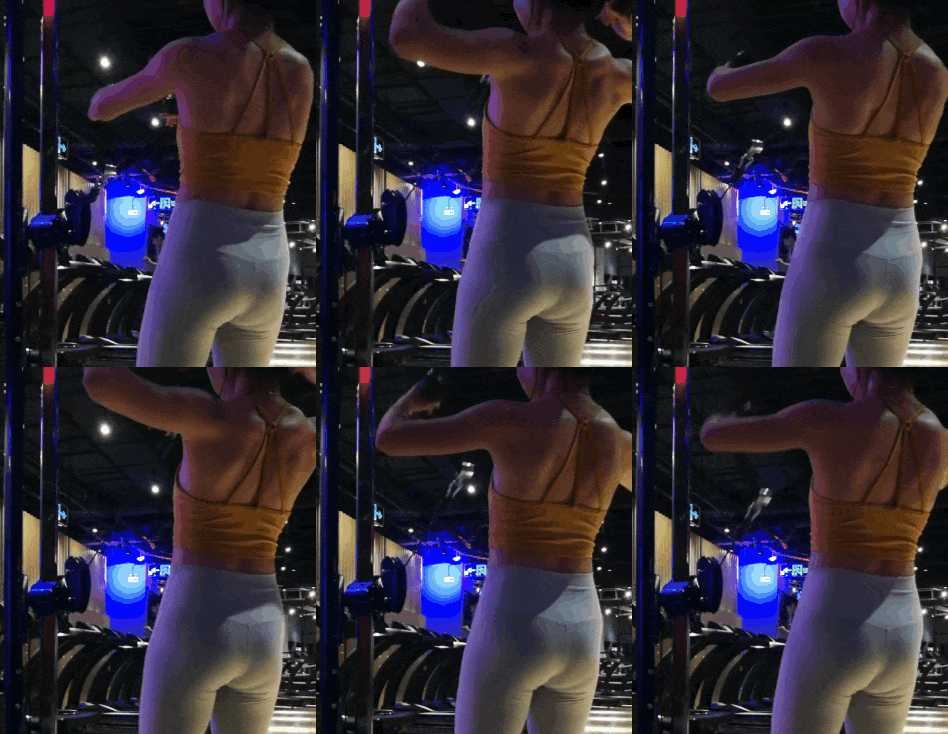
Ordinary people have winged scapula problems, work will be particularly easy to neck, shoulder and upper back pain, upper back pain, and serious will even be unable to lift arms above the head. For women with training habits, even if the static does not show winged scapula, when doing actions appears winged scapula, it will greatly damage our training results, appearing the thick upper back muscles that we do not want.
Overloaded upper back muscles
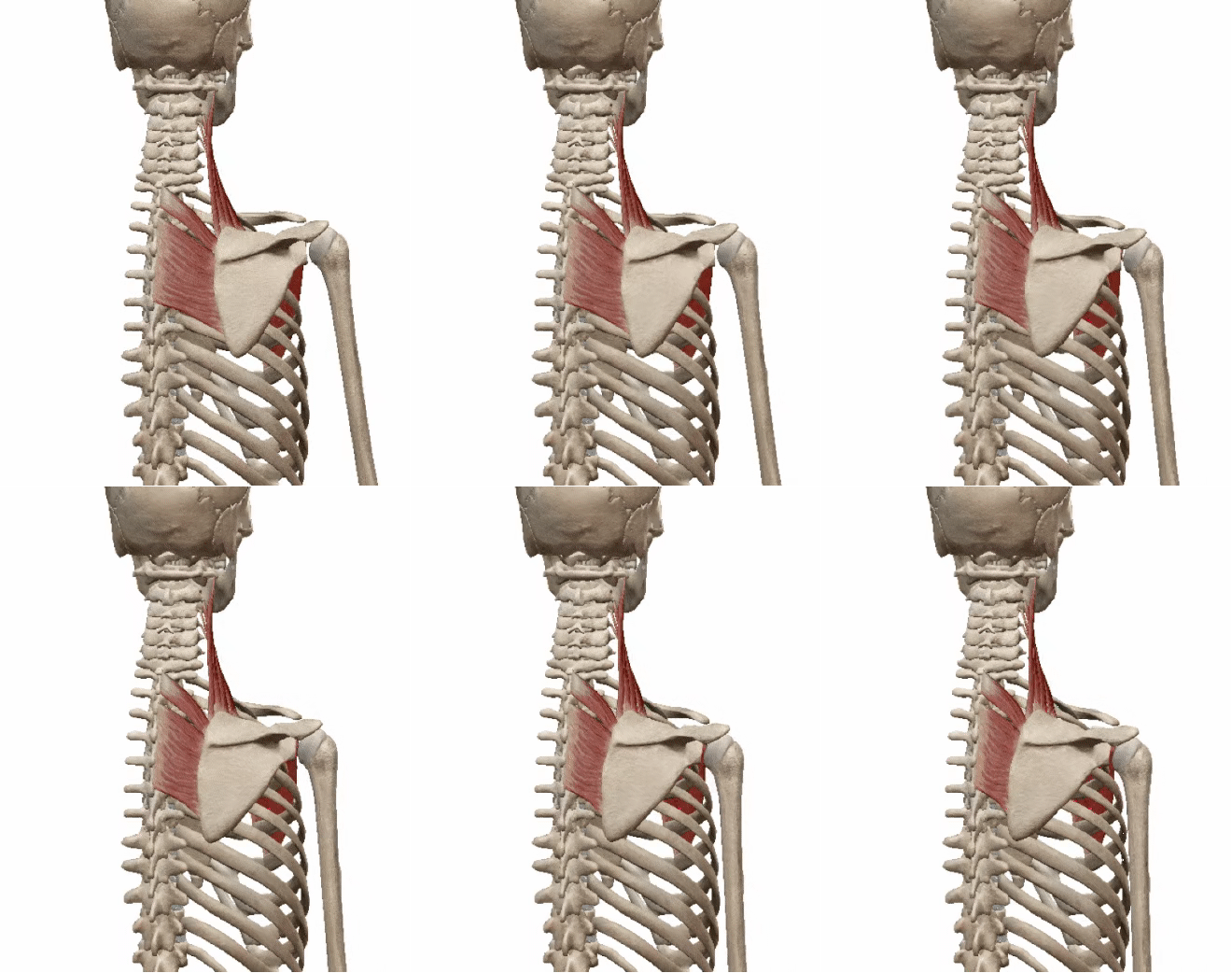
The weakness of the anterior serratus makes the shoulder blade tend to 'fall down', but it will not endlessly fall down, it cannot fall down, right? There must be a muscle to hold it. Then the upper trapezoid muscle will play a role, assuming the role that the anterior serratus should play, to keep the shoulder blade from falling down.
Shoulder blade down
When these problems exist, the overload of the upper trapezoid muscle will be unstoppable, no matter how we suppress it will not become smaller, we do everything relaxation massage, stretching, hunching shoulders, are futile. Instead, the more we suppress it, the more it will become larger to prevent our shoulder blade 'falling down'. So how to do it?
How to improve
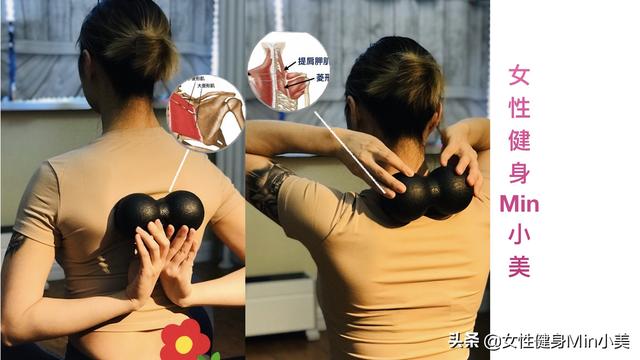
Pulling and relaxing the upper back muscles, avoid the upper back muscles exerting force, but it is still getting bigger, at this time we need to find the root cause is where. The anterior serratus is a muscle that is difficult to feel the force, not only women, many men also often ignore it, to correct an incorrect force, need long-term continuous practice correction.
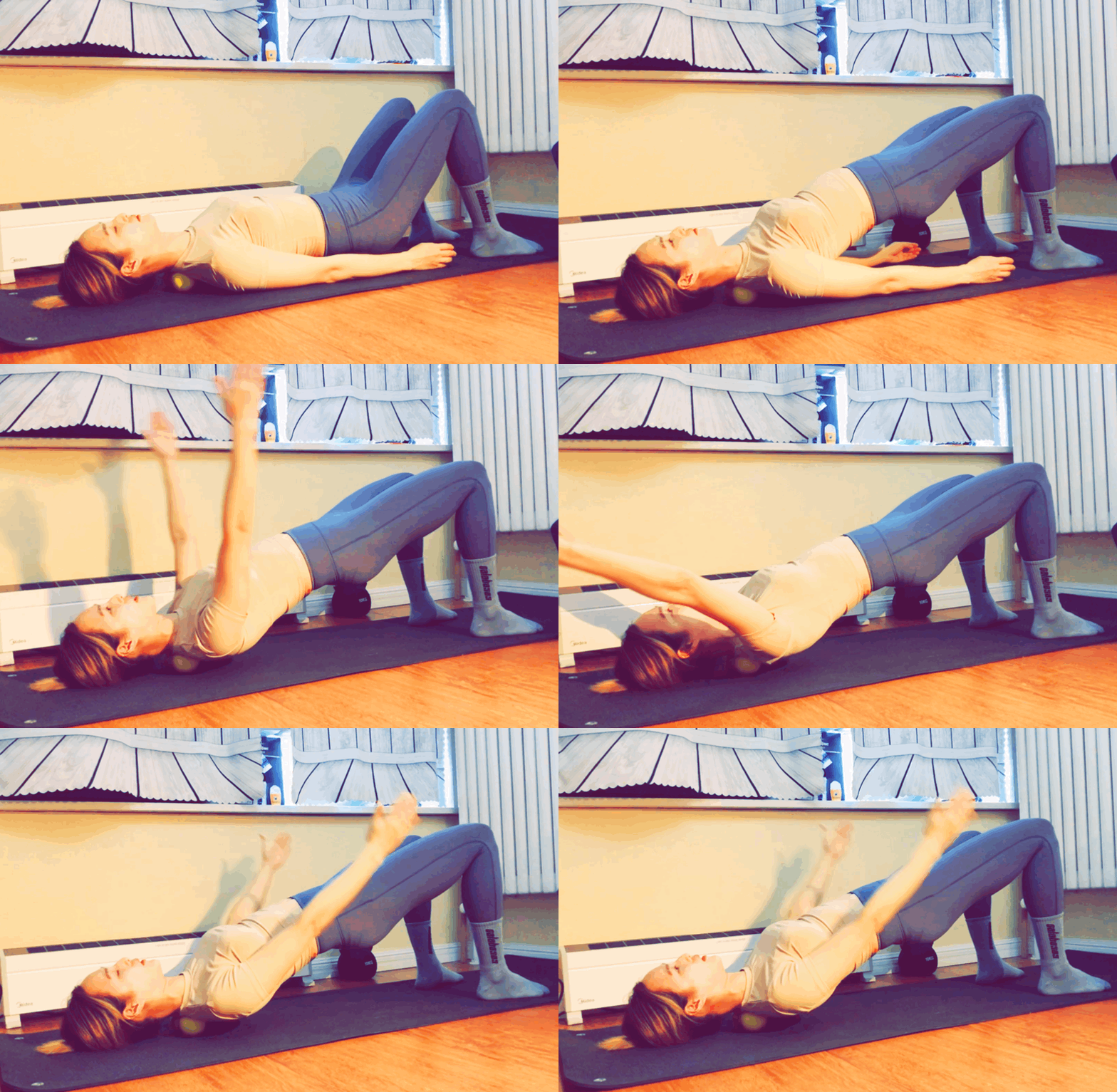
Activate 1
Action point: Use a roll of resistance with the smallest and thinnest rubber band, arms use force to pull the rubber band outwards, while doing up and down flexion, pay attention to coordinate breath to hold the rib, do not let the waist spine protrude. Complete 20 times.
Activate 2
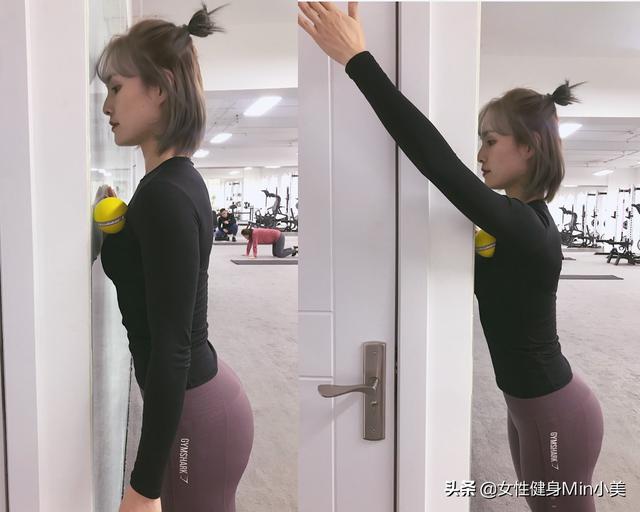
Action point: Kneeling posture on the pad, tuck the abdomen and contract the hips, stand up straight, eyes always look at the ground. Pull the rubber band maintain the rubber band, upward lift the arms, as much as can lift, do not use the waist to assist, complete 15 times.
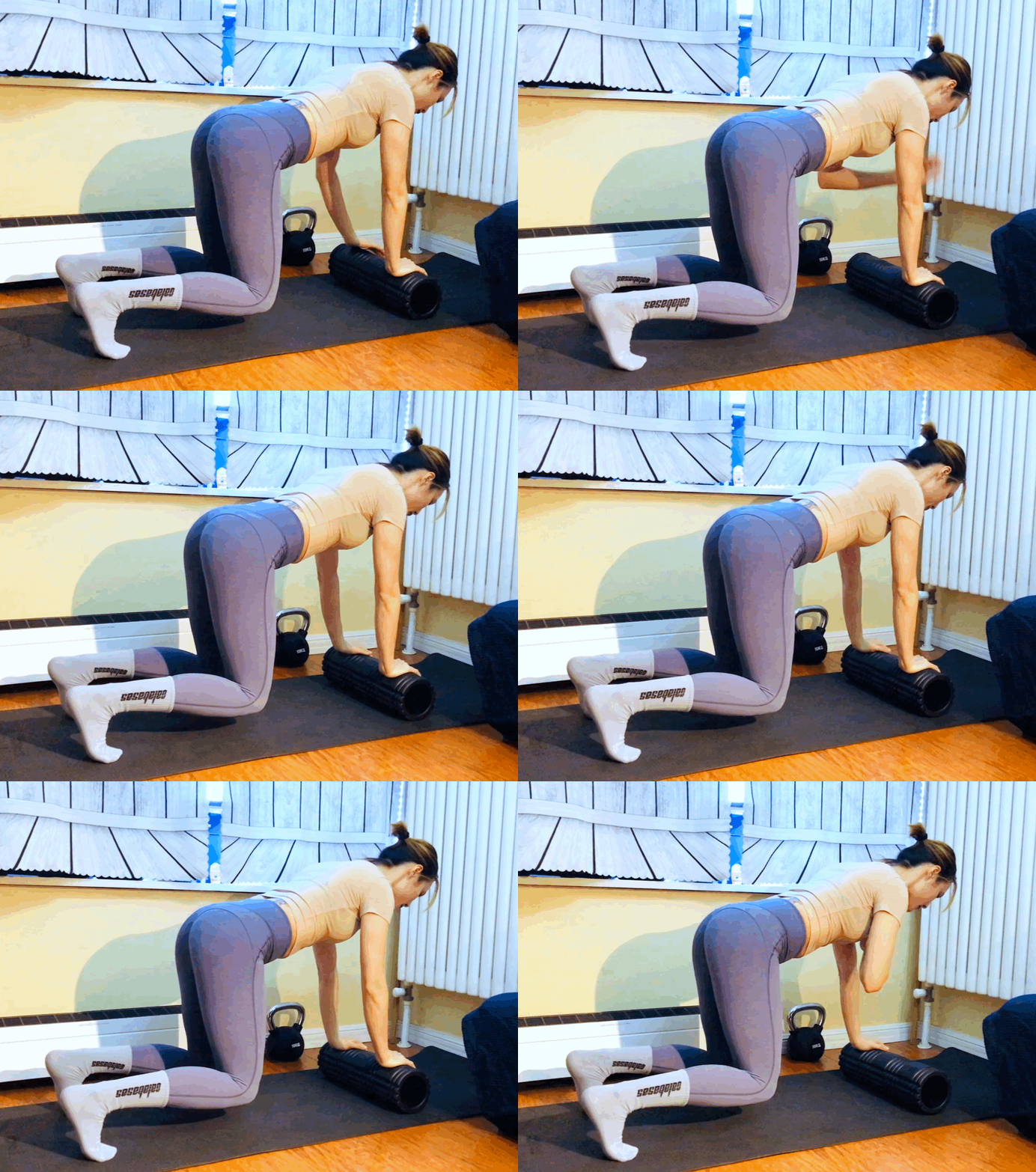
Strengthen 1
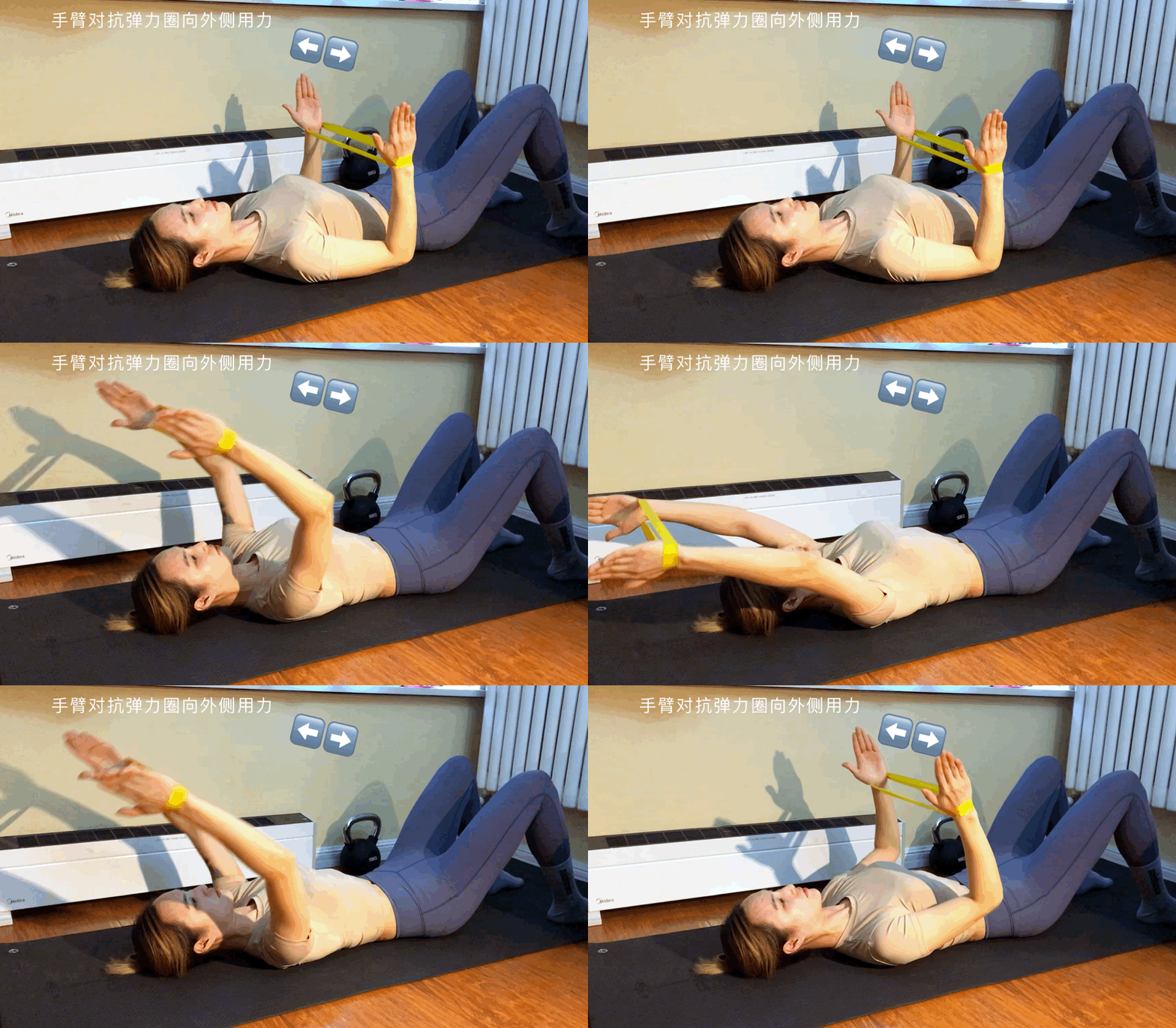
Action point: This action is unstable, the knee can be placed on the pad. Coordinate with the above action to maintain the feeling of the shoulder blade attached to the rib cage, maintain the action slowly and steadily, first press and then lift the arm, switch to touch the shoulder, complete 20 times.
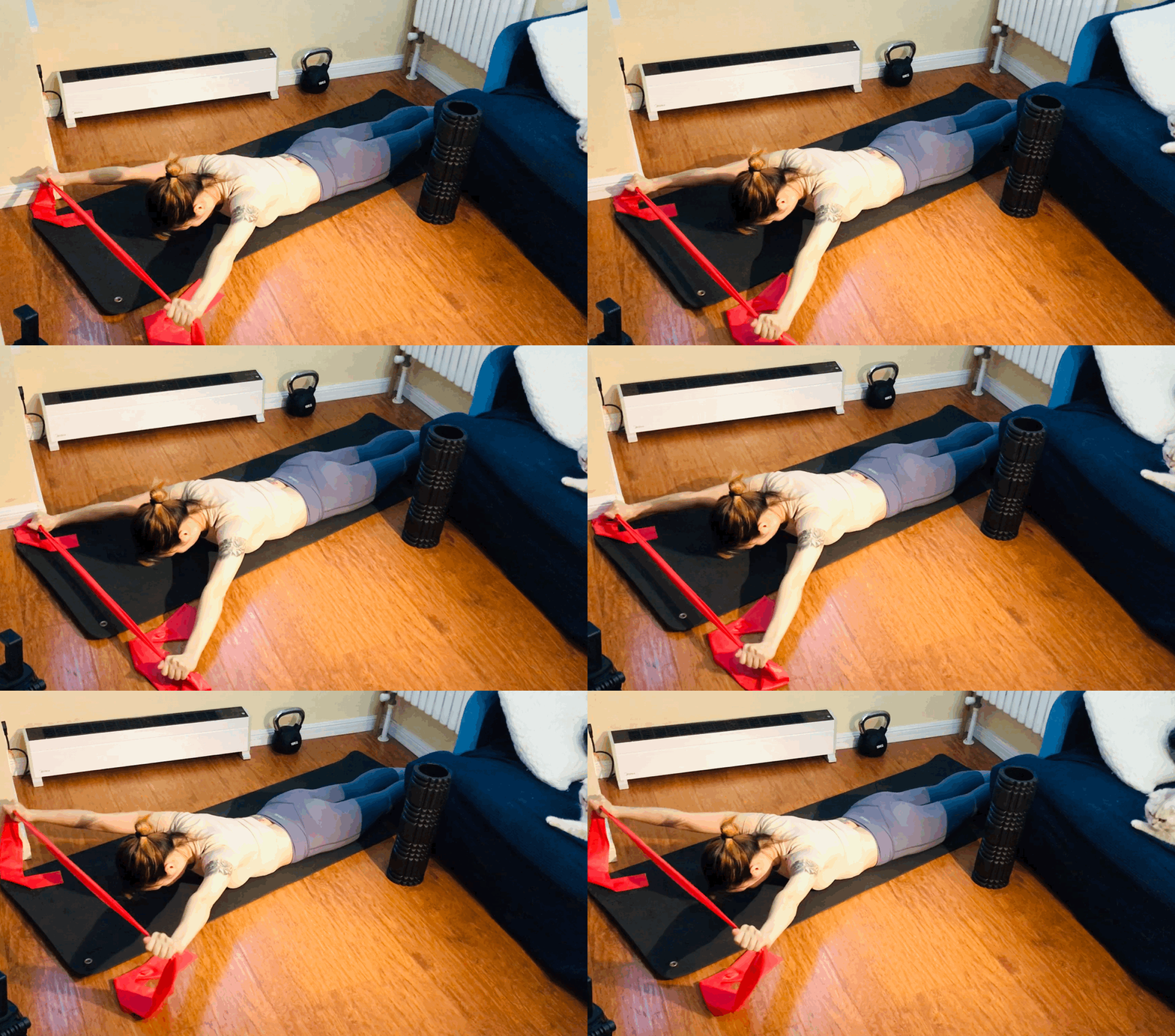
Strengthen 2
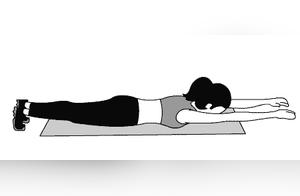
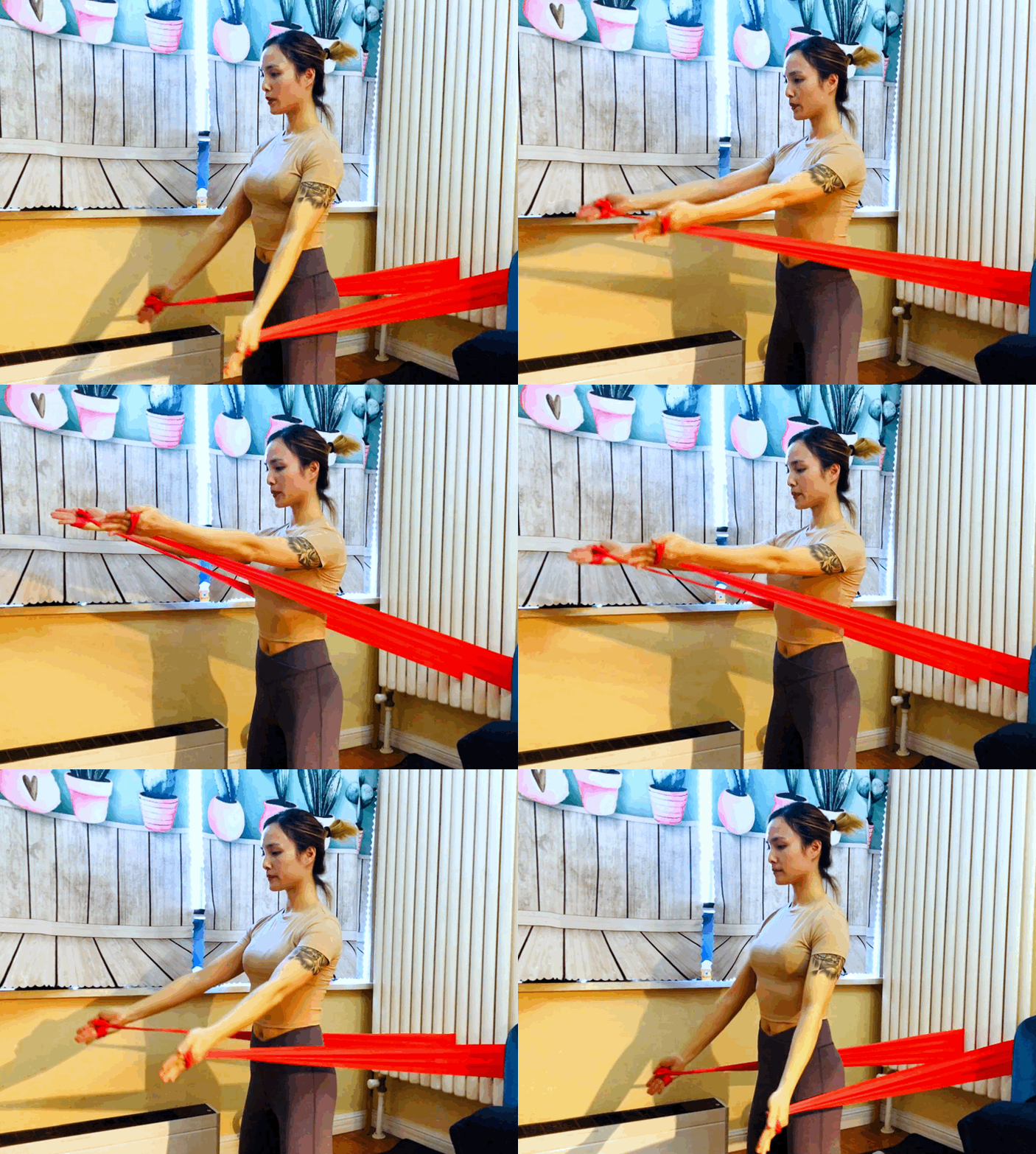
Action point: Lie flat on the pad, legs together, close the hips, keep the abdomen attached to the pad. Maintain the body stretched straight, eyes always look at the ground. Pull the rubber band maintain the rubber band, upward lift the arms, as much as can lift, do not use the waist to assist, complete 15 times.
1⃣️
20
2⃣️
15
277