When Concerns and Doubts Fade Away - Reading 'The Yoga Sutras of Patanjali'

I know I'm a funny person, often doing funny things. In the past, I thought yoga was just about handstands, and I worked hard to learn handstands, thinking that was already quite yoga. After reading this book, I realized I was just starting out, and there was still a long way to go.
When I got to this point, I started to understand why this book puts Samadhi in the introduction, instead of arranging it according to the order of practice.
Because this is the ultimate goal of cultivation, to let everyone know the direction, explain the basic operating principles, and know what possibilities might exist in the future, so that there is a motivation and power to practice.
Or, if you start by explaining how to practice, I guess many people would have already raised the white flag.
Continuing the thread of the previous article, the first part of the first chapter talks about what yoga is, who you truly are, and then goes on to talk about what the mind is.

Third, what is the mind?
The Indians believe that each of us is a combination of body, mind, and soul (physical body, mind, and soul). The three are interconnected.
The 'soul' is the 'soul,' and I understand that the 'true self' mentioned in the previous article, that constant, unshakable awareness, the purest essence. Each person's soul is the same, and at this level, we are all equal, without distinction of high or low, noble or humble.
We often say 'all things have a soul,' and that's because it's at the level of the soul.
The unchanging thing is the soul, the changing thing is the heart, which is the mind, thoughts, emotions, and everything in between. The mind is constantly changing, sometimes painful, sometimes joyful, and often influenced by external things.
I thought of a good analogy that can help us understand. The mind is like clouds in the sky, constantly changing, while the sky remains eternal and unchanging. The sky is our soul, our awareness, that true self, the observer, it encompasses everything, carries everything.
As someone said yesterday, 'knowledge brings pain,' I understand why I was in pain, because I was just trying to think about it with my mind, instead of experiencing its reality through my body, feeling its real existence, this is useless, or you just know, but haven't done it.

Bettanyari doesn't distinguish between painful and painless changes in the mind, because he believes that pain and pleasure are constantly changing, one moment painful, the next happy, a thought, sometimes painful, sometimes joyful.
He divides the changes in the mind into selfish and selfless. Love is selfish, expecting a reward, you will eventually suffer.
Without self, purely for the benefit of others, regardless of your appearance, even if you're angry or stern, you will eventually be understood, and you will be happy. When you are happy for others, and others are happy, you will also be happy; when you are happy for yourself, and others are suffering, you cannot truly be happy.
Therefore, the emphasis here is on non-attachment, removing the 'ego,' removing selfishness, and you will become more peaceful and serene. Or, if you want to be selfish, as long as it doesn't harm others, it's allowed.
Fourth, how to control the mind?

Pain comes from the changes in the mind. So how can we control the changes in the mind and let the inner light of peace shine through? Although it's said it's easy to do, it's actually the mind that controls us, and it's difficult to control the mind.
Practice, constantly practice, to stabilize the mind and make it unchanging. How to practice? Always pay attention to it, carefully observe your every thought, every word, and every action.
Practice, firstly, is to practice restraining the mind; secondly, it is to separate your true self from the mind.
We often call 'attachment' the desire of the mind, and the mind always runs out to seek things to satisfy our desires. When the mind is attracted by one thing after another, the mind cannot find rest and peace.
Therefore, the goal of controlling the mind is to not generate desires for things seen or heard, i.e., not to cling to anything.
When I came across the word 'attachment,' I remembered something a teacher once said: 'The advantage in your first half of life will become your disadvantage in your second half of life, so you need to learn how to transform and adjust.'

I used to label myself constantly, psychological suggestion, saying I was a very attached person. In fact, it was true; I had been living a very attached life for almost my entire life, which gave me a strong sense of purpose and achieved some progress and growth, but it also brought many negative consequences, and now it's a hindrance to my path to happiness. Now I'm starting to learn to let go, to learn non-attachment, to learn to go with the flow, to accept everything, and it feels like life is like walking a big circle, once you start, you walk halfway around, and now you're starting to walk back from the other direction, back to the beginning.
Of course, non-attachment doesn't mean doing nothing or lying around; it means doing things without personal desires or selfish motives, or even with a light and pure attitude, and you will quickly find happiness when you do things.
The Indians say, 'God is in the heart, work is in the hand.' Or, 'Put your heart in God, and stretch out your hand to the world.'
I think what this means is that if your mind is free from desires and distractions, you will allow your hands to work. Then you can work and live, but nothing can constrain you, you can do whatever you want, become a master of pleasure and enjoyment. You can enjoy everything, enjoy the world, enjoy your life. This is the secret to success in life.
Fifth, what is Samadhi? How to cultivate it?
After explaining the mind and desire, the latter part of the first chapter is all about Samadhi.
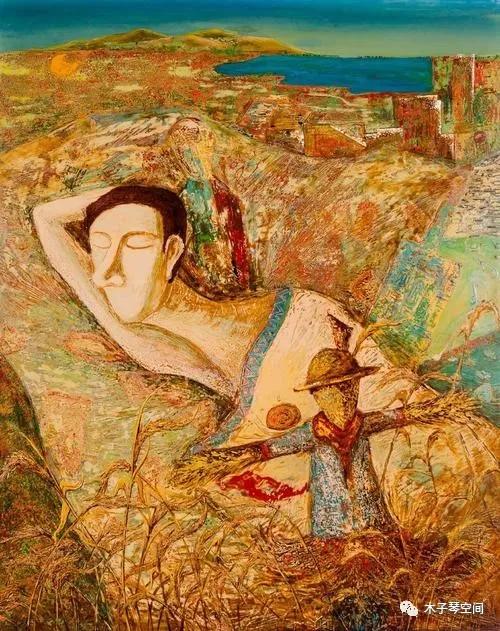
The core of Samadhi cultivation is that you must focus your mind on one point, and completely control your mind, and use the whole mind to practice Samadhi, then you can enter Samadhi.
Samadhi has two levels: obvious and not obvious. The difference between them is the object you focus on. At first, focus on a physical object, then in the intermediate level, focus on non-physical things, such as colors, beauty, love, etc.; in the advanced level, you don't focus on anything, without any object, just joy; and finally, you reach the ultimate level, completely without self.
Layer by layer, increasingly refined, until your mind returns to its original state and merges with your true self, completely liberated and free.
The author recommends one method of cultivation: repetition. This is the simplest, purest, and best technique. Repeat it, to calm the mind. This is probably what we call 'Mantra Yoga'
Secondly, control the breath. Practice observing the breath and adjusting the breath, because adjusting the breath can bring the mind peace. So, when you are excited, angry or worried, take several deep breaths to calm your mind.
When you focus on the breath, you can bring your mind to a state of peace. Therefore, when you are excited, angry, or worried, take several deep breaths to calm your mind.

When you focus on your breath, you can bring your mind to a state of peace.
In the book, other methods are also recommended, but the main principle is the same: focus the mind on one point, don't let it scatter and run around, so that it can become clearer and more stable.
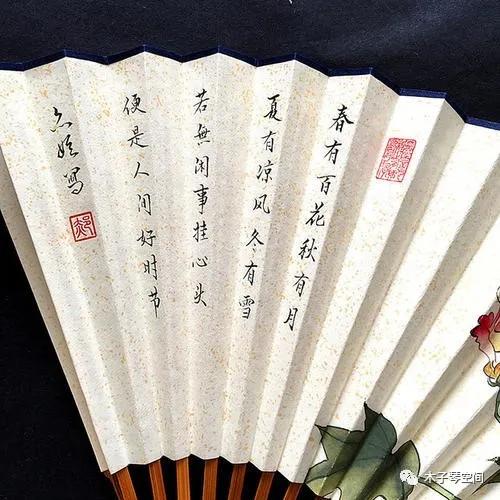
In summary, the direction of cultivation is to liberate the mind, without concern, without being swayed by desires. Suddenly, a poem came to mind, which is a way our Chinese people express enlightenment, and it's very appropriate here, so I'd like to share it with you.