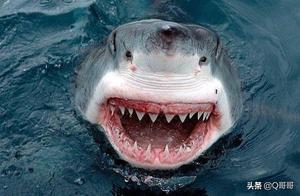
Animals that are willing to kiss you with their eyes meeting yours are the best diplomats, and no one wants to harm them.
We all know that the animal kingdom focuses on life rules and the food chain, simply put, it’s about eating and being eaten. Generally, only animals of the same species can avoid fighting. However, there is one exception in the natural world. They are very good-natured and a talented diplomat. They can play with almost all animals, even predators, without harming them.

This animal is the capybara. The capybara is a semi-aquatic herbivore, the largest rodent in the world. It’s not a small animal, with a body length of over 1 meter and a weight exceeding 100 pounds as an adult. It has a large head, small eyes, and almost no tail, with its two nostrils facing upwards as it moves freely.
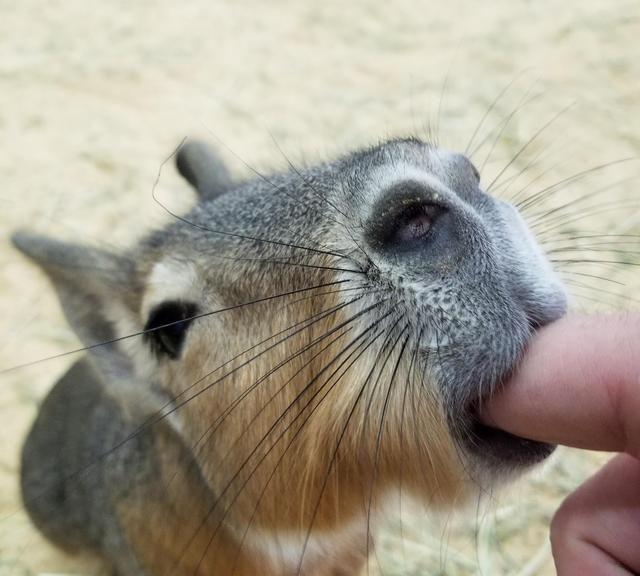
As the name suggests, the capybara spends most of its time in the water. It can breathe by exposing half of its face. The capybara has many nicknames. Because it looks like a rat, it is called the largest rat. Its face is a bit like a hippopotamus, and because it lives in the water, it is also called the South American hippopotamus.
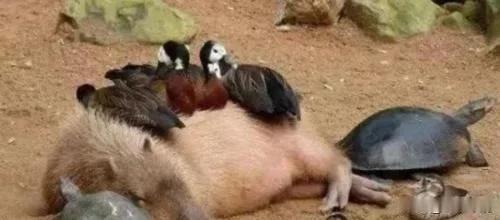
When facing humans, even if it holds a lethal weapon, it will not proactively attack. Its body radiates love and intimacy to all animals. When it looks at you with four eyes, as you slowly extend your finger or head, it will actively approach and kiss you.
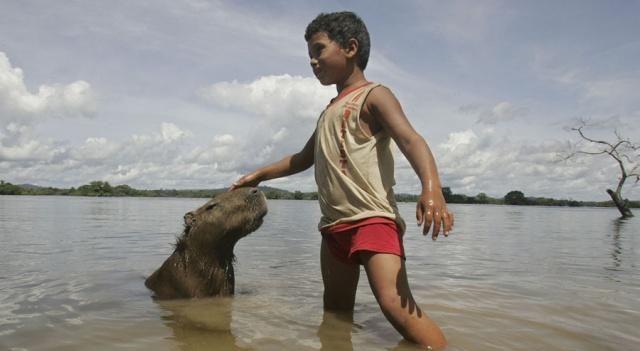
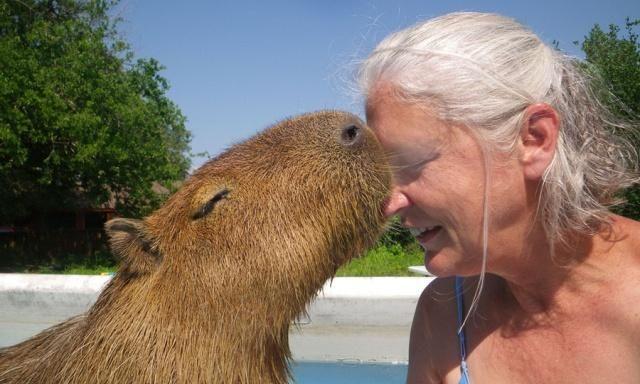
If you hold a delicious piece of food, the capybara will behave like a normal animal, circling around you with its two small eyes. If you put it in its mouth, it will eat it with a humble attitude.
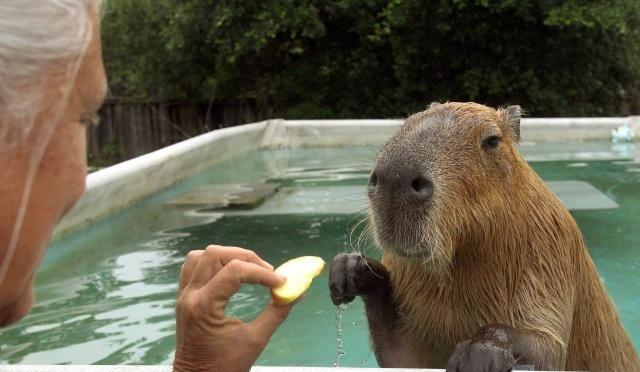
Every capybara is so gentle and kind, full of respect for the world around it. Capybaras face humans and all animals with a humble and orderly attitude. Was it because they don’t have a bad temper and like to ‘accept adversity’ that other animals consider them good friends? To reveal this question, humans have studied and interpreted its life experiences.
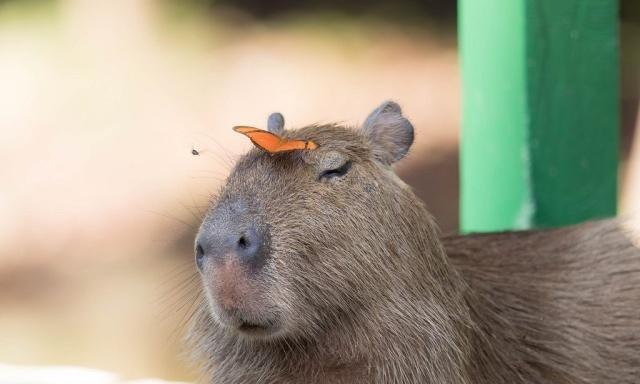
The capybaras, which mainly eat aquatic plants, are identified as vegetarians. For example, water hyacinth, which once threatened the freshwater ecosystem of South America, was well-controlled thanks to the presence of capybaras. However, in some places where aquatic plants are scarce, they also “steal” crops, eating humans’ rice, vegetables, and fruits.
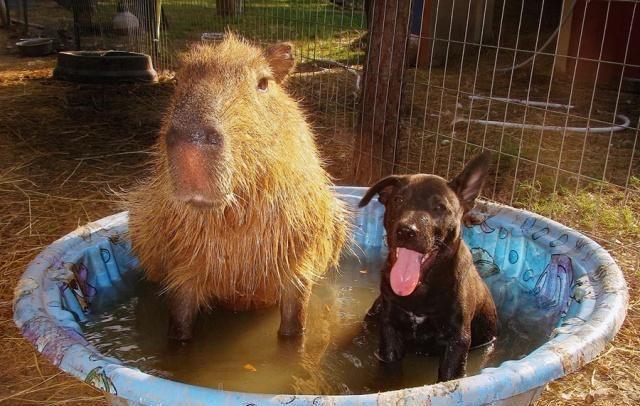
It likes to relax and doesn’t like to fight. Even when facing danger, it will dive into the water, only exposing its nostrils, eyes, and ears to observe what’s happening.
According to the rules, animals without protective abilities are likely to go extinct, but why haven’t capybaras, except for farmed capybaras killed by humans and wild animals, been listed as protected animals?
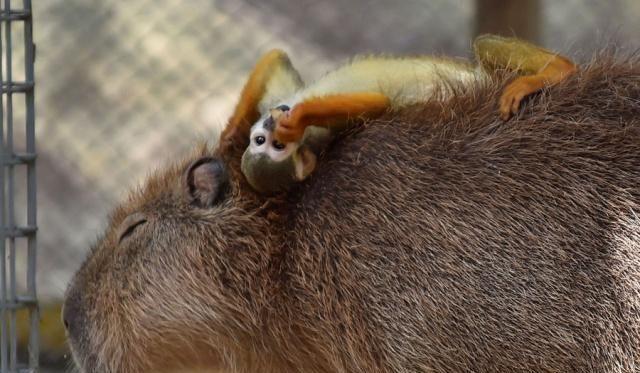
Their reproductive capacity is too strong.
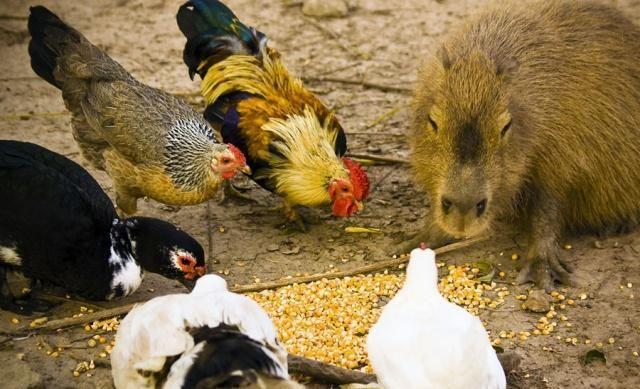
Female capybaras give birth once every six months, with 3-8 babies each time. Newborn capybaras can eat grass within a week, and they adapt quickly.
Although they can eat grass at a very young age, this can only be considered ‘supplemental food’, and within four months, young capybaras still need to drink milk. However, this isn’t necessarily from their mother’s milk; as long as they encounter female Yangtze river dolphins during breastfeeding, young capybaras will not hesitate to ‘greet’ them, open their mouths and suck a few mouthfuls, this may be an advantage of family clusters.
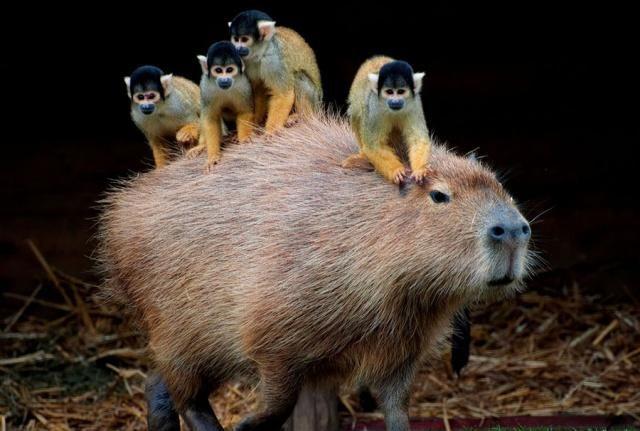
Due to its calm and stable temperament, and its irritable character, the capybara has gradually become a favorite of animal lovers, even ‘ridden by thousands of people’. This phenomenon is especially common in zoos.
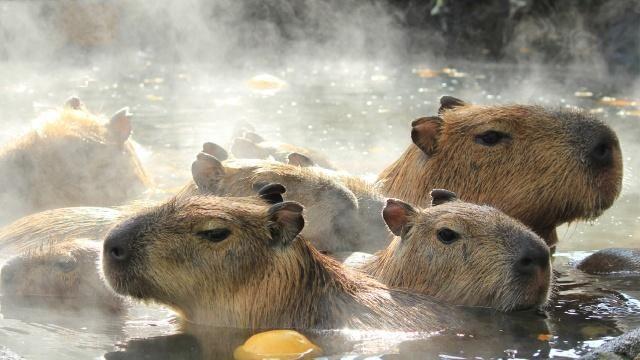
Capybaras are very easy to raise. It doesn’t have any conflicts whether it's raised with any animal, and it's not excluded, it’s also loved by other small animals. Even ferocious crocodiles won’t harm them. When crocodiles open their mouths wide, the capybara still lies beside them quietly eating grass.

Therefore, the capybara is considered by scientists to be one of the most peaceful animals in the world. Anyone can be its friend, even its enemies.