Why Don't Vultures Get Sick?
The vulture is a symbol of death and disease in many cultures around the world, so vultures have a bad reputation. However, as nature's cleanup crew, vultures play a crucial role in reducing the spread of death and disease for humans.
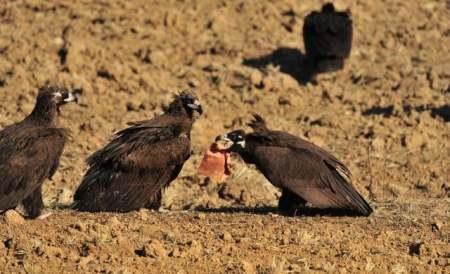
We know that many animals in the natural world feed on carrion, and vultures are unique in that they not only eat carrion but also eat carrion infected with viruses. This is something that almost no other animal in the animal kingdom can do, and they are picky, not eating meat with viruses. Experiments have shown that vultures have an immunity to botulism, and they can happily eat carrion containing anthrax, which causes anthrax; eating animals infected with rabies, swine hog disease, and many other diseases is no problem either. These diseases would cause fatal harm to most carrion-eating animals.
So how do vultures do this? Why don't they get sick?

Vultures are able to comfortably eat diseased carrion largely due to their highly acidic gastric juices, which are very powerful and can basically kill most bacteria and viruses.
You may remember from high school chemistry that pH value ranges from 0 to 14, with 0 representing strongly acidic substances, 7 representing neutral substances, and 14 representing strongly alkaline substances. The pH value of human gastric juices varies depending on the food they eat, but it usually remains between 1 and 3. In contrast, the gastric acid of the Turkish vulture (one of the most resilient members of the vulture family) has a pH value of almost 0. Does the difference not seem small? We need to know that pH is a logarithm, which means that for every pH value below 7, it is 10 times higher than the previous value.
In other words, in extreme cases, the gastric acid of a Turkish vulture is 1000 times that of human gastric acid. Its acidity is so strong that it can dissolve many metals (the pH value of battery acid is about 0.8). Even if some bacteria manage to survive in the stomach of a Turkish vulture, these bacteria are still subject to the vulture's strong immune system. Vultures are considered to have 'the most powerful immune system of all vertebrates', and diseases that can threaten vultures through food transmission are basically none.
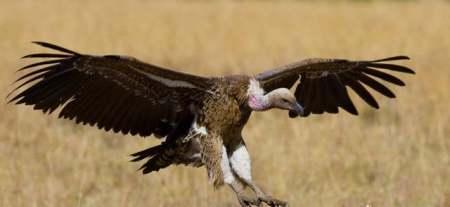
Why can't humans do the same?
It is certainly related to evolution! In the history of vultures, they have been dealing with rotten, disease-filled meat all the time, so over time, those ancestors who could perfectly handle carrion gradually took control of the vulture gene pool. With continuous genetic selection and optimization, vultures were able to eat more carrion without any adverse consequences.
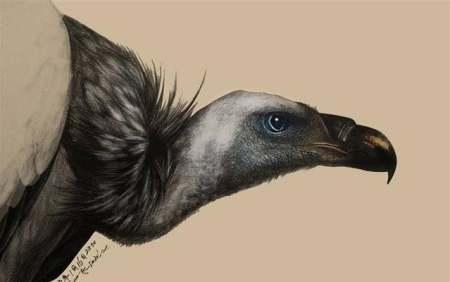
Humans, on the other hand, haven't developed in this direction. Although humans can eat fresh meat and our gastric juices are strong enough to kill many types of bacteria, our stomachs cannot handle certain types of bacteria. Humans spent thousands of years discovering that cooking meat could avoid being harmed by certain bacteria, and vultures must have spent thousands of years adapting to feed on carrion.
Of course, the fact that vultures are so 'tough' doesn't mean they can eat everything. Some meat is too rotten for them to eat, but this doesn't prevent vultures from cleaning up the garbage in nature. They can eat bones instead of meat. And this diet is more effective than meat because the calories in bones are higher, and bones can be stored indefinitely, unlike meat, which decays. After the meat disappears for a long time, the bones left behind are still delicious for vultures.
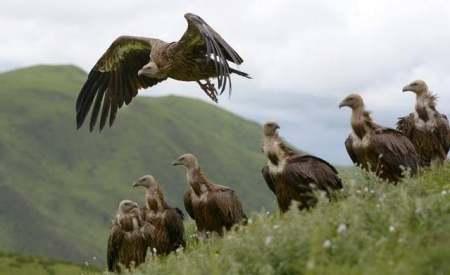
Vultures can prevent the local spread of disease.
Perhaps the most surprising thing about vultures is that, despite being considered carriers of pests, experts believe the opposite is true, and they have observed that when vulture numbers decline in a region, the incidence of disease often rises, sometimes even sharply. Why is this?
We have said that vultures' digestive systems kill most bacteria in carrion, making them 'terminal hosts'. If a vulture eats a sick animal, the spread of the disease will end here. In addition, vultures like to peck the corpses clean, which means that in areas with a high concentration of vultures, the risk of disease transmission from corpses is relatively low.
Without vultures, diseased carcasses would be eaten by other indiscriminate animals that cannot handle bacteria, and spread bacteria along with them.
Furthermore, when vultures feed, they also urinate frequently, with highly acidic excrement, which kills bacteria attached to their legs. It also disinfects the area around the corpses, preventing the spread of disease.