Research Reveals Bumblebees Enter ‘Economic Mode’ When Carrying Heavier Cargo
According to foreign media reports,The Bumblebee's mission is to regularly transport honey equivalent to its own weight, and they need to use their energy wisely during return trips to the hive.To better understand the performance of these miniature flying elevators, scientists at the University of California, Davis, observed these insects while they flew using high-speed cameras, and they discovered that bumblebees enter an 'economic mode' when carrying particularly heavy cargo.
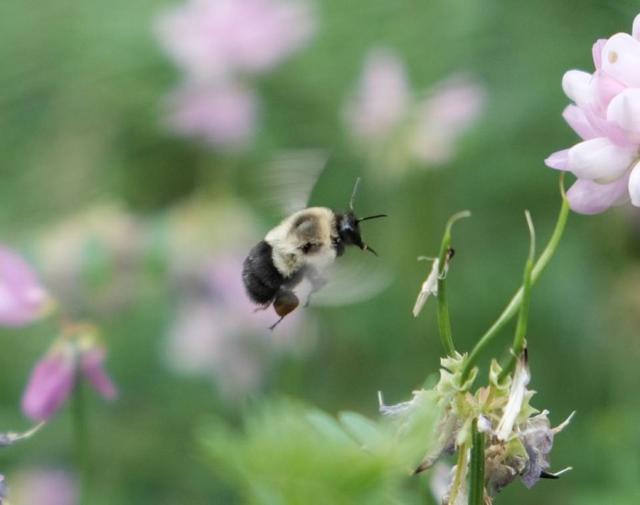
Research report author Susan Gagliardi stated that bumblebees can carry 60%, 70%, or 80% of their own weight in the air while flying. 'We were curious about how they did it and how much energy they needed to bring food and supplies back to the hive.'
To this end, Gagliar and her colleagues conducted an experiment to measure the energy consumption of bumblebees during flight. Through high-speed cameras, the research team discovered that bees, under heavier loads, would adjust their flight in several ways. Their response was to increase the frequency and impact of flapping, that is, the distance of the wings flapping, to generate more lift and handle the extra weight.
However, what surprised the scientists was one slightly different flight mode, which allowed them to fly with less energy under a load. It is currently unknown how bumblebees achieve this 'economic mode' of flight. Researchers suspect that this may involve twisting the wings between flights.
Research paper co-author Stacey Combes pointed out that the heavier the cargo carried by the bumblebee, the more economical the flight, but this has no meaning in terms of energy.
Researchers know that bumblebees are selective about when they enter this energy-saving mode: they increase the frequency of flapping their wings when they are rested or carrying lighter items, which may be to improve performance such as increasing stability; while when they carry a heavier load, they enter this mysterious economic mode, which seems to increase or reduce the frequency of flapping wings in a very small amount to carry the extra weight.