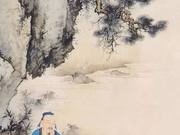
Waiting for the Next Spring
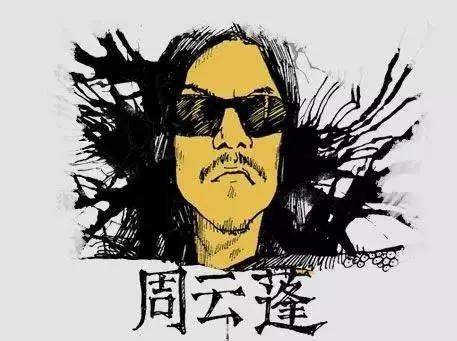
Zhou Yunpeng is special, his voice is deep and restrained, his lyrics are poetry, even though he is not young anymore, his works don't seem to cater to young people, but his listeners are mostly a relatively young group. He is one of the best folk singers in China, or perhaps the best.
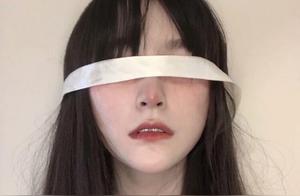
On a spring night, hearing Zhou Yunpeng's version of 'Spring Song', the eyes, nose, and ears that had been dormant throughout the winter seemed to have been penetrated, recalling Su Dongpo's exclamation 'Ear to it to make a sound, eye to it to make color' when he was traveling along the Red Cliffs. It's hard to imagine that a blind person could have such a shaping power, yet he was actually a blind man. Even though he had boundless expanse before his eyes, his heart was more vibrant and colorful than many sound-minded people.
Zhou Yunpeng is not the original singer of this song. The lyrics originally came from the Buddhist scriptures of Song Hui-kai, which were then adapted by He Xitian into the style of Jiangnan folk songs. On the inauguration ceremony of the reconstruction of the (Leifeng Pagoda), he and over 800 people sang this song together. 'Spring has a hundred flowers, autumn has the moon, summer has cool breezes, and winter has snow. If there is no idle affairs in your heart, then it is the best season in the world.' These four sentences are repeated over and over again, with a grand momentum and a distant Buddhist feeling. It's a great way to quiet your mind during noisy days.

Zhou Yunpeng added lyrics to the original version, incorporating two poems by Liu Yuxi, 'Ukiyo Lane' and 'Bamboo Branch Essay'. This not only preserved the original quiet Buddhist flavor, but also added a touch of folk music style.
A person can sing a song so leisurely and spacious, he certainly isn't a gloomy person. In 1994, Zhou Yunpeng was still living in the painter's village in Beijing's Yuanmingyuan, and he was a blind folk singer selling songs on the street. Unlike those pretending blind singers we often see at entrances and exits, who use emotional songs to enhance their lives—there's no intention of discrimination here. This kind of living by one's own skills is far more dignified and respectable than those who seek attention by begging for money.
But from a musical perspective, Zhou Yunpeng and they are different.

At that time, Zhou Yunpeng was also selling songs on the street. He could sing Rudy Lo's songs, and choose songs based on his own interests. If he had a good day's income, he would buy wine and food to take home. Drinking and poetry were his favorite way to spend his time, it seemed like he had no worries in his life, and it deserved to be celebrated. After all, only a small number of people encounter major misfortunes and lucky events. The majority of people can live their lives peacefully, and if they can appreciate the true taste of life in that, it's a great pleasure.
During the Wei Dynasty, there was a trend of diluting things, and Zhou Yunpeng's temperament matched this. 'Diluting and not losing substance'—it's a fitting description. When he covered other people's works, he didn't have a strong intrusive feeling, but naturally formed his own atmosphere, distinct from the original song. Besides 'Spring Song', his other well-known covers include 'September' by Zhang Huesheng.
In 'September', Zhou Yunpeng created a vast and sorrowful atmosphere, just like Hai Zi's words. It gave the song a more weighty historical feeling. At the time, 'September' was almost lost because of Zhang Huesheng's sudden death, but thanks to Zhou Yunpeng's preservation and further processing, 'September' has become an unchallengeable classic in Chinese folk music.
Good works have their own style and can be given different flesh and blood by different singers, creating different tastes.
Good Brother band also covered this 'Spring Song'. Compared to the two previous versions, Good Brother's version had more urban flavor.
As Good Brother's popularity increased, the play volume of the two previous versions also increased. In the NetEase Cloud Music, there were comments like 'Good Brother's 'Spring Song' come to check in' about Zhou Yunpeng and He Xitian's version of 'Spring Song'—it seems that the older generation who first heard 'Spring Song' from him, then learned about He Xitian's version later.
Likes and books are private things, they contain all the emotions and mood at that time, and unconsciously, the melody has already reflected your emotions before you realize it. Therefore, different versions of the same song will be needed in different heart states.
Ultimately, good music should be shared and listened to by more people—it's a treasure of the work.