Don't Burden Yourself with Time's Debt: Forcing Time's Pace Ultimately Leads to High Costs
Understanding the inherent instability of things requires experience. A wise and experienced person wouldn't be deceived by the seemingly eternal surface of phenomena, and can even anticipate the direction in which things will develop to some extent.
However, ordinary people tend to view the current state or direction of development as permanent, leading them into a state of illusory self-numbing. If one comprehends Li He's poem, 'A young man wishes to remain a boy forever; the sea's waves still transform into mulberry fields,' one can understand the profound inner workings of time and change.
People can predict the potential changes in things over future time, but shouldn't demand those only time can deliver in the present.
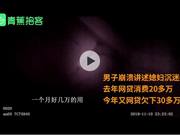
This premature gratification is like high-interest lending; time will ultimately demand double the repayment. Just as a patient can recover through long-term conditioning or medication, a quick recovery is often superficial and doesn't address the root cause, which can resurface repeatedly.
The former is about waiting for time to give, while the latter is about preempting time. Waiting for time's gift is about following the rules, accepting nature, and embracing the concept of '' (shun – harmony). Defying and opposing nature is inevitably the beginning of misfortune.
In conclusion, don't incur time's high-interest debt; forcing time to accelerate will ultimately result in a far more costly reckoning.