Zhuangzi: Breaking Free from Conventional Cognition to Achieve True Freedom of the Soul

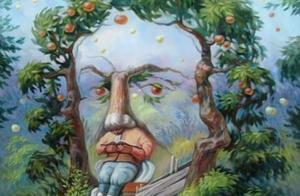
Philosophy has a concept called the 'Cave Illusion'.
The meaning is that everyone lives like they are in a cave, constrained by the environment, customs, and education, and because of their limited experience and narrow perspective, they habitually view the world from their own angle, and believe their views are a standard.
It's just like a frog at the bottom of a well, unable to see the vastness outside the well. Because of his cognitive limitations, he always lacks respect for others' enlightenment.
This is not a problem in itself; 'cognitive limitation' is a state that everyone exists in. However, one should not use their limited cognition to judge the world. A person's biggest mistake is that they cannot begin by objectively recognizing the world.
There is a poem that says: 'Without recognizing the true face of Mount Lu, it is because you are in that mountain.'
A person goes to an ancient architectural scenic spot and walks around the attraction, first from far to near, then from near to far. However, from any angle, they cannot see the entire panorama of the scenery.
Suddenly, he hears a flock of wild geese flying overhead, and he realizes that from the perspective of the geese, overlooking the scenery from a higher and more distant angle, he can observe the entire face of the scenery. Therefore, to recognize a thing, you cannot only stand from your own perspective, but you must escape your current limitations and gain a more distant and higher perspective to grasp the whole picture.
In the Buddhist tradition, there are three stages of practice: when starting to practice, you see mountains as mountains and water as water; after practicing for a period of time, mountains are not mountains and water is not water; after practicing enlightenment, mountains are still mountains and water is still water.
And the state after the final enlightenment is not returning to the starting point, but knowing how to recognize the essence of mountains and water, rather than standing from one's own perspective to judge the external world's state.
'Zhuangzi' contains a passage like this:
'Things such as( and wealth) are not worth pursuing, humiliation and punishment are not worth being ashamed of. Knowing the difference between right and wrong, distinguishing between big and small, there are no standards to delineate. It is said: 'The Sage does not hear, the Highest Virtue cannot be achieved, the Great ones have no self.' The difference between things is almost to the point of no distinction.'
In life, the subjective consciousness behind what drives a person to recognize a thing and make a decision at a critical moment is their subjective consciousness.
We use our subjective consciousness to define things as good and bad, and excessively reject bad things, excessively pursue good things. However, many 'good' and 'bad' things are merely the normal state of the natural laws of heaven and earth, they are not worth adding our own thoughts and feelings, because this will bring us inner noise and pain, and will not have any effect on our lives.
Therefore, Zhuangzi proposed: '( and wealth) and (wealth) are not worth pursuing, humiliation and punishment are not worth being ashamed of.'
Everything in the world is not worth judging with our narrow, subjective thoughts, to avoid human foolishness and arrogance.
True wisdom is the ability to put yourself in a higher realm, transcend worldly cognition, to find one's inner and soul's true freedom, therefore, the Sage forgets himself.
Written by: Guoxue Shushe (National Studies Book Repository)
Reflect on National Studies wisdom, feel the ancient culture, understand a different world, see a different life.
|