Strengthening and Solidifying Your Major Choices Through Small Choices

Tell me, when was the last time you wanted to completely change yourself, change your life?
Do you remember? One day you suddenly hated your muddled state, you decided you wanted to change. You bought a lot of books, made a lot of flags, you were full of fighting spirit and confidence, wanting to transform into your ideal self.
After a week, the passion faded, and your life returned to normal.
Whether it's fitness and dieting, or daily writing, or early morning check-ins, or reading plans... every time you try, you become even more diligent, but every time you mysteriously return to where you started.
You may have different excuses to stop or give up... You don't know what the reason is, it's as if our lives lack something that supports us to continue moving forward and constantly changing.
What's the problem exactly?
The way we solve problems is a pattern of planning—persistence—giving up—planning again—persistence—giving up. This is essentially a problem-solving approach.
When we try to solve a problem, we take action to avoid unwanted results. But once the action is effective and the problem is relieved, we don't take any further action, we become complacent, and the problem returns.
This is like swinging on a swing, going back and forth, so you often put in a lot of effort but don't see obvious results.
Let's take the example of losing weight. At the beginning, you decided to control your diet and exercise, which is not wrong, right? The desire to have a good figure motivated you to take action. However, there's also an opposite force—the force of indulging in what you want to eat and not exercising—which is equally strong. These two forces struggle in the middle, and you're caught between them.
When you move towards 'desire,' there's a restraining force behind you, and when you move towards 'relaxation,' that restraining force tightens. Every time you move forward, you have to put in a lot of effort. If you're not careful, you'll be bounced back to where you don't want to be.
So you give up, starting to indulge, indulging to a certain extent, and then you feel guilty and disappointed, and the desire returns stronger—this is why most people relapse and give up for a while, and then start trying again.
It seems like most of your self-change attempts are in this cycle of continuously repeating and looping. It feels like 'swinging back and forth.' Don't you have similar experiences?
Therefore, this ‘problem-solving’ approach is not effective. It makes us rarely think deeply. We often think that it’s our psychological state that affects the outcome. So we keep adjusting our psychology and trying to change the outcome by increasing our willpower and execution.
But the outcome is determined by that ‘swinging back and forth’ structure. In other words,
You must step out of this framework to avoid failing.
To step out of this framework, we need a new structure that helps you unleash your creativity.
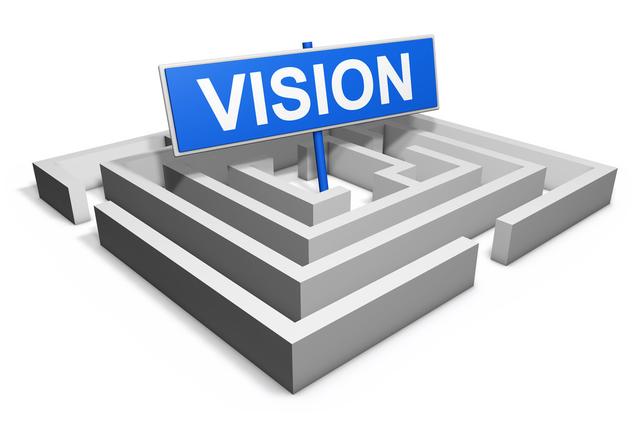
The structure of creativity consists of two elements:First, a clear vision of what you want to create;
Second, a clear understanding of your current situation.
These two elements form a new structural tension. The vision provides you with a strong driving force, driven by what you desire and expect. The current situation drives you to action by what you don't want.
By the gap between the vision and the current situation, you can constantly move forward and create the results you want.
The more clearly you define your inner vision, the more likely you are to create the results you want.
It's important to note that when you create, you need to focus on the results you truly want. All your actions should be aimed at making your desired results happen. At this time, you may not feel the pulling force of the 'restraining wall'.
Let's take writing as an example. In this new structural tension, you have a clear goal: to write a professional book.So, what is your current situation? How many related books have you read? What lectures have you attended related to this professional field? What level of articles can you write? What is your writing efficiency? How do you get interrupted when writing? When you ask these questions, you may start to experience the gap between ideal and reality.
Generally, creators’ tolerance for the gap is higher than most people. They can even see the gap as a powerful force to drive their creativity. So you need to embody the ‘creator’ role, increase your tolerance for this gap.
To start your creative structure, you only need to do one thing: to seriously think about what you want to create, and then carefully observe your current situation. If you have dreams but don't look at the real situation, you will only fail.

Now ask yourself, what do you really want to own?
Once you make a choice, you will continuously make a series of smaller choices to maintain your major choice.
For example, if I want to write a book, because I want to leave my thoughts and experience in the form of words and inherit them to more people who need them, and let more people benefit from it, and let more people be inspired by it, so that I can help more people discover their potential, and use the book to make friends and acquaintances, and let the book become a textbook for the training industry.
The goal should be clear, specific, and achievable. Many goals fail because we rarely seriously look at our situation. Just having a dream without considering the real situation will only lead to failure.Now ask yourself, what do you really want to have?
When you make a choice, you will continuously make a series of smaller choices to maintain this major choice.
Of course, in the actual creative process, you will encounter countless obstacles to reach your destination. The most common obstacle you encounter is that there is a time difference, and there is a reluctance to the situation.Time difference When you just start taking action, you will experience a period of time difference before you can see the results. For example, from the first time you exercise to get a waistcoat, it takes time. From writing the first article to writing a book, it also takes time. And sometimes, we overestimate the distance between us and our achievements, a bit too optimistic.Generally, before you achieve your creative accomplishments, you may experience time differences, sometimes you stagnate, or even seem to move backwards. And we often imagine the distance between ourselves and our achievements is closer than it is, a bit too optimistic.When you take creative action, the results won't appear immediately, sometimes the change has already happened, but we don't realize it. Before you completely achieve your desired result, you may encounter time differences, but don't give up, this is often a crucial time to catalyze your creativity.

Reluctance to the situation Because the situation is not in line with expectations, it's difficult for us to objectively perceive the situation. You need to train yourself to quickly see the situation. Then you can accurately measure the distance between the situation and the goal, and then make a plan and strategy that is both helpful in achieving the goal and compatible with the current situation.
There are four key techniques to help us face the gap between the situation and our dreams:
First, describe your current situation to yourself, report your ability and advantages that support the dream.
For example, regarding writing a book, I can currently write 6000-8000 words a day, when I’m in a good state, I can write 10000 words. In this field, I have years of teaching experience, and I’ve read many related professional books. My accumulation is enough, so I believe I can write a book with valuable content.
Second, predict and organize the obstacles you may encounter during 'persistence,' and rehearse them in advance. When obstacles occur, what measures should you take to respond?
For example, when writing a book, I am easily disrupted when I lack inspiration, I can flip through some related books to rest my brain, and let inspiration gradually germinate in this.
Mathhematician Poincare was stuck on a problem. He took a nap and woke up and got the answer. A chemist found a new discovery in the laboratory, but couldn’t find a formula to explain his discovery. He got on a bus to go to the city for a tour, and as soon as he stepped on the bus, the answer appeared. These phenomena have scientific basis. The brain continues to work during sleep or relaxation, and relaxation promotes brain creativity.
Nature’s principle is that energy will continue to flow along the path of least resistance, so if you want to achieve your goal, you need to find innovative ways to move towards your dream destination.
The clock on the wall swings back and forth, while the rocket is trying to reach its final destination. Wish everyone can find their way to success.
If you like this article, please forward and share it to help more people with dreams.