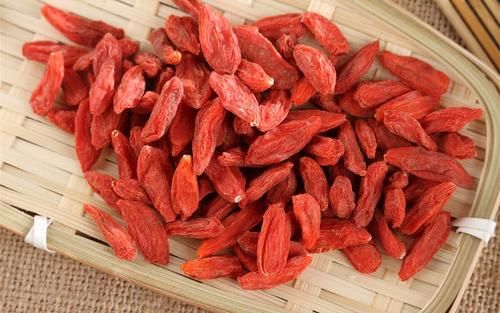
With increasing age, yin and yang both decline, especially when the essence of qi (jing) is deficient, leading to a decrease in moisture in the mouth and easy dryness. Wolfberries (goji berries), with their sweet taste, are renowned as a well-established Chinese medicine for replenishing qi, benefiting essence, nourishing the liver, brightening the eyes, and moistening the lungs and generating saliva. They are particularly effective for elderly patients suffering from yin deficiency and dry mouth. Clothed in the Qing Dynasty, the medical scholar Zhang Xixun described in 'Medical Treatise on Internal and External Medicine': 'Every night, when sleeping, regardless of winter or summer, a pot of cool water is placed at the head of the bed, and whenever waking, a few mouthfuls are drunk. By the time of morning, there is only a small amount left in the pot.'
If a dose of one or two grams of goji berries is chewed before bedtime, and the water is reduced to half, and the patient feels especially calm and refreshed upon waking, as well as having ample mental clarity. Modern research has also confirmed that goji berries can eliminate free radicals, regulate immunity, and slow down aging, and can directly stimulate the salivary glands to secrete saliva.
It is important to note that dry mouth in the elderly can also be caused by other diseases, such as diabetes. Some elderly people, due to various factors, long-term anxiety and loneliness, and mental stress, can lead to a decrease in saliva secretion. It could also be due to taking certain medications, such as bronchodilators, Parkinson's disease medications, and antihistamines. Dry mouth in women may also be a symptom of Sjögren's syndrome, accompanied by dry eyes. If chewing goji berries is ineffective, it should be mindful of other possible causes, further examination and exclusion are necessary.