Just now, you were taking pictures of the ‘Supermoon’, and he was already counting the lunar maria (craters) ...
According to scientific predictions, on March 10th at 1:48 AM Beijing time, the Sun, Earth, and Moon will align in approximately a straight line, at which point the Moon will be at its fullest. The Moon's distance from Earth will be approximately 35.74 million kilometers. On March 10th at 2:30 PM, the Moon's distance from Earth will be slightly closer, reaching 35.72 million kilometers. The time when the Moon is the fullest and closest to Earth differs by less than 13 hours, which is unusual since these two time points usually differ by less than 24 hours, and both can be called 'Supermoon'.
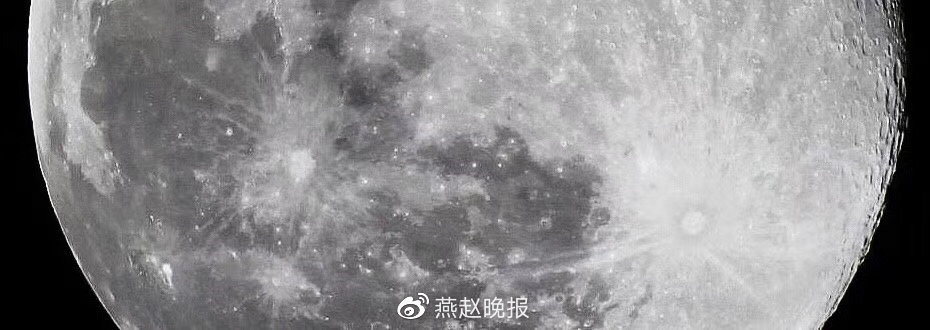
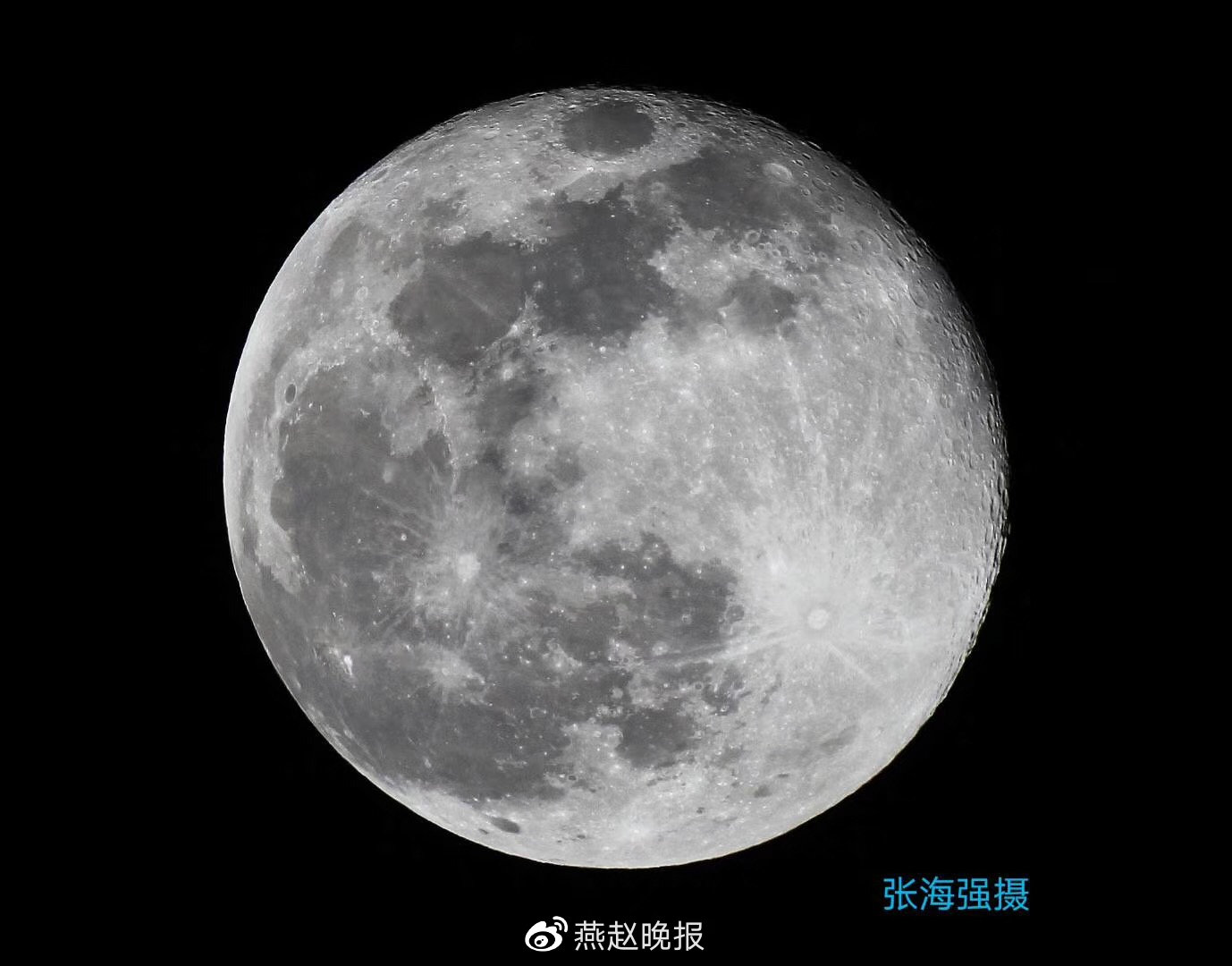 The picture shows a Supermoon photographed in Shijiazhuang at 10:00 PM on March 10th.
Astronomers say that the 'Supermoon' occurring on the 10th will be smaller and less bright than that on April 8th, because on April 8th, the Moon's distance from Earth will be closer. However, from the perspective of enjoying the moon, the Supermoon on the 10th will still look very bright.
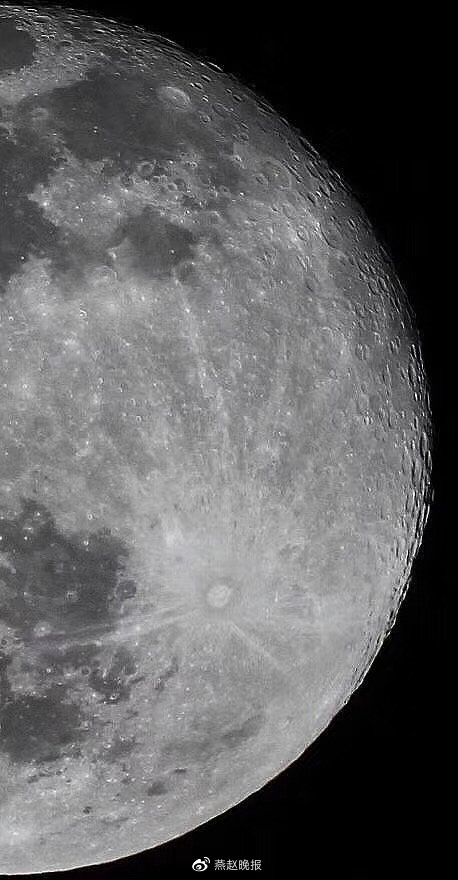 The picture shows a Supermoon photographed in Shijiazhuang at 10:00 PM on March 10th.
People can start to notice the round Moon slowly rising from the northeast starting on March 9th. The evening of March 10th is also a good time to watch the Supermoon. A Supermoon is a phenomenon that occurs when a full moon, the Moon is located near its closest point to Earth. Because the Moon orbits the Earth in an elliptical orbit, the distance between the Moon and Earth is constantly changing, so when the full moon occurs, the Moon is closer to Earth, and the full moon people see is larger. Many astronomers believe that from a scientific point of view, calling this 'Supermoon' a 'perigee full moon' is more appropriate. Supermoons are not rare, and they occur several times each year, and the largest 'Supermoon' of this century appeared on November 14, 2016.