Did Juri Tingyi Chew a Piece of Bread 32 Times? You'll Look Ugly If You Try!
Recently, Juri Tingyi’s habit of taking 32 chews per piece of bread has topped the hot searches, causing a lot of comments.No wonder celebrities are so thin.Comments like this.

Netizens enthusiastically posted emoji comparisons of female celebrities’ eating habits.

Comparing their eating with their own, the comparison is full marks.

Everyone knows that in the entertainment industry, female celebrities often restrict their diet and engage in excessive exercise in order to look slimmer.

The previous record holder for taking two minutes to eat a few pieces of bread was Dilraba.

She took a small biscuit for more than ten minutes in ‘A Wonderful Life’!!!!
I can finish a small biscuit in two bites, it makes me really question life!!!!

There are even more exaggerated cases in the promotional activities for ‘Produce 101’ where Cai Xukun chewed shrimp dumplings for 97 chews!!!!

Is it really necessary to chew a piece of bread for 30 or 40 times?
Actually, as early as 2003, scientists conducted relevant experiments.
They recruited 21 participants, each of whom ate a pizza the same size, with Group A chewing only 15 times and Group B chewing 40 times before swallowing.

The results showed that
The group that chewed 40 timessubjective feeling of hungerwas less, stronger satiety, and higher insulin concentration.
Simply put, the more you chew, the less likely you are to get hungry.
Why is this the case?
Because the finer the chewing, the smaller the food particles will be, and the faster the salivary enzymes will react with the starch at that time, leading to an increase in glucose and insulin concentration, which is a natural thing.That is to say, after chewing slowly and deliberatelyobjective feeling of satiety
is also increased.
Seeing this, you may already involuntarily say, ‘Look, Juri Tingyi’s way of losing weight may really work!’
Wait, the experiment is not over yet.
After finishing the pizza, the participants were asked to rest for a while before continuing to eat pasta, and they ate pasta without restrictions, chewing an unlimited number of times, until ‘they were full’ before stopping. The result was that both groups ate almost the same amount of pasta.
This shows that
Although chewing a lot can increase satiety, it doesn't necessarily reduce the total amount of food consumed.

That is, the more you chew, the more you can eat, and it won’t make you less hungry.
Therefore, even if you can chew bread 33 times like a star, can you only eat one piece of bread per meal? Can you not drink milk tea? Can you not eat snacks?
Moreover, increasing satiety doesn’t help with weight loss, and it can also make you look uglier!
Why is this the case?
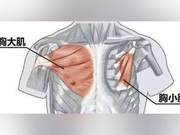
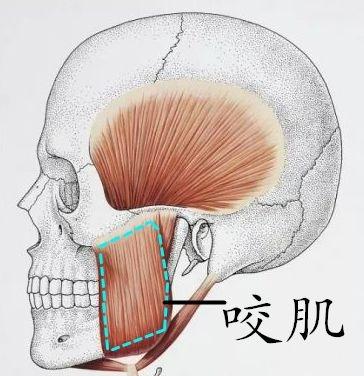
This leads to the masseter muscle in the face▼

Friends who don’t know where the masseter is
can squeeze their teeth to find the muscular, protruding place▼

Everyone knows that the more you train muscles, the more developed the masseter muscle will be. Eating gum and chewing hard things will cause the masseter muscle to become overly developed.

A large masseter muscle will become a square face▼
Because such repeated chewing movements are so unnatural.
Therefore, Juri Tingyi’s way of losing weight is useful for increasing satiety.

Because eating slowly has many benefits: increasing satiety, reducing appetite, promoting digestion, delaying glucose increase, and helping to relieve abdominal burden.
But it's really unnecessary to chew so many times!
Here’s a small tip for a slow and deliberate meal:
1. Don’t worry about the number of chews, just take at least 15 minutes for each meal.
2. Don’t gobble up your food.
3. Eat more coarse grains and develop a habit of chewing slowly and deliberately.