The Benefits of Single-Leg Training Are So Many, Yet You Might Be Ignoring These Details?
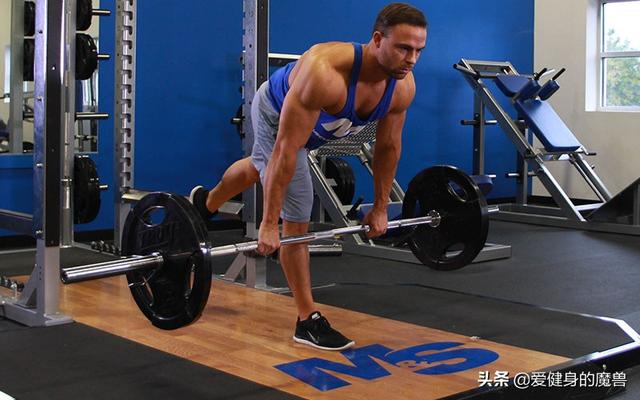
Instead of looking at your arms, look at your back, and surely the most heart-wrenching phrase is: look at your legs.
Don’t train your legs and you’ll regret it later. About 70% of your total muscle mass is in your lower body. When you train your legs, not only will it stimulate muscle growth in your legs, but it will also stimulate your body to release more growth hormone, which will stimulate overall muscle growth.
Furthermore, leg training is never ‘isolated.’ Training your legs will also stimulate other muscle groups, such as the back muscles and core muscles, to improve the efficiency of strength training.
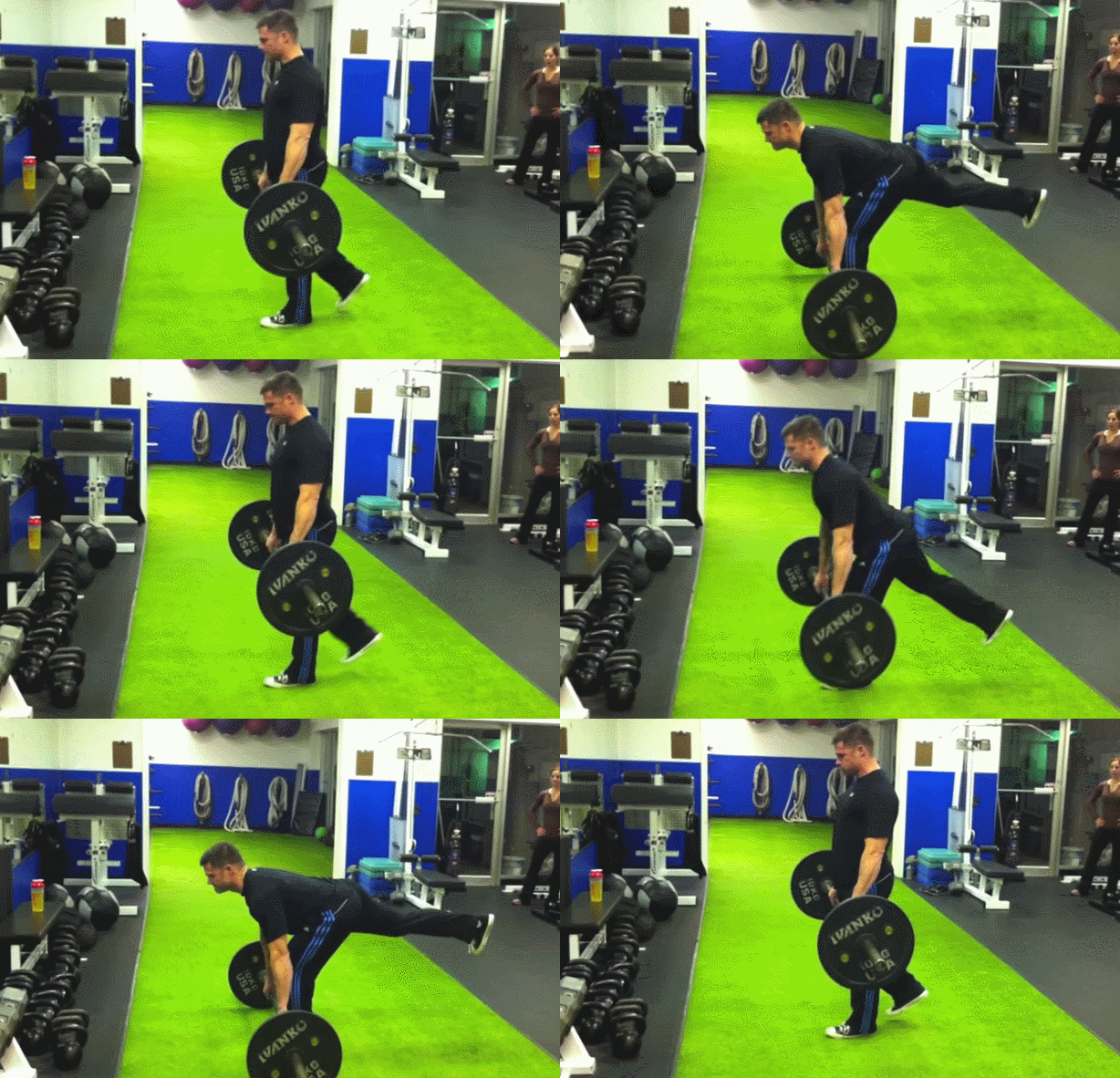
However, leg training has a classic movement that is not just a simple strength training movement.It encompasses flexibility, stability, movement control, strength, and power.If your squat hits a bottleneck, you can try this movement to adjust.
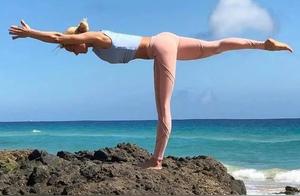
It is single-leg deadlift.
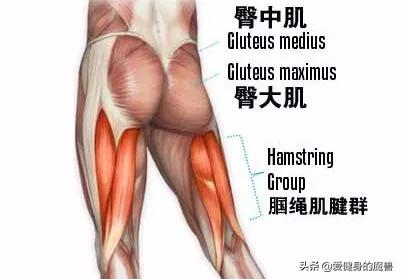
The glutes are made up of three muscles: the gluteus maximus, gluteus medius, and gluteus minimus. The glutes are a core component of the ‘posterior chain’, which also includes the hamstring muscle on the back of the thigh, the lower back muscles, and other muscles on the back of the body.These posterior chain muscles work together to maintain an upright posture, while both dynamically and statically maintaining balance. Furthermore, having strong posterior chain is a safeguard for healthy lower back.
Step-by-step instructions
You need an area where you can fully extend yourself. Place a kettlebell in front of you.
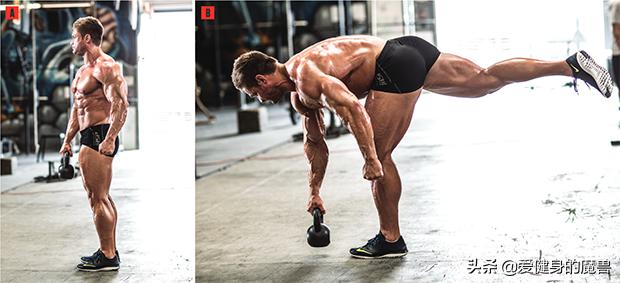
1. Stand upright, with your feet firmly planted on the ground, your legs straight, and your upper arms hanging at your sides.
2. Stabilize one leg and slide the other back, allowing your torso to move forward.3. The hip joint is the axis.As long as you lose balance during the movement, just tap the leg you’re lifting to the ground to regain balance.
3. Maintain a stable, fully extended leg or slightly flexed leg , lean forward to the point where your finger touches the kettlebell handle. Then, grasp the kettlebell handle.
4. Use the pull of the posterior muscles—hamstrings and glutes—to complete the movement.
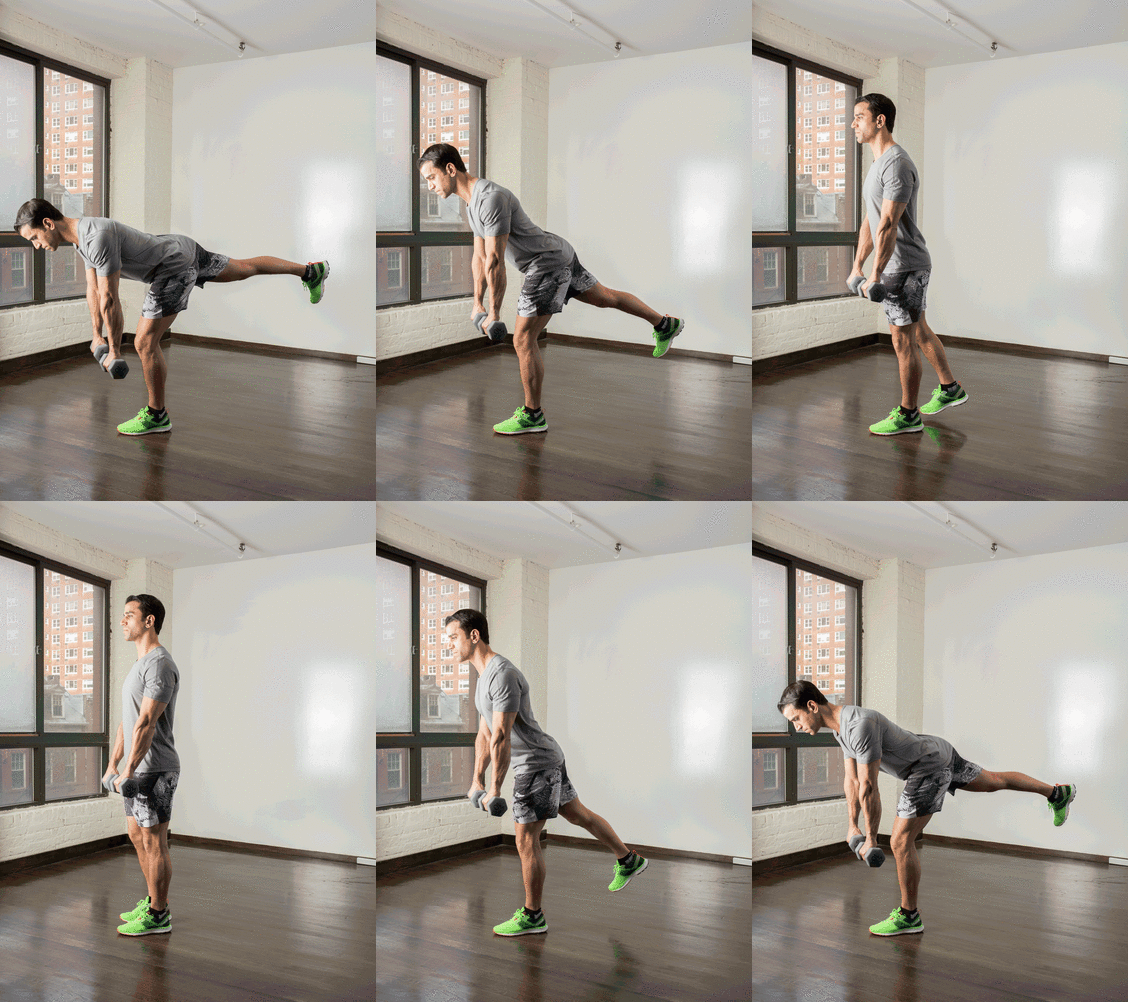
5. Maintain an upright body and support the fully extended leg to complete the movement.Ensure your hip joint has a full range of movement, with the glutes contracting.
6. Make short pauses during the movement to ensure balance, then slowly lower the kettlebell to the ground.
Perform 5 repetitions per leg with a small to medium weight, then gradually increase the number of sets and repetitions.
Common mistakes
Avoid these mistakes to maximize the effect of this movement and prevent muscle strains
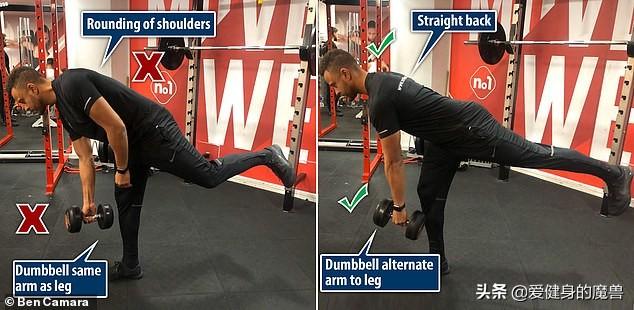
Arching your spine or hunching your back
Your body should be a straight line, without any bending or arching of the spine. Arching your spine can cause back pain and reduce the amount of force exerted by the gluteus maximus, which is contrary to your goal.
Curling your back leg
Your back leg should be straight, forming a line with your spine. Curling your back leg may cause your back to arch.
Adjustments and Variations
You can complete the movement in different ways to make it more effective and increase the intensity.
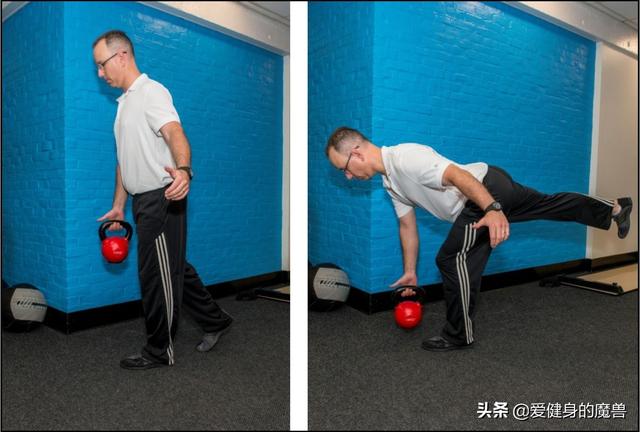
We strongly recommend that you start without any weight to perfect your movements. Allow the mid-range stretch to be felt in the lower leg muscle when your torso drops down to the hamstring. If your flexibility prevents you from leaning far enough, bend the knee of the supporting leg.
Once you are ready to add weight, start with light weights. A recommended approach is to perform 5 sets of 5 repetitions per leg, then switch to a kettlebell with a slightly heavier weight, repeating.
Want a challenge?
Another way is to use two kettlebells. This will increase the total load, so make sure you can master one kettlebell before starting with two.
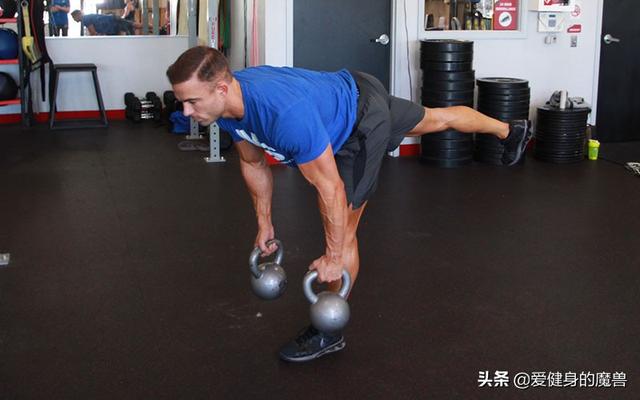
Another way to increase difficulty without increasing weight is to close your eyes. This will force the muscles to work harder to maintain balance.
Safety precautions
If you have ankle, knee, hip, shoulder, or back injuries, consult a doctor and check if it’s appropriate for you to do this exercise. Act according to your ability, and stop immediately if you feel pain.
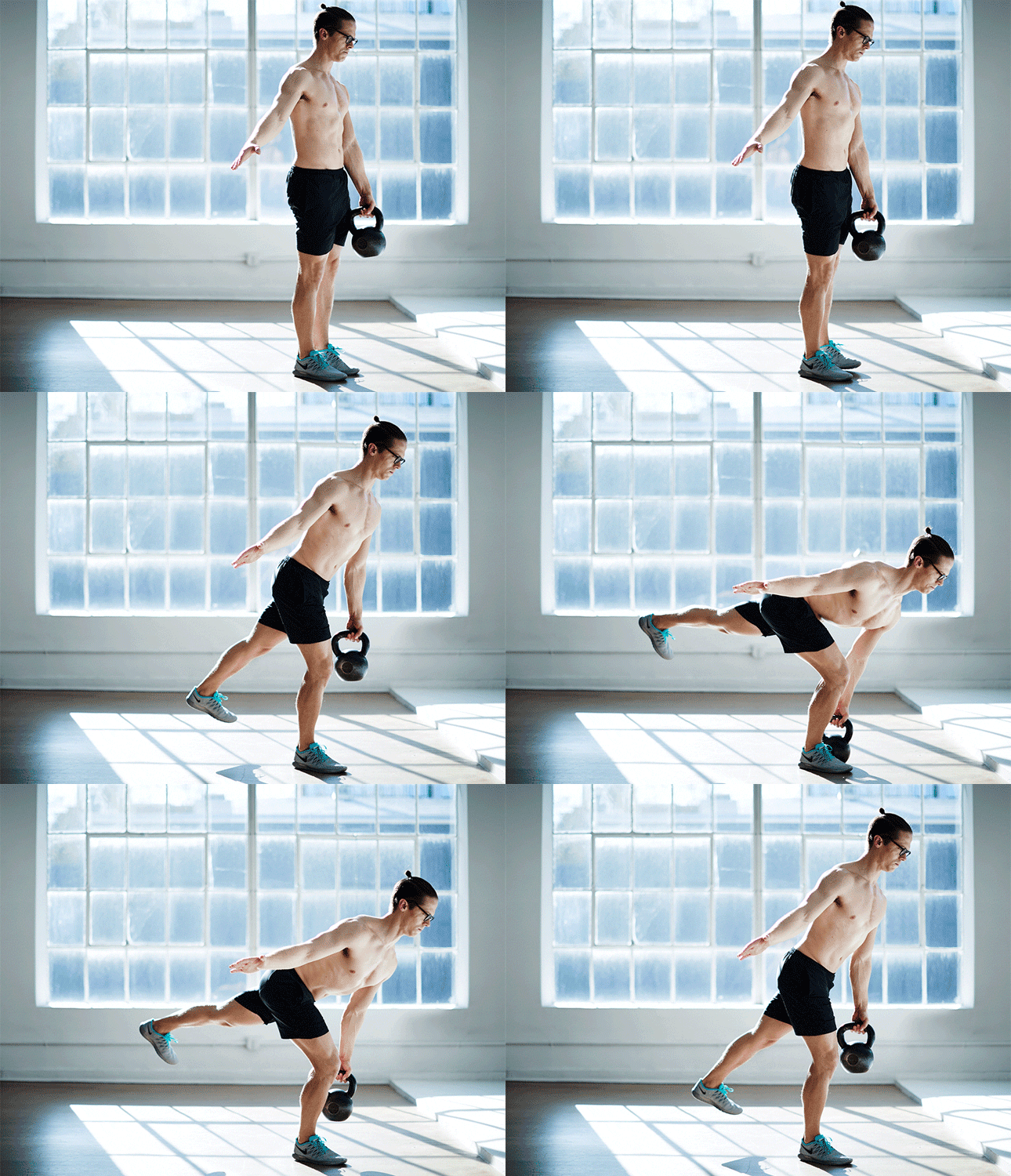
Through single-leg deadlift, your balance will be greatly enhanced, you can not only sculpt and strengthen the glutes, but also increase overall sports ability and overall athletic performance.
Single-leg straight-leg deadlift is a simple yet effective movement that can simultaneously strengthen and sculpt the glutes and improve balance. You can use a kettlebell or dumbbell to do this exercise. Beginners can also complete it with their own body weight. You can incorporate this exercise into your plan to strengthen muscles and sculpt muscles. Perform this exercise after a warm-up for better results.
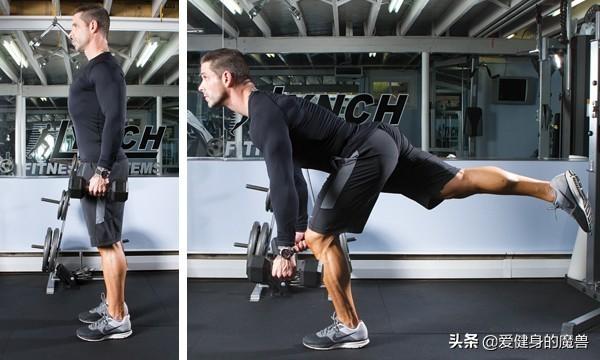
This movement, from stepping down to high-level, you can gradually start with self-weight training, or switch to an Olympic bar to increase difficulty in terms of balance and stability. Pay attention to us, share more fitness tips!