How to Practice Tai Chi Truly Well: Mastering These Three Key Aspects
How to practice to truly master Tai Chi, this is the eternal question and eternal mission for every Tai Chi enthusiast.
It is not that the more Tai Chi forms you learn, the better—as you can often see in parks, a group of Tai Chi practitioners will practice after a musical accompaniment, they finish eighteen essential forms, then old forms, then old forms two, then new forms, followed by Tai Chi sword, Tai Chi knife, Tai Chi fan, one set after another, busy and somewhat chaotic. However, upon closer examination, these people may not have eliminated any diseases, only achieved the effect of movement—Tai Chi can indeed become a fitness project, but the Tai Chi kungfu that truly refines the mind and body and opens up mental wisdom must have its special training methods and paths.
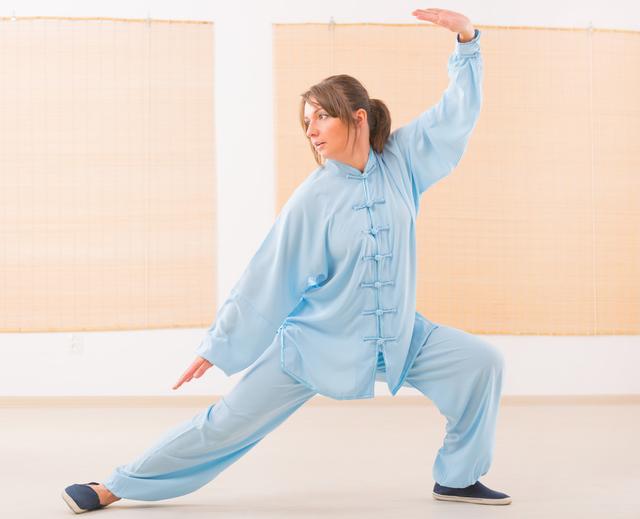
In order for Tai Chi to achieve its greatest benefits, practitioners must first clarify what they are aiming to achieve when practicing Tai Chi, and then, based on their actual situation, diligently refine their Tai Chi skills.
Summarizing the rules learned by seniors to cultivate Tai Chi kungfu, in addition to the principle of forms, inner power and Tai Chi thinking, the principle of three in one must not be neglected, it is also necessary to understand what Tai Chi is. The three key aspects of learning Tai Chi are:
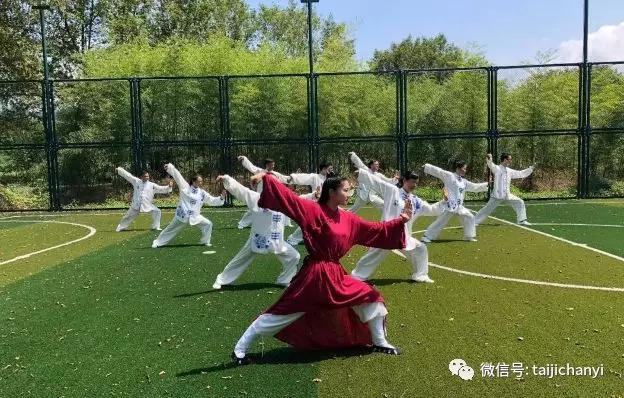
The first key aspect: Reasoning to awaken
1. Reasoning to awaken is the key to whether Tai Chi can be well-practiced. If the reason is not clear, the ancients called it 'blindly practicing without understanding.' Once you understand the principles of Tai Chi and then practice the forms, the practice will be more efficient and achieve better results.
2. Understanding the wisdom of Tai Chi.To understand the principles of no-boundary, Tai Chi, Yin and Yang, and the unity of three in one, focus on one point, and the five steps, and gradually embody them in the practice of Tai Chi, implementing them throughout the whole process of initiating thoughts and intentions in Tai Chi.
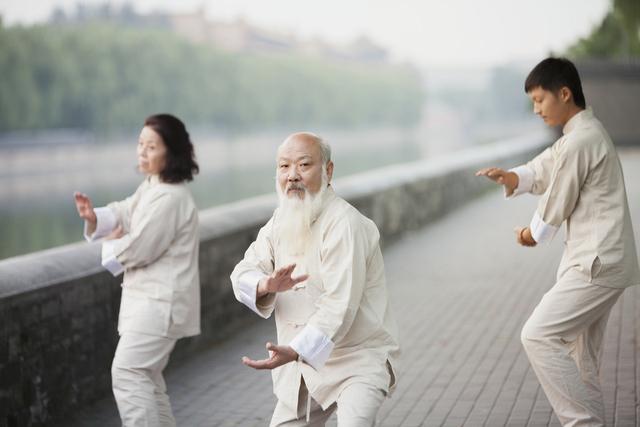
3. Knowing the 'Three Treasures' of Tai Chi.'' – '' means to restrain, to implement every detail, do not use physical force, practice, cultivate, and understand Tai Chi by following the principle of Yin and Yang mutually supporting each other and 'four two pulls thousand'.
'' – '' means to fix, to stabilize, to measure, to naturally, without effort, and comfortably. To comprehend the mysteries within, '' is used as a guide.
'' – '' means wisdom, to use one's mind to practice, through imagery thinking, logical thinking, movement thinking, perceptual thinking, and creative thinking to constantly integrate, to achieve martial arts and literary cultivation, wisdom is paramount. Specifically, in the form of strikes and techniques, 'Mutual cause and effect' must be embodied; inner power cultivation and Tai Chi thinking are incorporated into the forms, achieving 'Unbroken powers and forms' and 'One-as-one Tao.
4. Learn, practice, and understand Tai Chi in stages of gradual progress, and in the path of Taoism's decline.
① Immersively learn and comprehend the knowledge and skills of Tai Chi, master the name, appearance, and principle of Tai Chi—the forms and techniques are endless, this 'learning gradually' stage of learning and practice;
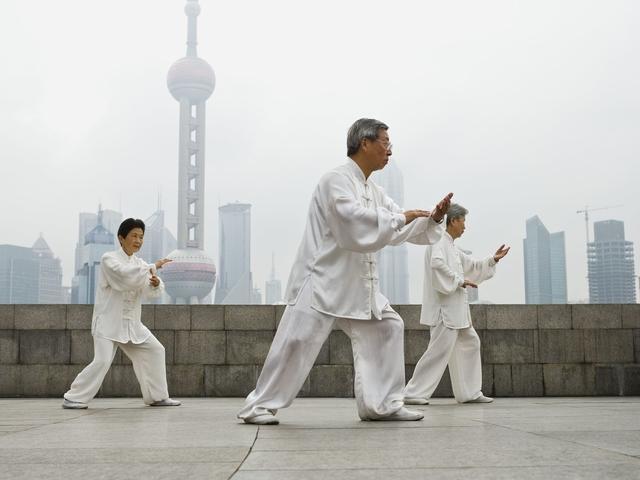
② 'When stillness is born, the heart is produced' – this is the most important content of 'the path declines and the day diminishes.'
This stage, it is necessary to forget the skills and knowledge of the Tai Chi kungfu learned, gradually achieving 'diminishing and diminishing to be without, in order to be without,' ultimately achieving no form, no intention, no thinking, as if Tai Chi is achieved naturally.
The second key aspect: Intent to initiate
Tai Chi is the most refined part of inner home martial arts. What is 'inner home martial arts'? An old master once said: 'Seeking within to achieve innate natural abilities.' Such martial arts are called 'inner home martial arts.'
Based on this understanding, when practicing Tai Chi, we must think in this way.
1. Ball, round, and flowing, no-effort practice: During the practice of the forms, we should specifically practice by a 'ball, round' encompassing the body, arms, and legs, and then achieve the state of movement like water, like wind, like steam, like sound, and achieve the state of 'no effort to achieve.'
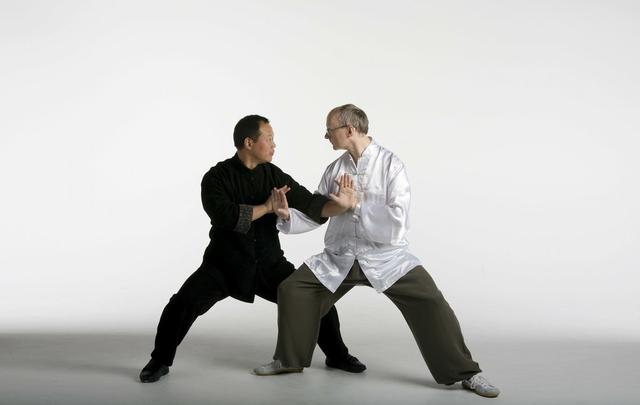
2. Magnification and Diminution: Every form and technique embodies the awareness of expanding the mind and shrinking it, thereby naturally driving the form—with both expansive momentum and 'appearing and disappearing,' so that the center of gravity and the source of inner power are not perceptible, and the inner power is not revealed.
3. Inner strength and outward overflow: The mental state must achieve 'soft, empty, round and complete,' the inner emptiness must not be empty, and it will be manifested outward, the forms are full, rich, graceful, and smooth. How to achieve this: the mental state must 'observe and listen externally, and listen internally,' with three-fourths of the mind inside and one-third outside.
4. Cultivation and willingness to let go: In the process of practicing Tai Chi, the body and mental state should achieve 'slanted middle contains right, curved contains straight, leaning heavy follows, sinking floating rises and descends,' constantly cultivate this ability; at the same time, in this process, it is necessary to train oneself to abandon solid, rigid forms and methods, towards 'nothingness within nothingness, no direction, no root'.
5. Eight Gates and Five Steps: When starting to practice Tai Chi, it is necessary to form a habit of practicing slowly, because one movement must take account of eight gates and five steps—the thirteen aspects are taken care of, and the movement needs to be a little faster, and even a faster movement can still take care of the thirteen aspects, so it is necessary to practice slowly.
The first key aspect: Reasoning to explore
Many people practice Tai Chi, only satisfying how many times they practice the forms every day, but the form and inner power techniques and the principle of the forms are often not very clear. In fact, practicing Tai Chi requires, through the principle of Tai Chi, in the appearance of the form (forms and techniques), and in the principle of thirteen total positions, to repeatedly comprehend, only when each action conforms to these principles, it is a true Tai Chi Kung Fu practitioner.
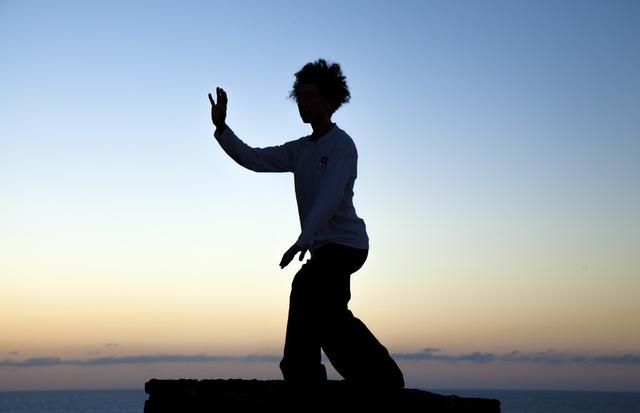
The specific training method is: repeat! Repeat! Repeat!!!
Tai Chi's so-called 'repeat! repeat! repeat!!!' has two inseparable aspects:
1. Single-form exploration. Select 1-3 forms at different stages to repeat every day, even a single form, you must practice it 10-30 times a day, (note: chronic patients should not practice too much, 1-3 times a day is enough for the whole set of Tai Chi forms, mainly concentrating on attacking and eliminating, to concentrate energy).
Tai Chi, the intention must have a virtual ball, this is the method of 'immersion to explore'.