Tai Chi Practice: Achieving Results in One Session by Slowing Down Three Parts
walk through the formalities, but to produce three effects?
What's the secret?
It's easy to say:
Slow three parts of the punch.
The so-called ‘punch slow three parts’
is based on the normal routine practice time basis,
slow down by one-third.
For example, extending the 24-style Tai Chi routine, the practice time is extended from five minutes to a total of seven to eight minutes. The 42-style Tai Chi competition routine takes six minutes and extends to a total of nine to ten minutes. Seventy-plus style and eighty-plus style traditional routines can be extended to a total of about thirty minutes. ‘Punch slow three parts’ is just a term, to be precise, it should be three to five minutes slow.
What is the reason for slowing down by three parts?
After many years of practice,
I think there are the following benefits:
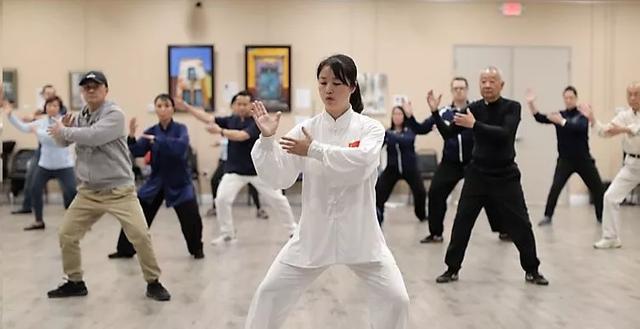
(1) It's easier to achieve mental calmness, with no effort and relaxation of the whole body, you can gradually experience and correct the relaxation of the internal and external parts of the whole body.
(2) It's easy to maintain natural and long breath, qi sinking to the abdomen.
(3) It can accommodate up and down, left and right, without distracting thoughts, without losing details, making ‘hand, eye, body, method, step’ a more orderly combination.
(4) It can maximize the exercise of balance, support, coordination and control ability.
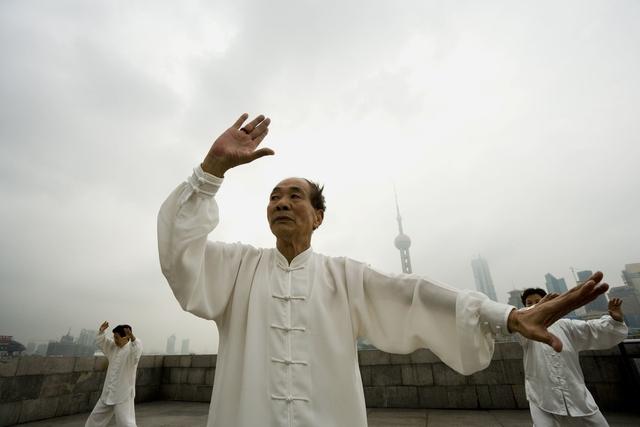
Due to regional differences and the early development of Tai Chi, many Tai Chi enthusiasts believe that the practice time of a set of Tai Chi routines is based on video teaching or competition regulations. For example, the one-road of Chen style Tai Chi, many Tai Chi enthusiasts practice it for fifteen minutes to complete a set.
I suggest that many Tai Chi friends who practice one-road of Chen style Tai Chi, ‘extend this set of routines to 25 to 30 minutes or so, not only can the breath be practiced more fine and long, but also the effect is twice as much. It is regrettable that most people think it is unnecessary. This proves that many enthusiasts treat Tai Chi routines as general physical exercise. From this point of view, it is obvious that many enthusiasts treat Tai Chi routines as general physical exercise.So, is it better to slow down the Tai Chi routine?
Not necessarily.A few years ago, I saw a master in the south who practiced one-road of Chen style Tai Chi, which was slowed down to almost one hour. This shows that this master has very amazing control and balance ability. I also tried it, and I don't agree with his super slow method.
Tai Chi is not a physical competition. The ‘punch slow three parts’ I'm talking about is relative to the relatively slow speed of the general public’s Tai Chi practice speed. For most people, if the speed is too slow, it will make the breathing and action decouple, it’s difficult to avoid stiffness, stagnation and the time defect.
It's also easy to cause nervous muscle tension and knee joint injury. So, his super slow training speed is only suitable for a few people.
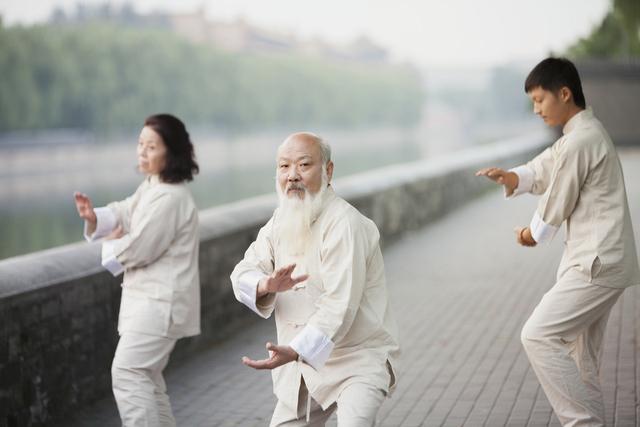
How to slow down?To what extent does it meet the requirements?
That is, in the state of calm, relaxed and natural operation, with a feeling of smooth and gentle stimulation for the whole body’s meridians, bones, joints and nervous system.
Suitable for your own slow speed, deep and long breath, every movement requires to the skin, joints, even internal organs, nervous system and all parts of the body. Do not use force where it is not required, try to relax, it is difficult to achieve without sufficient slow speed. You must gradually increase it based on constitution and kung fu depth.
We often see that in the routine of Chen style Tai Chi, there is a frequently appearing foot-tapping action, such as the ‘use the inner side of the heel to insert diagonally forward, or the inner side of the heel to insert left’ often taught in the teaching. When this action is performed, it is necessary to slow down to make the heel close to the ground, the foot landing point short, it’s slow but light, not relying on leg support and balance ability to complete.
More importantly is qi sinking down, only when qi sinks down can you bend your knees more firmly. For example, extending the 24-style Tai Chi routine, the routine’s wild horse turning steps, or the encircling knee and stepping turns are all forward steps. This action appears frequently in the competition routine. Many athletes control the point where the heel lands as if a leaf falling, and the stability of the independent foot step, the uniformity, continuity and smoothness of the action all require slow practice. It's also necessary to sink qi to the abdomen.
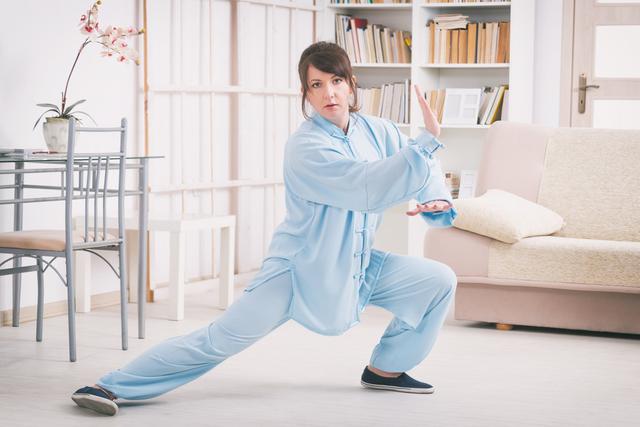
Traditional Yang style Tai Chi routine has even, continuous movements, implicit force, many practitioners practice 85-style Tai Chi routine a set of time about twenty minutes, can it ‘break the force’ if it’s even slower? In fact, at 20 or 30 minutes, it’s the most appropriate to ‘slow down by three parts.’
Of course, the speed of traditional Yang style Tai Chi routine cannot be regarded as absolute evenness. In fact, at the end of each move, there is often a short, seemingly still state, which makes the initial move of a move end, with focus, intent, and pointing to the next move to provide a good start. Slow down to be soft, soft to be loose, loose to be still, only with deepening, the breath becomes natural, long and smooth.
Example:
How to slow down one-road of Chen style Tai Chi?
I think one-road of Chen style Tai Chi achieves relaxation and stillness, enhances the feeling of sensitivity and elasticity, and the explosive power of flexible and soft, it is the basic of one-road of Chen style Tai Chi.And only by slowing down can you carefully examine the whole body to see if it can minimize relaxation conditions and create conditions for force and speed development. Therefore, one-road of Chen style Tai Chi can also be slow by three parts, depending on your technique and experience.For the body type of Chen style Tai Chi, the age group and the people who have cardiovascular problems, it is more appropriate to slow down first because sudden force can cause burden on the heart and blood vessels. If the speed is not right, the consequences are very serious. From a health perspective, it is also possible to create a set of routines of one-road of Chen style Tai Chi in style, ‘do not seek speed and power, just seek flexibility and softness’. For example, the hand-shielding elbow-glove strike, the seabed flip flower, and the encircling whip strike actions should not be used with full force in one instant. Just practice it in a slow and flexible style.
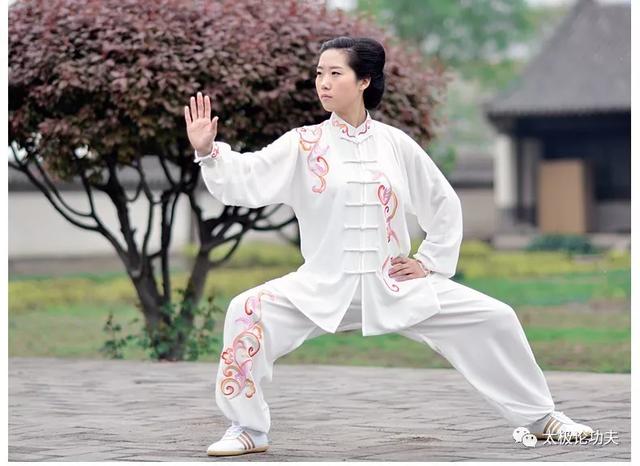
When starting to practice ‘punch slow three parts’, it's not advisable to practice a variety of routines with different styles, it is not recommended to mix different types of routines. When choosing a routine, try to choose a soft and slow routine.
If it’s not for competition, but for improving technology and health, whether it’s a competition routine or a traditional routine, you should slow down and practice during the usual time.
At the beginning, it may be difficult to control the movement, but after a conscious effort for a period of time, you will gradually realize that the effect of practicing a set of Tai Chi routines twice is much better than practicing three times.