Want to Step into the Ranks of Table Tennis Masters? Solve These Four Problems and You're There!
The common faults of amateur table tennis players are very common. Amateur table tennis players rarely receive regular training from a young age, so their movements are all over the place, with all sorts of movements, and they do whatever feels comfortable. There are also many people who are willing to learn professional techniques, but due to limited teaching and training conditions, they rely solely on their understanding to find movements, so understanding and recognition are inevitably biased. These are the obstacles that prevent amateur players from stepping into amateur masters.
One, large arm without retracting the forearms
Large arm, as the name suggests, since the action of ‘throwing’ the ball involves ‘throwing’, this kind of action is difficult to control. This kind of action itself has many instabilities. Secondly, most amateur players flick their wrists, flick their forearms and flick their big arms, and if they want to play competitions, this technique is not suitable. Amateur players of higher levels basically do not have this throwing big arm action.
To solve this problem, using bare hands is the best way to swing the racket, but remember, during the swing, do not raise your elbows, do not raise your shoulders, and do not swing your arms. It should be overall, not specific. Don't think too much about the wrist and fingers, first have a basic overall shape, that is, first overall, then local, but never hold the shoulders, and don't swing the big arms to pull. Practice suggestions start with the down spin ball from the half-out to pull the ball.
Two, the ball pull has no power
Generally, amateur table tennis players cannot generate power, there are a few reasons:
1, poor cooperation. Many people have a lot of strength, but this point does not work to the ball, that is, ‘empty swing’, there is no cooperation with the ball, either the swing is too early or the swing is too late. The swing process should have a peak, have an acceleration point, the maximum comfort point, your racket is the most comfortable point, generally can generate power. In simple terms, if you can find the feeling of ‘mouth opening’, you mean you have found the feeling of power.
2, more relaxed. Power comes from head to toe, continuously generating power, in fact, generating power is a process of relaxation, acceleration, and then relaxation and acceleration. You must have an acceleration, otherwise it will be a constant speed, constant speed will not generate power. The so-called generating power is this acceleration process, in order to accelerate, we must have a good relaxation.
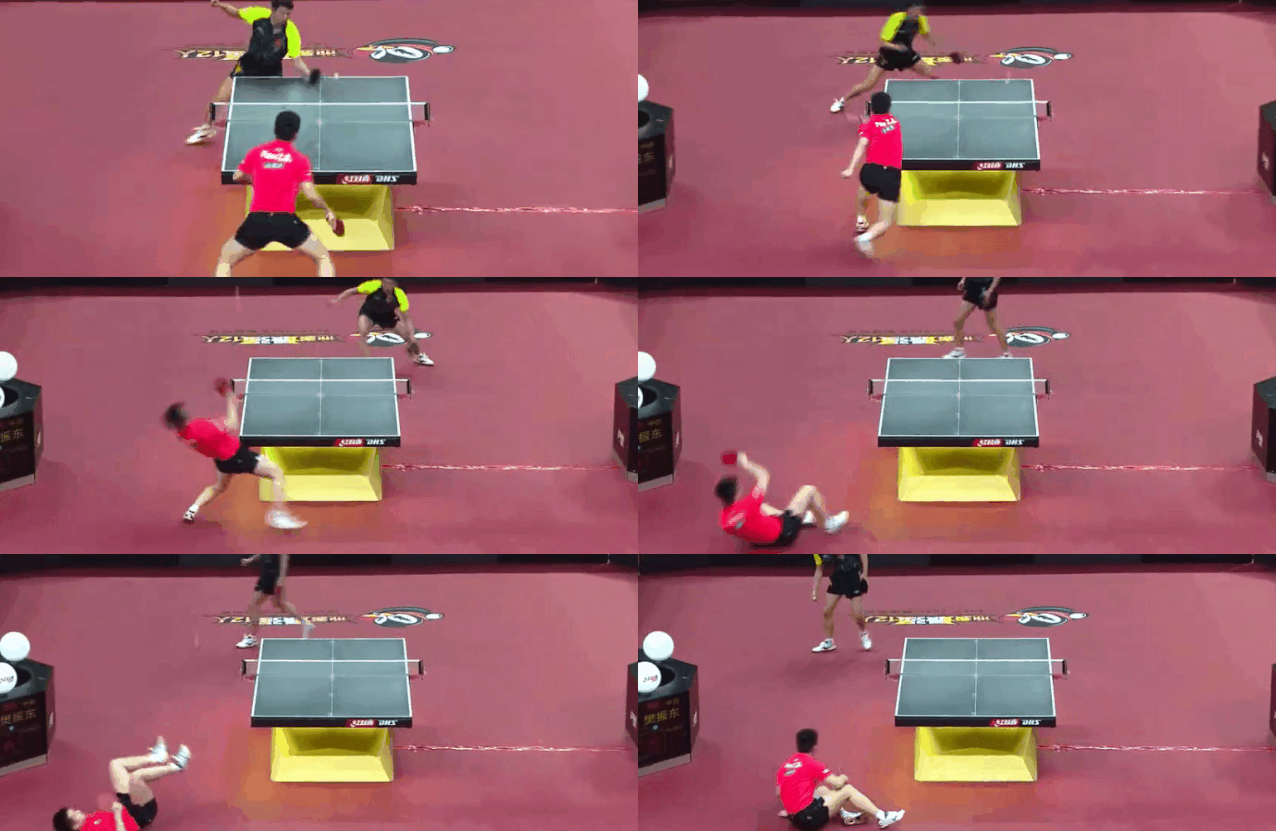
3, body cooperation. Reaching to hit, hitting in the arms, will not generate power, so you must cooperate with the movement of feet and the cooperation of waist and shoulders, adjust the ball to the most comfortable position to hit the ball, and then generate power will be better.
4, inherent power is small. In this case, you can only go to the gym or through other ways to train strength, the improvement of inherent strength is also helpful for hitting the ball.
Three, the ball pull rotation is not enough
The most direct reason for this problem is impact, less friction! This is a common mistake made by many amateur table tennis players. The reasons are roughly as follows:
1, the position of the racket handle. Generally, the forearms are too high, as if the shoulders are raised, there is no friction.
2, the shape of the ball when hitting. The shape of the ball is too open, that is, the way we usually say ‘bright’, it may be a little short. Conversely, if you press too tightly, you will not produce friction with the ball body.
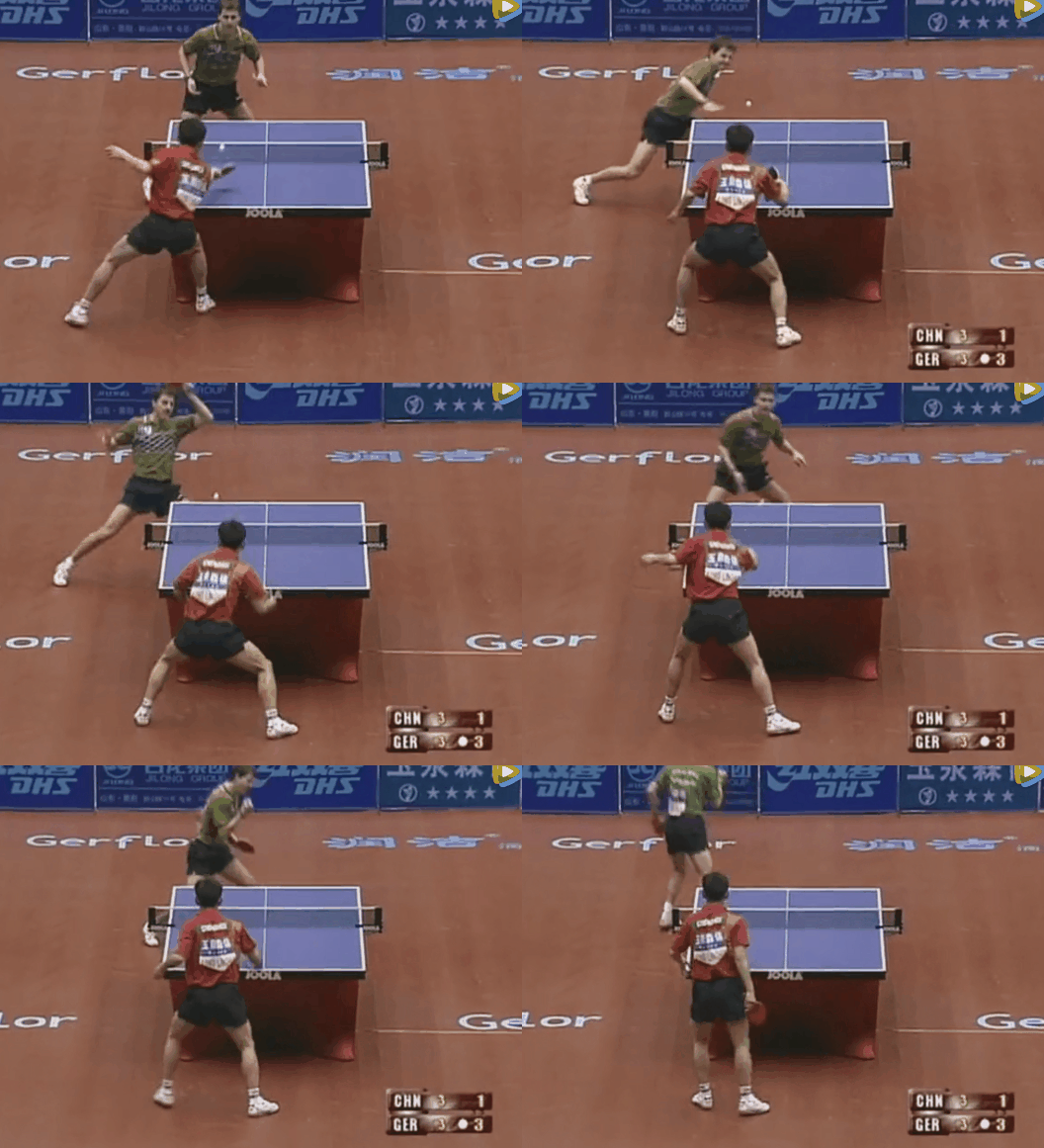
3, the force direction of the wrist and fingers. Why don’t we talk about the direction of the swing at the end? Because at the end, the hand wrist and fingers determine the decisive role. The offensive technique of table tennis has a saying, no matter you generate power or not, you must generate a dynamic force, so we say ‘simultaneous and same direction’, that is, simultaneously swing in the same direction, so your movements will be clean, pure, and easy to achieve the goal you want.
Four, continuous ability is poor
Continuous pulling of the ball easily leads to missed balls and mistakes, which is a common problem for amateur table tennis players. Pay attention to:
1, you must stare at the ball. Because when doing continuous pull, the opponent will try to control the landing point to your hand, but you will still miss balls or make mistakes, which shows that you are not staring at the ball accurately. Staring at the ball is the most important part of learning table tennis, because the speed of drawing the racket, the range of drawing the racket, and the time of swinging all depend on judging the state of the opponent’s ball at that moment.
2, drawing the racket. You need to give the ball enough space, so you need to draw the racket. You need to stare at the ball to determine the high and low of the racket handle, the amplitude of the drawing racket, etc.
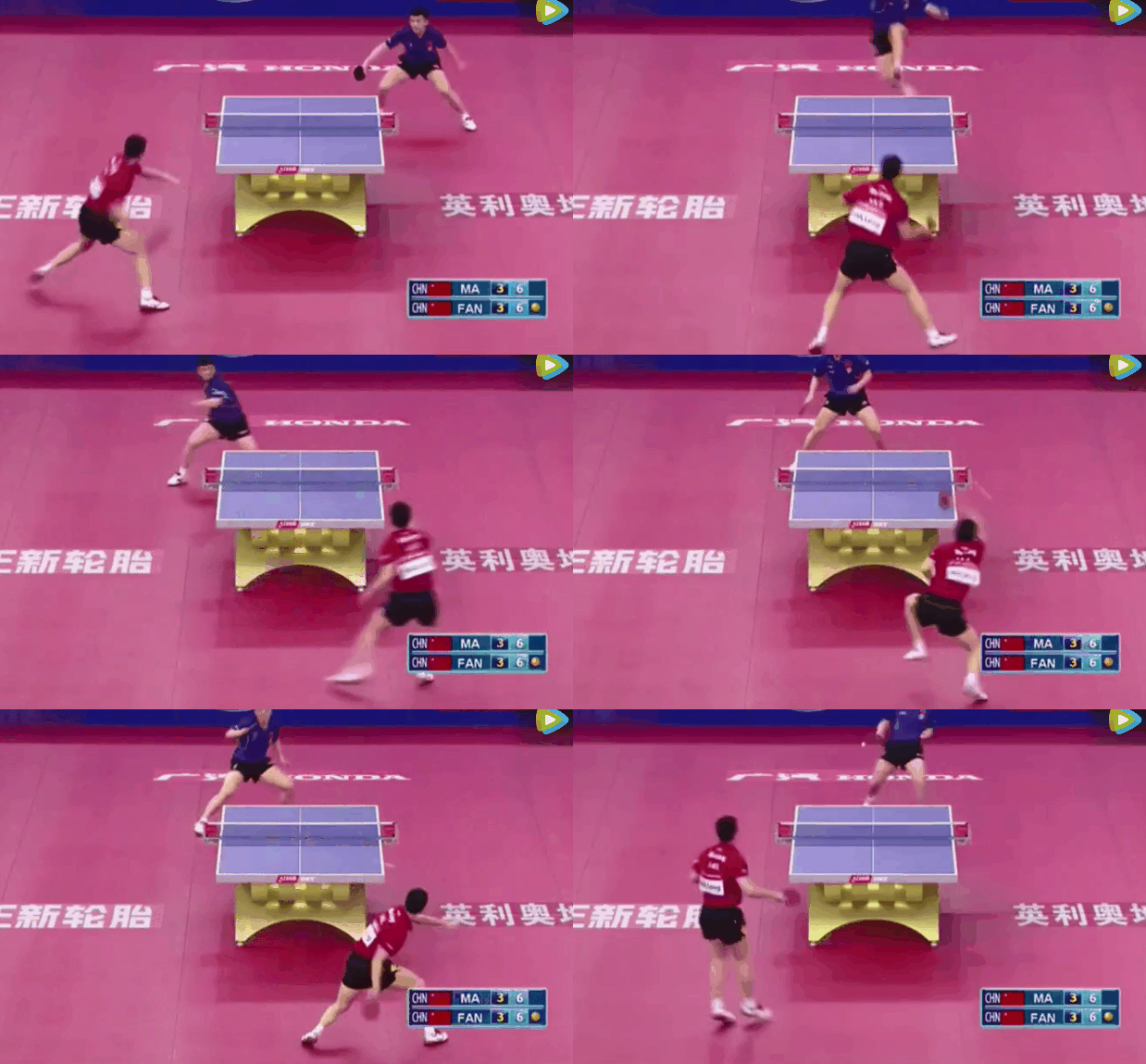
3, control the shape of the racket. Some people often want to turn the ball a little when pulling the ball, and the tilt of the racket is too much, sometimes it will miss the ball. In simple terms, it's hitting the ball with a little friction, if you hit the ball first, you won't have this problem.
As long as you handle the above three points in the process of continuous pulling, and control the rhythm, develop a good habit, you will not feel that you always feel like you are lagging behind. In addition, when you first practice continuous pulling, you must pay attention not to generate force randomly, if you pull a board after pulling, then start ‘explode’, this will easily lead to the use of more big arms, excessive elbow lift, and eventually make the movements more stiff, making it easy to pull the ball.
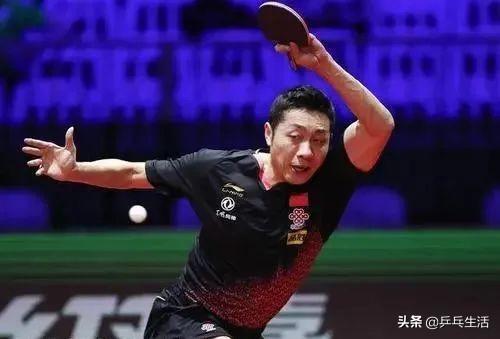
Finally, there is one more thing worth noting: the technique of table tennis, especially the right-hand technique, should start from the lower limbs, such as leg lifting to top hip, then turn the waist, and then transmit the power to the wrist and fingers, and then to the racket head, only in this way can you make the ball through, solid, and then note: the action problems, must start from bottom to top, use feet and waist hip to lead hand, never use arm to find the action.