Common Marathon Running Terminology: Learn These Terms Even If You've Run for Three Years!
When a group of runners are discussing marathons, do new runners sometimes feel bewildered, such as when they say 'PB' what does it mean? Sometimes it's hard to ask because it's a common term in the running community. Let's introduce some commonly used professional terms for marathons to new runners. You'll become a more professional runner if you understand these terms!

01
Marathon:
A marathon is an internationally popular long-distance race. The full distance is 26.2 miles (42.195 kilometers).Half Marathon:
The half marathon is half of a marathon, 21.0975 kilometers.Four-Minute Marathon:
Refers to a 10K race.Mini Marathon:
The distance of a mini marathon is not fixed, it may be 10K or 5K.02

Basic Terms:
Form: The body posture during running.
Pace:The average time it takes to run one kilometer.
Cadence:The frequency of steps per minute.
5K/10K:Five kilometers and ten kilometers respectively.
Warm-Up:5-20 minutes of warm-up before running can improve heart rate and blood circulation, reducing the risk of injury.
Cool Down:Relaxation activities after running, to help the body recover.
03Running Methods:
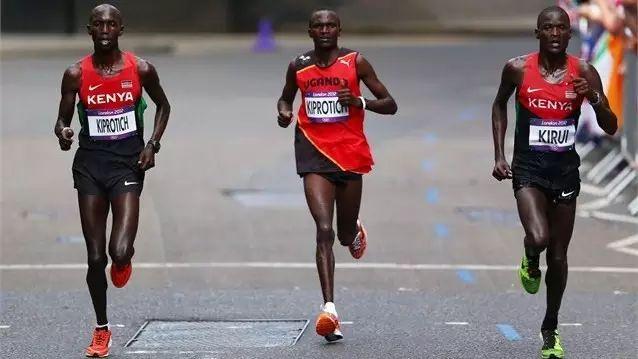
Fartlek Training: Fartlek means speed variations in a running workout, alternating between fast and slow speeds.
Easy Run:
A relaxed run without timing or distance tracking.Recovery Run:
A recovery run on the same day as a strenuous run (such as a half marathon).Speed Intervals:
Strictly controlling the time to perform exercises in a session, without allowing the body to fully recover.Repeated Runs:
Running the same distance, time, and pace repeatedly.VO2 Max:

The maximum oxygen uptake, a measure of aerobic capacity.Hill Run:
Running up and down hills, alternating between slow and fast speeds.Tempo Run/Lactate Threshold Run:
Running at a moderate speed to cause lactate to accumulate slightly.Long Slow Distance (LSD) / Long Distance Slow Running:
Generally refers to distances of 20 kilometers or more, running at a constant speed with a comfortable pace.04
Event Related:PB/PR: Personal Best/Record.
Rabbit: Usually refers to lead runners (also known as pace setters).
Chip Time vs. Net Time:
Time recorded from the start gun to the finish line is called chip time; time recorded from the runner's start to finish is called net time.Taper:
Reducing training volume in the weeks leading up to a major event to allow for rest and to build up energy reserves.Carbo-Loading:
Increasing carbohydrate intake in the Taper phase to store energy.False Start:
Starting before the gun fires.Splits:
Dividing a long run into segments.Negative Splits: A race where the second half is faster than the first half.

Draw:When the number of entrants exceeds the available places, participants are selected by drawing lots.
Race Number:Proof of eligibility and runner identification.
Finishing Medal:Awarded to all finishers who complete the race within the time limit.
Closing:The closing time for a full marathon is usually 6 hours, and for a half marathon it's 3 hours.
Aid Stations:The organizers set up aid stations along the course to provide runners with water, energy drinks, bread, bananas, energy gels, etc.

Race Pack and Finish Medal:Received before the race, and awarded upon completion.
Timing Chip and Timing Points:Runners are required to carry timing chips throughout the race. Timing system records time when runners cross the timing mats.
05Physiological Terms:
Heart Rate/BPM: Beats Per Minute.
VO2 Max:
Measure of aerobic capacity.
Pronation:The degree to which the foot rolls inward during running. Normal pronation, over-pronation, and under-pronation.
Lactate Threshold (AT):07Other:
Walloping/Hitting the Wall:
Feeling of inability to continue.
10% Rule:The principle of increasing mileage by no more than 10% per week.
/VO2MAX
/Pronationnormal pronationover pronationunder pronation

/Anaerobic Threshold(AT)
07
/Hitting the Wall
/10% Rule 10%