Understanding Fitness vs. Knowing How to Do Fitness: Becoming a Fitness Master

Many people read my articles and are inspired, leading them to believe that I am a theoretical master.
But in fact, compared to real theoretical masters, I am just a newbie. I need to admit that my fundamental theory is poor, and compared to real professionals, I am a half-way wild child.
Because now I can't even say exactly how many muscles are in my back, nor their names, I just call it ‘back’
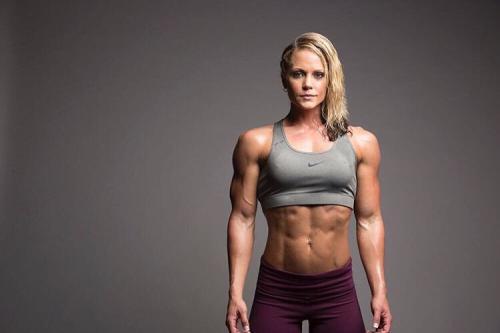
I deeply respect these theoretical masters, but I must also say that if you only know these theories and you just ‘know fitness’, you are just ‘understanding fitness’.
But to truly train effectively and become a fitness master, I think you need to ‘know how to do fitness’ rather than just ‘know fitness’.
Knowing fitness and knowing how to do fitness are two different things, you know?
If understanding fitness is about knowing the facts, then ‘knowing how to do fitness’ is about solving practical fitness problems.

Below I will give 3 examples to illustrate what ‘knowing fitness’ and ‘knowing how to do fitness’ are.
Knowing the muscle position doesn't necessarily mean you can make the muscles contract.
Most people start by reading books like ‘Anatomy of the Human Body’ to learn about muscles. Frankly, I haven't read this book.
Reading this book brings you the knowledge of muscle names and positions.
But when you actually train, can you make the corresponding muscles contract?
In fact, many people can't even make their chest muscles contract, let alone make their back muscles, triceps, or abdominal muscles contract.
If someone ‘knows how to do fitness’, he will use techniques to achieve the target muscle contraction.
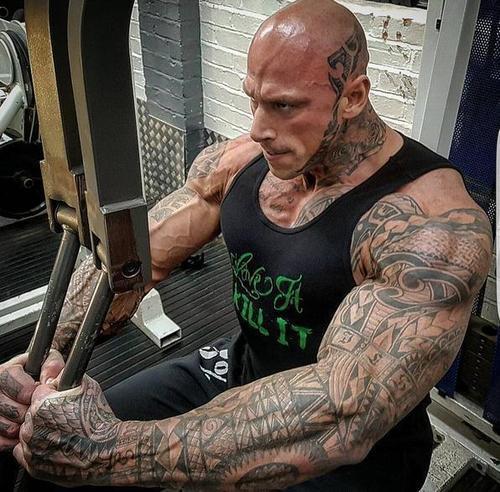
For example, ‘muscle pre-saturate’, make the chest muscles temporarily thicker, then stimulate the chest muscles to contract.
For example, using muscle stickers to guide the muscles to contract.
So it’s often said that ‘hitting your head with a hammer’ is a way to train the trapezoid muscle.
Because I felt the trapezoid muscle contracting!
Knowing supplement effects, also know whether you need them
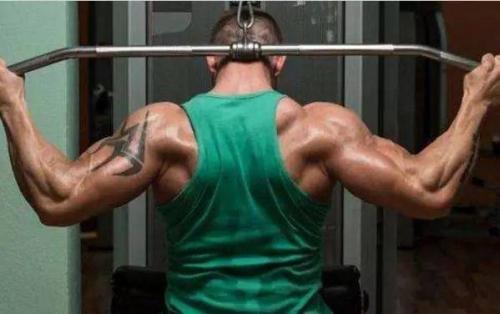
The more fitness masters you know, the fewer supplements they use, of course, some masters are rich and buy psychological effects.
Each supplement has a real effect, for example, protein powder can supplement protein, such as creatine can improve muscle strength, and nitrogen pumping can improve focus.
Many newbies see these supplement effects and think they all need them, so they buy all kinds of supplements.
What I want to say here is that newbies should choose fewer supplements.
For example, Class A supplement creatine is a proven supplement.
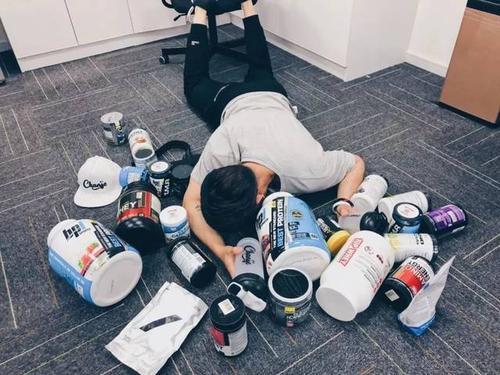
But for newbies who are very thin and weak, and women, this supplement may not be very effective.
Because its biggest effect is to increase water storage and muscle tension to increase strength.
But if your muscle mass is too small, water storage won’t bring you much change, and strength and endurance won’t improve significantly.
Let alone BCAAs.
Newbies should just use protein powder, and if necessary, add glutamine to promote absorption and recovery.

Knowing action principles doesn't necessarily mean you can choose efficient actions
This is where I’m good at. I’m best at decline exercises, and I’m best at planned exercises.

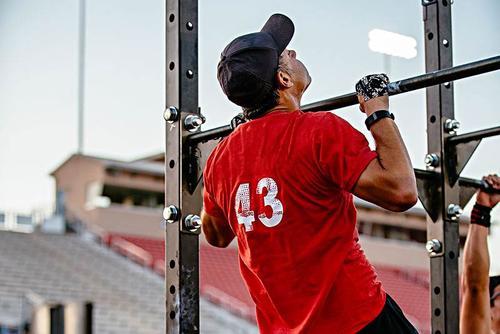
For example, pull-ups are a way to train back and arm muscles, so if I practice wide grip pull-downs, can I learn how to do pull-ups?
Yes, but you need to achieve a ‘one force down ten force’ effect to complete the pull-ups.
So you need to spend a lot of time, especially with mass gain training.
But in fact, the real difficulty of pull-ups is coordination, that is, when you pull up, you also need to control your body to stabilize, this is the most difficult.
So it’s better to use fixed exercises to train pull-ups, such as eccentric pull-ups and elastic band pull-ups, so you can learn pull-ups more easily.
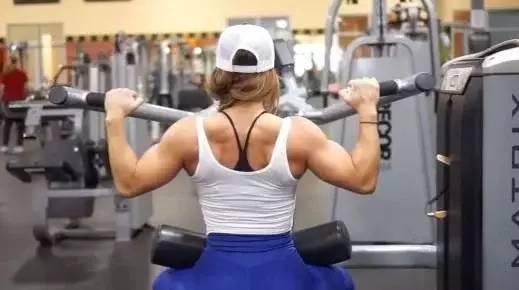
Higher-level actions are even more difficult, for example, learning free hanging, many players focus on the shoulder part.
But you should actually focus on the hip part, because the center of gravity is in the hip.
Seeing this, many people think I’m criticizing theoretical masters, but I’m not. The foundation theory is very important.
I’m not criticizing people, but I’m criticizing ideas. Some people do fitness too rigidly, they do what’s written in the book, and they don’t do what’s not in the book. They won’t do what’s not in the book.

In fact, when you actually train, you should dare to try and have a ‘cheating’ mentality, you should be a little cunning, so you can truly ‘know how to do fitness’ and become a fitness master faster.
“”