Biodiversity Encyclopedia: White Stork – I’m a ‘Different Kind of Stork’
Beautiful Yunnan – Biodiversity Encyclopedia
Today
The editor wants to introduce you to
Stork
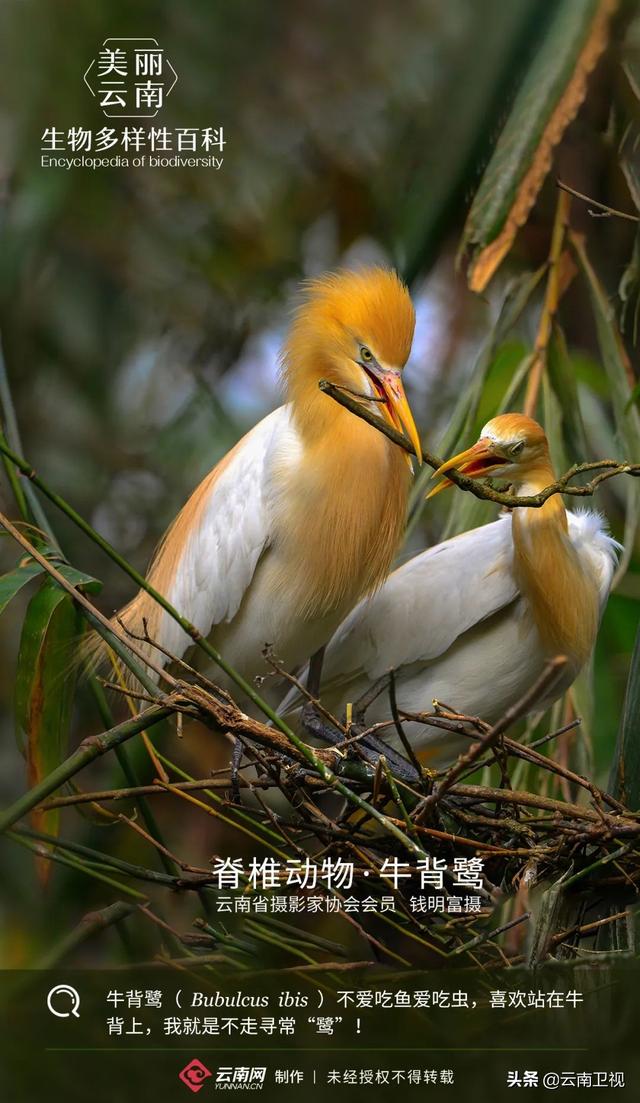
Oriental White Stork
Bubulcus ibis
Vertebrates, Birds, Storks, Herons.
Oriental White Stork is a medium-sized wading bird, weighing 300-500 grams, with a body length of about 50 centimeters. It often inhabits low mountains, plains, rice fields, pastures and wetlands.
Even the same Oriental White Stork, people may easily mistake it for two completely different species in different seasons. This is because Oriental White Stork adult plumage is divided into summer plumage and winter plumage, summer plumage for the breeding season, the head and neck are orange yellow, and winter plumage is the whole body white, the difference is great. As shown in the figure, the two Oriental White Storks are in the breeding season, with summer plumage, the head and neck are orange yellow.
Oriental White Stork is absolutely a ‘weird’ heron in the heron family. Usually, herons give people the impression of eating fish, but people rarely see them hunting fish and shrimp in the water, instead they are particularly fond of agricultural pests, they also eat spiders, eels and frogs, with a diverse diet.
Compared to other birds, Oriental White Stork is also the most likely to ‘addle’ when resting, their necks are folded into an S shape when resting, the body is in a humpback shape. When flying, the head is retracted back onto the back, and the neck is downward, which looks like a humpback.
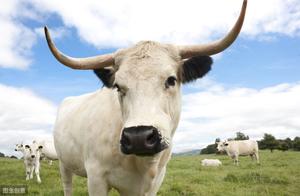
And its nickname ‘Farmer’ is not in vain, they like to stand on the backs of cattle to peck at parasites, or follow behind the cattle that are ploughing fields to look for insects overturned. Usually one Oriental White Stork stays on one cow’s back, no more than two, if a third Oriental White Stork wants to join in, the first two will unite to drive it away. During the spring plowing, they also like to follow farmers to catch insects, frogs and other creatures driven out by plowing.
Source: Yunnan Release
Editor: Xi Xi
Responsibility Editor: Song Lijin
Supervising Editor: Mu Liyun
Channel Director: Duo Xiang
Executive Editor: Li Xiaofeng
Editor-in-Chief: Li Qi
/