Snow Leopard Sighting in Southern Mountain Areas of Shiqiaozhou, Xinjiang
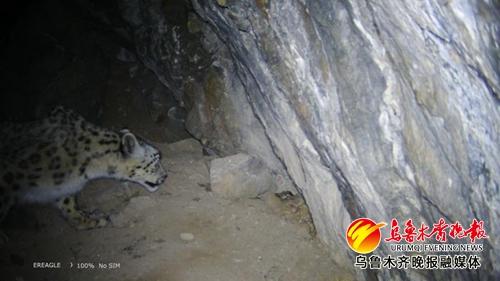
Urumqi Evening News All Media Report (Reporter) In front of the infrared camera lens, a snow leopard stretched out half of its body and looked up for a moment before quickly leaving. On April 6th, Wang Rui, who repeatedly watched this video, was extremely excited. This is the first time the Wild Stone Team in his area has captured the shadow of a snow leopard.
“This snow leopard is about 3-4 years old, very young.” Wang Rui said that he immediately shared the video with the Wild Xinjiang Team, a team that has long been investigating and monitoring snow leopards. After analysis by experienced experts, they could only determine its age. Since the infrared camera only showed half its body, they couldn’t determine its gender.
The Wild Stone Team, founded by Wang Rui, has been committed to the observation, protection, imaging recording and popularization of local wild plants and animals for four years.
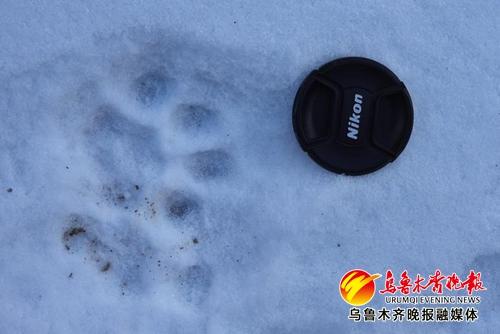
On December 21st last year, he and four team members went to the southern mountains of Stone River – they named it “God’s Valley” – to observe wintering birds. After traveling 80 kilometers from the city, they found several footprints belonging to large cats on the mountain road. After identification, they were confirmed to be snow leopard footprints. Subsequently, the team established a tracking group to track and investigate snow leopards.
“’Tracking’ refers to tracking various animals’ traces in the wild.” Wang Rui introduced. For example, they used marking objects, feces, footprints, and then used infrared cameras to record images, which helps them observe elusive animals or some of their little-known behaviors, while also avoiding disturbing them. This plays a crucial role in biodiversity surveys.
On January 16th and 22nd of this year, the team, following the guidance of the Wild Xinjiang Team, set up two infrared cameras on two animal trails. After two months, they retrieved the two infrared cameras, which captured images of wild goats and foxes. There was no sign of snow leopard.
On March 22nd, Tracking Group Leader Han Xu and a team returned to “God’s Valley” and placed the camera on a trail under a large rock wall and next to a gray prairie hare’s nest.
“When looking back at the camera, suddenly, a black and white patterned ‘big cat’ appeared in front of my eyes, it was a snow leopard!” After ten days, Han Xu and several people retrieved the two cameras and were surprised to find that the cameras had captured images of a snow leopard, because the camera was aimed at the entrance of the gray prairie hare’s nest, so it only captured the snow leopard’s half-body.
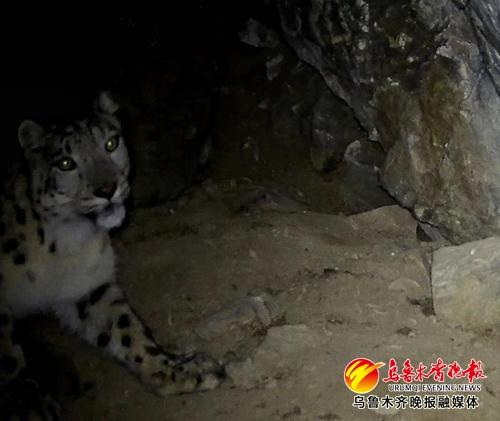
Han Xu’s online name is “Representative”, and the snow leopard he first discovered was named “Representative”.
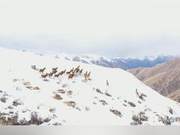
“At the end of last year, the footprints found in the snow were at an altitude of about 1500 meters, which should be where the snow leopard followed the wild goats to a lower altitude. Snow leopards generally live in mountains with an altitude of 3000-5000 meters, with their main food being wild goats. In winter, wild goats come down to the mountains to forage for food, and snow leopards follow them. The place where the snow leopard was photographed is at an altitude of 1800 meters, which indicates that there are snow leopards in the surrounding area because of their food, and whether this snow leopard has a family member or other similar species, needs further monitoring and investigation.” Wang Rui said.
Wang Rui stated that in the future, they will gain a deeper and more detailed understanding of the distribution and activities of snow leopards in the Stone River area, and they will jointly work with the Wild Xinjiang Team to integrate resources and share resources, to help the survey and protection of snow leopards in Xinjiang.