New Scenery! Dolphins Playing in the Sea at Dizhoulang Bay, Rizhao
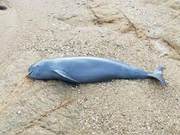
Jinzhao Daily·Haihua News, Rizhao, March 9th news. (Reporter Zhao Hongzhi, Jia Xiao Yi) Just after the Zhenzhe Festival, the grass and trees in Rizhao, Shandong, are sprouting, and the sea is warming up. On the evening of March 6th, the setting sun cast its reflection on Haibay, and several “dolphins” leaped and played in the light. Ding Yuanpeng quickly recorded this adorable moment with his phone.Through the video, we can clearly see several “dolphins” chasing and playing in the sea, occasionally jumping out of the water to show their backs. ‘River pigs,’ Ding Yuanpeng said, had been seen frequently since 2016. They were more frequent during high and low tides. ‘It was a lucky encounter to see them twice a day.’ The term ‘river pig’ is the scientific name for ‘river dolphins,’ which belongs to the cetacean family and is the only species in the dolphin family. They are similar to dolphins.
As the construction site manager of the Haibay project, Ding Yuanpeng has worked in this sea area for more than three years, witnessing the transformation of the former coal heap field into the current bay and port. He also witnessed the birth of this new landscape – ‘dolphins playing in the water.’ The transformation from ‘unlucky’ to ‘new landscape’ benefited from the construction of Rizhao Port Haibay and the southward relocation of Dongmei Coal. Rizhao City thrived due to its port, and coal terminals were the cornerstone of economic development. However, as the construction and operation of coal terminals accelerated, natural sand beaches were gradually replaced by coal operation areas, leading to conflicts between the port and the city regarding shoreline utilization and environmental protection.
At this time, the Rizhao Port Haibay and Dongmei Coal Relocation Project came into being.
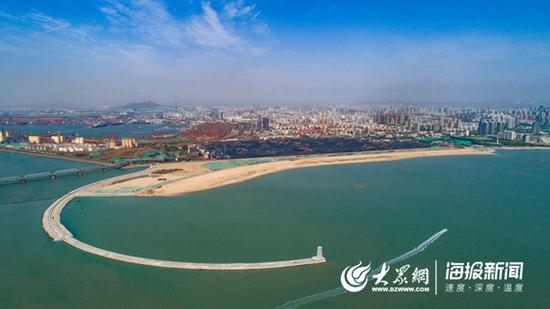
In 2016, the Haibay ‘Retreat Port and Return Sea’ restoration and rectification project started. As the first industrial ‘retreat port and return sea’ restoration project in China, Rizhao Port insisted on ecological priority and ‘trial and error’ to combine the ‘North Charge South Slag’ tidal sand movement pattern. Using a combination of artificial beaches and natural siltation, the shoreline was restored 1882 meters long, forming a ‘golden sand beach’ of 460,000 square meters, giving more space to the ocean.
At the same time, the Dongmei Coal Relocation Project was also in progress in Rizhao Port’s west area. Since June 2019, the coal terminal and its accompanying stacking area began to gradually move to Rizhao Port’s southern operation area, 10 kilometers away from the city. This project gave some port space to the city, improving the port-city conflict. The new coal stacking area will adopt the latest dust control technology. The vacated approximately 2-kilometer natural coastline and more than 2,000 acres of port industrial land will be used to build a museum and exhibition hall.
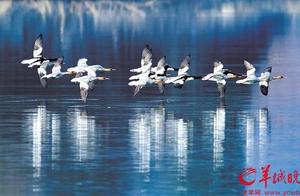
During the construction process, Rizhao Port insisted on ecological priority, protected development, and adopted multiple approaches to avoid construction damage to the marine environment, with the purpose of returning the shore and improving the ecological environment. Since 2018, white dolphins, thousands of seagulls, fish, and various marine organisms frequently appeared in the Haibay construction sea area. People also discovered national-level protected animals, such as sea turtles, in the construction sea area. The ecological value of the ‘retreat port and return sea’ project has been preliminarily demonstrated.
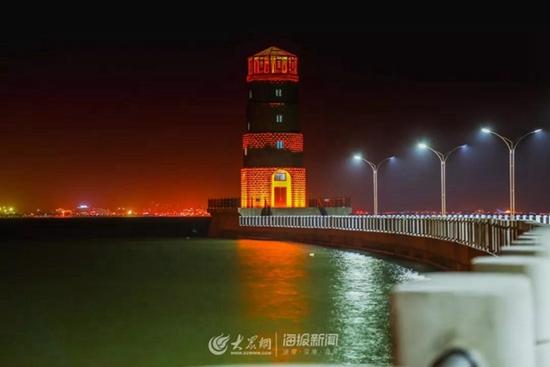
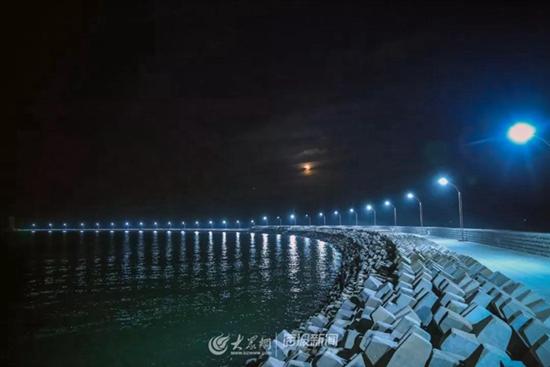
Looking down on the Yellow Sea coast, the former coal terminal has transformed into an ecological tourism destination due to the port. The arc-shaped breakwater and the coastal sand barrier formed a bay, with golden and fine sand beaches and a blue sky and sea, seagulls spread their wings, and the river dolphin, which had disappeared, reappeared in the blue bay, adding vitality to the blue sky and blue sea...
......