Giant Panda Relatives Appear in South America, Also Rare Species, They Eat Vegetarian and Love Pineapple

South America is divided into eastern and western regions by the Andes Mountains, and has two completely different climate environments. The west of the Andes Mountains is very dry, and it is one of the driest places in the world - the Atacama Desert. On the eastern side of the Andes Mountains, due to a large amount of rainfall, South America's entire east side is covered with lush vegetation, with vast rivers and dense rainforests, even the world's largest rainforest - the Amazon rainforest, and the world's largest river - the Amazon River.
With dense rainforests, there are many kinds of animals, so South America is inhabited by many animals, including many unheard-of animal species. If we ask what animals we have in China that we admire, it must be the national treasure giant panda.
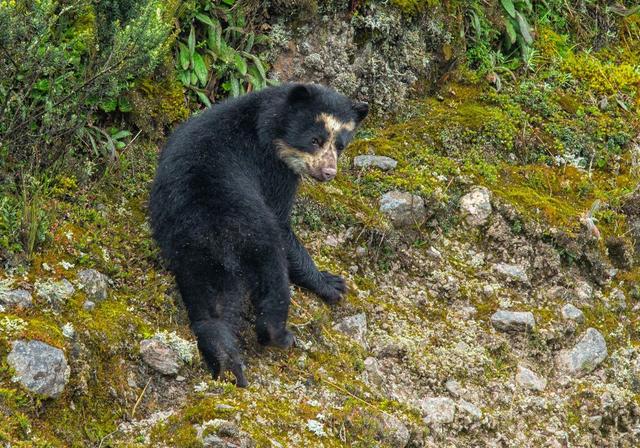
But do you know that there are giant pandas who are missing relatives living in South America, which is far away from the earth? They are the only bear species in South America. Isn't the existence of giant pandas limited to China? Why do giant pandas have distant relatives living in the far corner of the earth?
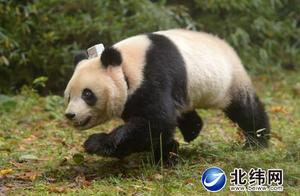
Giant pandas are indeed a species unique to our country. You cannot find wild giant pandas in other countries. We all know that giant pandas have two colors, one is black, and the other is white, and they also have large black circles around their eyes.
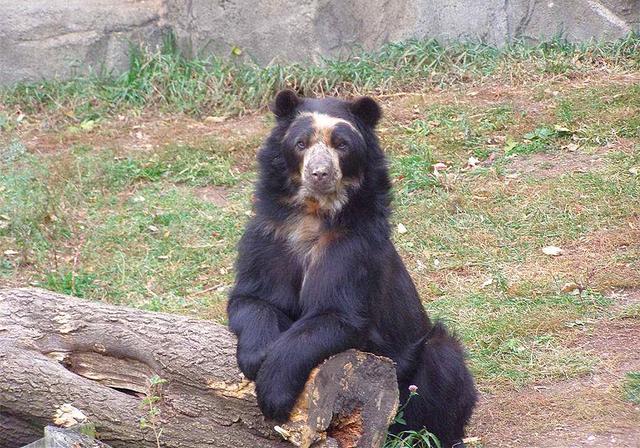
Giant pandas living in the far corner of the earth also have black circles around their eyes, just like wearing a pair of black sunglasses, so they are called 'glasses bears'. Didn't 'glasses bears' just because they have the same black circles as giant pandas be recognized as distant relatives of giant pandas?
'Glasses bears' are also called Andes bears. They can only be considered medium-sized bears in the bear family, and they are the only extant species in the short-nosed bear family.
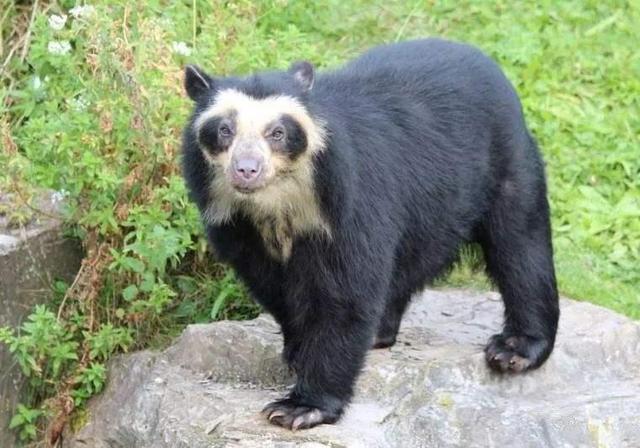
Short-nosed bears are not like black bears and brown bears, which have long mouths, and they look very fierce. Their mouths are not so long, round and cute, just like the giant pandas we are familiar with.
The fur of 'glasses bears' is usually a relatively uniform black, and there is a circle or thick or thin milky white stripes around their eyes. This forms a ring, which looks cool when viewed from a distance, as if they are wearing cool sunglasses.
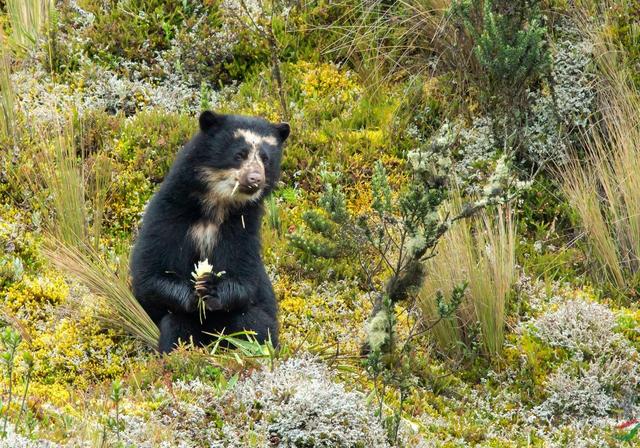
If we say that 'glasses bears' have something unique, it is that they are just like giant pandas, most of the time they eat vegetarian, and they especially like fruit. Pineapple is especially beloved by them.
To harvest fruit, 'glasses bears' climb trees or tall cacti, climbing to a height of even more than 10 meters, and they can flexibly climb from one tree to another. Although 'glasses bears' like to eat fruit, mature fruit is not available in every season, so on other days, 'glasses bears' will also eat cacti, honey, bamboo, etc.
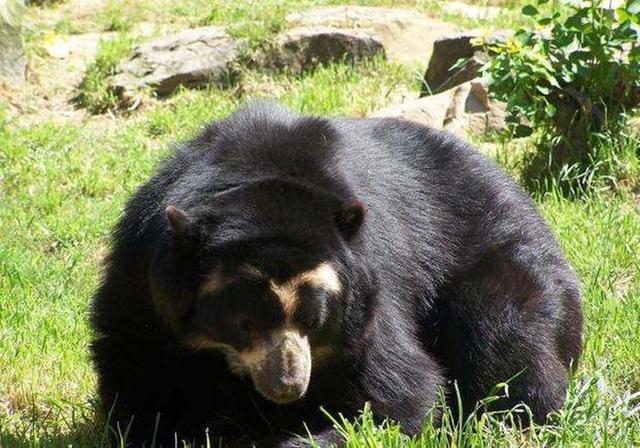
Generally speaking, bears are carnivorous animals, while 'glasses bears' are a special exception among bears, and they eat vegetarian. This may also be one of the reasons why they are distant relatives of giant pandas who eat vegetarian.
In fact, in the tens of thousands of years ago, giant pandas and 'glasses bears' should be from the same ancestor. However, with the passage of time and the evolution of species, their ancestors gradually formed different kinds, so saying that 'glasses bears' are distant relatives of giant pandas is not wrong.
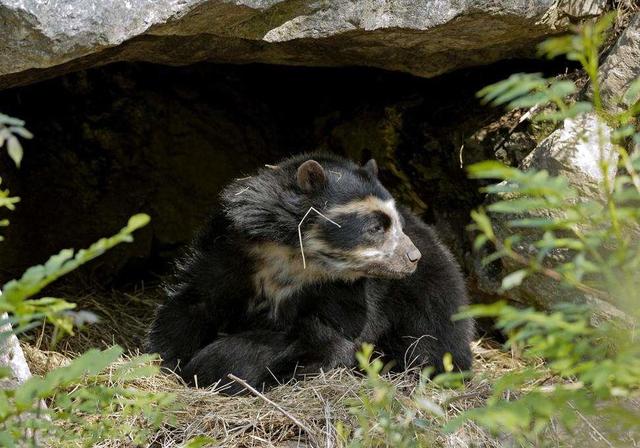
Nowadays in South America, the number of 'glasses bears' is very small, which makes them a rare endangered species. Their small number is not only caused by the large-scale hunting by humans, but also like many endangered species, they are endangered because their habitat for survival has been destroyed.
Our national treasure panda was previously also an endangered species, but after years of effort, the giant panda is no longer so endangered. So as long as humans are willing to put in effort, we can save many endangered animals and let them continue to live happily on earth.