Pay Attention to Dog's Dry Eye Syndrome, Here You Need to Know
Dry Eye Syndrome (KCS)
Abstract
Dry Eye Syndrome is also known as Chronic Dry Eye. It is caused by insufficient tear production, and many dogs are affected by this condition.
Severity:
Mild to Moderate
- Requires Veterinary Diagnosis
- Not Curable, but Manageable
- Veterinarian and Pet Parents Can Treat
- No Known Preventative Measures
- Not Transmissible Between Animals
- Diagnosis Requires Physical Examination, Schirmer Tear Test
Very Common
KCS is common in middle-aged to large dogs. Certain breeds are predisposed, including American Cocker Spaniels, English Bulldogs, Shih Tzus, Alaskan Malamutes, King Charles Cavaliers, Miniature Schnauzers, Pugs, Lhasa Apsos, and Pekingese.
Diagnosis
To determine the presence of dry eye, tear production is measured. Veterinarians use a small strip of paper for a Schirmer Tear Test (STT). The paper is placed beneath the eyelid edge, drawing tears from the surface of the eye. The fluid moves upward along a steel tape and shifts the ink line. The distance of ink movement is measured over one minute. If tear production is insufficient, the diagnosis of KCS is made.
Successful treatment targets the underlying cause of suspected reduced tear production. Because corneal ulcers are common at the time of diagnosis, a fluorescent dye test can be performed after the STT to identify and appropriately treat the ulcer.
Etiology
KCS is caused by insufficient tear production. Immunologically mediated diseases are the most common cause of KCS, although the process is not fully understood. It can also be caused by bacterial or viral infections, as a reaction to sulfonamides and hypothyroidism. Many cases have no known cause. The gland simply stops functioning at its normal level.
Treatment Methods
Home Care
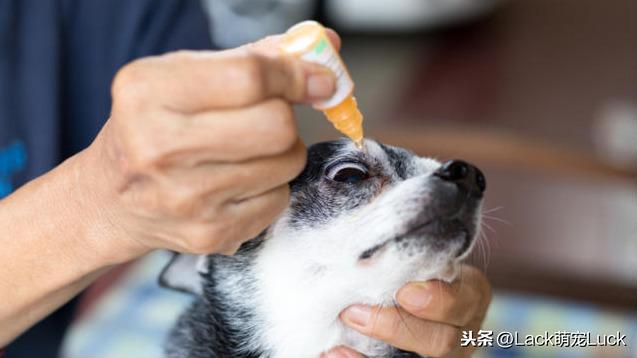
Pet parents will use eye drops at home. Gently wipe the eyes with a warm, damp towel to clear away secretions. Keep the pet away from direct sunlight to minimize eye discomfort.
Supportive Care
- Acupuncture has been used to help manage KCS.
Pharmacological Treatment
- Cyclosporine ophthalmic drops are most commonly used to treat this condition. Tacrolimus ophthalmic drops can also be used, and may be effective if cyclosporine is not used. Artificial tears are also recommended in some cases.
Surgery
- In severe cases, a salivary duct transposition surgery can be performed, transplanting the salivary ducts to the upper eyelid area. The saliva then enters the eye and provides the necessary lubrication.
Specialist
- General practitioners can diagnose and manage most KCS cases. For severe cases, consultation with a veterinary ophthalmologist is recommended.
Recovery
- KCS is a chronic disease. Symptoms can be controlled, but lifelong medication is required.
Monitoring
Regular rechecks are needed until drug treatment stabilizes the condition. Pet parents should monitor at home for sudden changes, such as red eyes, cross-eyed, or eye rubbing.
Prevention
No known preventative measures.
Resources are only for learning exchange, the copyright belongs to the original author, this account is not responsible for any copyright issues. If there is infringement, please contact to delete, thank you!