(Frozen Shoulder) Still Tormenting You? Five Exercises to Relieve Pain
Many middle-aged and elderly people call shoulder impingement ‘’ (fifty shoulder), primarily because shoulder impingement is most prevalent in people aged fifty or so.
The pathogenesis of shoulder impingement is still unclear, but it is related to age. If the shoulder joint has a minor injury during youth, the probability of disease onset is higher. It results in shoulder joint adhesion and inflammation.
Shoulder impingement may be related to hormone levels. The main symptom is shoulder joint pain. Initially, only individual actions cannot be performed. As the disease progresses, the range of joint movement becomes smaller and smaller.

Due to limited joint movement, the shoulder feels like it's frozen and immobile, so it’s also called ‘frozen shoulder’.
Even at night when flipping over, you can feel obvious pain, flipping back and forth, and the pain is unbearable. Patients when the disease is in its self-healing period, their activity range can gradually improve.
However, if the adhesion in the joint can be pulled open, the range of joint movement will also increase, and the symptoms will be relieved.

Today, I'm recommending five exercises to help you stretch the joints from the root and improve shoulder impingement symptoms.
First: Back-bending waist arch shoulder rotation: 20 reps per set, 2-3 sets per day.
Stand with legs straight, arch your back about 45 degrees, and perform shoulder joint circling movements, with a frequency from slow to fast.
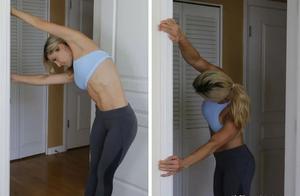
Second: Wall climbing exercise: 20 reps per set, 2-3 sets per day.
Facing the wall, stand with your arms along the wall, and climb upwards along the wall, trying to stretch your arms as much as possible, and stop when you feel shoulder discomfort, then slowly relax and lower your arms.
Third: Body side-bend wrist pulling extension: 20 reps per set, 2-3 sets per day.
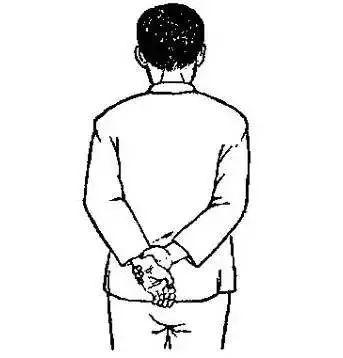
Stand with your body straight, hands behind your back, one arm extended, and the other hand grasping the wrist of the extended arm, gradually pull up for stretching. If you feel obvious pain, slowly relax and recover.
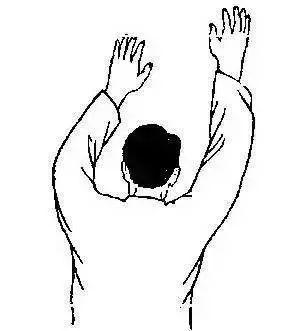
Fourth: Head-holding relaxation exercise: 20 reps per set, 2-3 sets per day.
Stand straight, cross your arms and place them on the back of your head, extend and retract your elbows, trying to make the two arms parallel to the ground. If you feel obvious pain, slowly relax and recover.
Fifth: Support downward squatting up: 20 reps per set, 2-3 sets per day.
Find a suitable height and can be supported fixed object, such as desk, windowsill, etc., to do the squatting action, squat to the bottom and then stand up, make the arm straight, try to stretch, maintain the back upright.
Have you learned these five exercises? Practice them every day to stretch the joint adhesion and improve your shoulder condition, happy and joyful New Year!