Functional Training 14: Controlling the Intensity of Functional Training
Control the intensity of functional training
Understand how to take progressive and regressive exercises in training, we can perfectly match the training intensity with the athlete's ability. Some simple techniques can be used to determine the progressive and regressive of training intensity to match the athlete's ability. Let's take a look at some practical adjustments that make training more reasonable.
Control movement speed
Changing the speed of movement can change the intensity of any training. Generally, the faster the movement, the greater the difficulty. This is because it requires additional power to reduce the speed, such as explosive movements like jumping. Self-weight jumping requires more force than self-weight squatting when jumping off and landing.
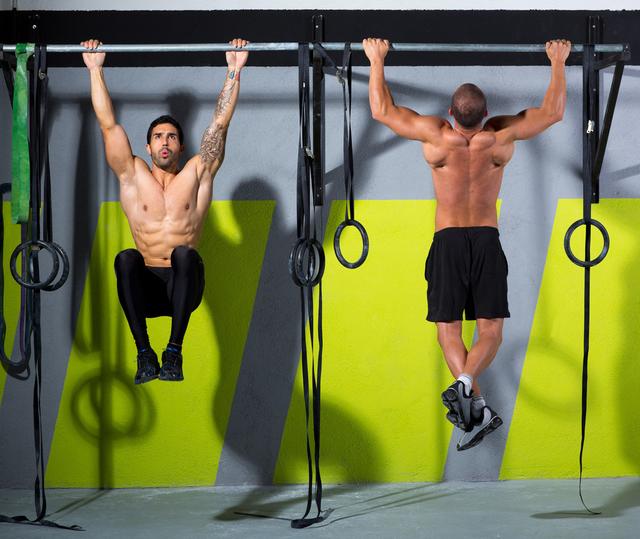
However, speed also plays a different role in some strength training. Slowing down the training speed can increase the intensity of this intensity level, expand the results, and increase the training intensity. For example, if an athlete can perform 10 push-ups quickly, slow down the speed, count 3 down from the arm and 3 up, can improve the training results and change the repetition to 4 or 5.
Control lever arm
The lever arm is the distance between the force application point and the fixed point in the exercise (see Figure 3.1). The longer the lever arm, the greater the load and the greater the difficulty of the exercise.
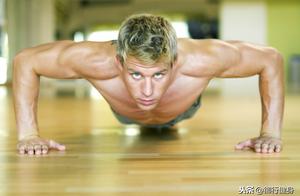
The most common use of the lever arm is as a variable factor in functional training, which can be seen in the exercise of push-ups. Push-ups with hands close to the ground are harder than push-ups with hands resting on a fitness chair, and they are harder than push-ups with knees replacing feet (see Figure 3.2). This is because the lever arm of the ground push-up is the longest, which is from the feet (fixed point) to the shoulder (the farthest end) is the longest. The same principle also applies to the comparison between flying bird and fitness chair inclined lifting, as well as the comparison between side lift and shoulder push.
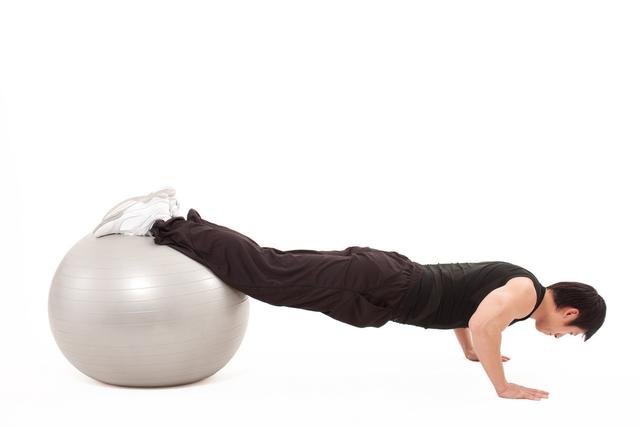
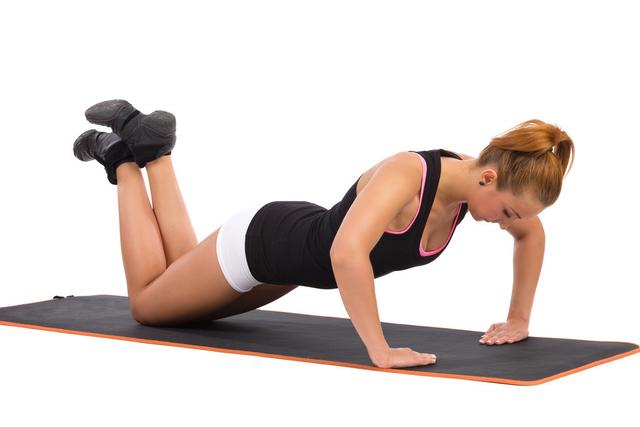
Push-ups and lever arm
Control support base
Controlling the support base can greatly change the intensity of the exercise. Increasing the support base can provide better stability and balance, reduce the load of the stabilizing point and reduce the difficulty of the movement. Reducing the support base will put more pressure on the support structure. For example, compared to the biceps curl with two legs, performing the single-leg alternating biceps curl requires better core and hip stability to maintain the 7-type frame. Because of the need for balance, the speed of the dumbbell is slower, so the biceps muscle can maintain a longer tension (that is, to increase the stimulation better).
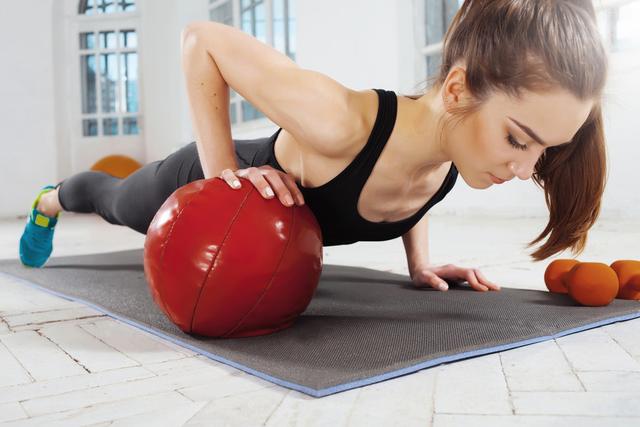
Reducing the support base (from four-point stance to three-point stance) while increasing the load on other support structures, such as three-point push-ups (as shown in the figure). In the three-point push-up, not only can the arm supporting the arm see a larger load, but the center of gravity also changed, and the body must avoid rotation or collapse.

Three-point push-ups have higher requirements for shoulder stability, not only train the supporting arm, but also further exercise core stabilization control ability.
Control the movement range
Adjusting the range of movement of the exercise can greatly change the difficulty of the action and the training intensity. Larger movements, especially controlled movements in slow motion, do not have much potential energy, and require more work and stronger control. For example, in the training of arm forward extension and single-leg squatting, it is more difficult to extend the arm forward to touch the knee, it is more difficult to extend the arm forward to touch the foot, and it is more difficult to perform single-leg deep squats. Simply increasing a few centimeters of depth or range can transform a beginner exercise into a higher level exercise.
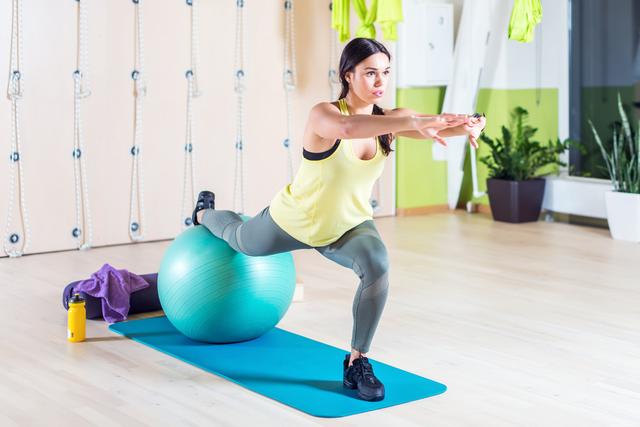
In terms of intensity, the conversion from beginner to intermediate can be seen as a pyramid, some combinations are performed at the highest level of intensity, some combinations are performed at the intermediate level of intensity, and others are performed at the easiest level of intensity.
To adjust some simple exercises to progress from beginner to advanced, adding a few centimeters of movement is a great option.
Other operational strategies
There are other ways to adjust the intensity of functional training. The most obvious one is to increase the external resistance, such as using dumbbells, medicine balls, resistance bands and cable machines, which can increase the training intensity. Increase the movement, such as adding stair steps and rotations in a certain exercise (such as resistance band lift, resistance band rowing) can also increase the training intensity. Adding stimulation, such as vibration platform or vibration rod, can also increase the difficulty of squatting and arm forward extension exercises. Vibration can increase instability and additional proprioception, thereby enhancing muscle and muscle system communication. After improving communication, it can be converted into function through specific functional training. However, vibration should not be used indiscriminately, it must be used for specific reasons.
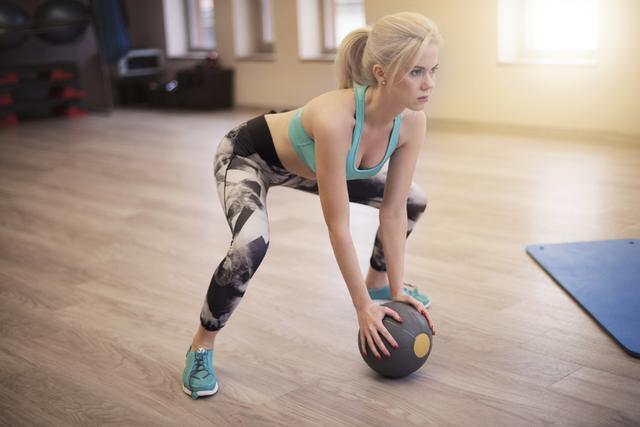
Other control strategies for functional training intensity include moving within a three-dimensional action plane specified for the target, or using specific drives to promote the expected movement pattern. For example, single-leg arm extension can be enhanced by turning into a mode of ABC, when the athlete extends the arm forward to touch the stable foot inside and outside, this mode forces the hip to make a larger rotation.
Why functional training is needed
Smaller space, less equipment, shorter time
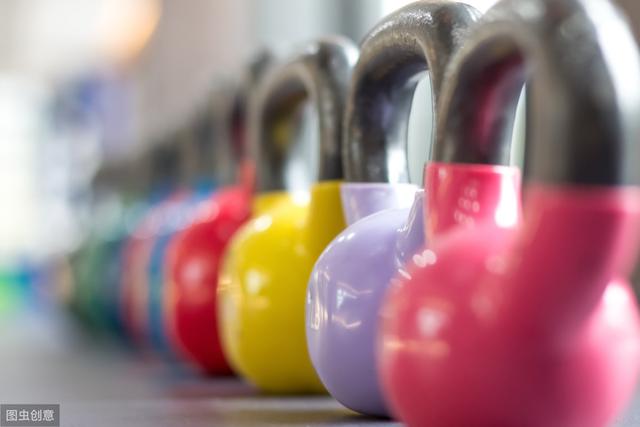
In contrast to the large amount of specialized training equipment required in traditional gyms, many ordinary venues can be easily transformed into functional training halls. Only a few basic equipment is needed. The key to functional training is the movement itself, not the equipment. Therefore, dumbbells, medicine balls, kettlebells, hurdles, resistance bands and balance balls are the simplest functional training hall. You can even carry these training equipment with you.
Kettlebell
Get fit without increasing weight
The characteristic of neuromuscular adaptation is that you can get stronger without increasing weight. In some projects, a large amount of weight can be a disadvantage. The coordination between muscle and muscle system can also make the body reduce the burden on a single muscle by distributing the load to multiple muscles, which can reduce the strain on a single muscle and prevent it from becoming too large.
Functional training reduces muscle damage, increases overall muscle coordination.