Football Basics - Phase 3: Don't Neglect Off-Ball Running; Ensure Passing Routes
On the football field, football is always the focal point, so the player with the ball receives more attention than the player without the ball. People marvel at the brilliant performances, but often ignore the green leaves around them.
Every player who dreams of playing on the green field hopes to have outstanding ball possession ability. Under the influence of this subconscious, many players don't attach enough importance to off-ball running.In fact, off-ball ability is far more important than on-ball ability.
Imagine you are the midfield core of a team that values possession. Every time your team plays, you can gain 60% of the ball possession, and your ball possession time reaches 12% of the team's time (this is a very high data). In such extreme circumstances, your total ball possession time is only 6 minutes and 30 seconds, and in the 80+ minutes outside this time, you are constantly running off-ball.Therefore, never ignore the actions you take in off-ball situations, as they could determine the outcome of a game.
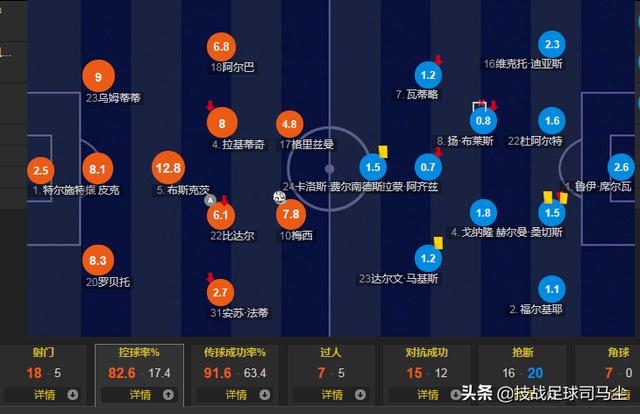
For example, in Barcelona's 1-0 victory over Granada, Barcelona midfielder Busquets won the best player of the game with over 100 passes. In that game, Barcelona's ball possession rate reached 82.6%, but Busquets' on-ball time did not exceed 10 minutes.
Football's rapid movement relies on off-ball assistance
In the first article, we repeatedly emphasized 'speed' in football. To expose the gaps in the opponent's defense, we need to make the football quickly move between players in a local area with minimal touches. In this process, in addition to the player who initiates the pass, off-ball players also ensure the pass route.
The pass route refers to the route between the passing player and the receiving player without defensive players. This gap always exists after the receiving player receives the ball, unless he is surrounded by defenders.Therefore, for a team that values one-touch passes, off-ball players need to move to ensure the existence of the pass route, which is a key point.This is why Barcelona, which emphasizes possession, prefers 433 and 343 formations, because these formations have more triangles than other formations, which allows players to move around in relatively fixed positions and provide more passing options.
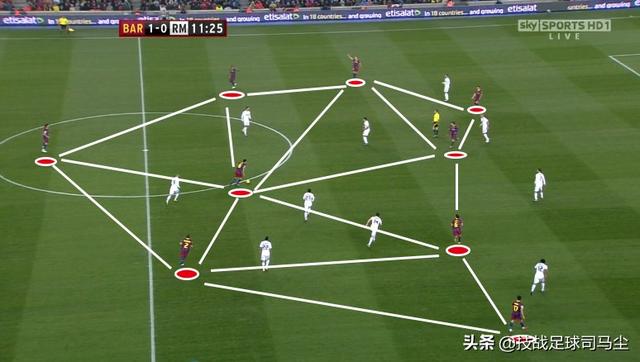
If the player who makes a one-touch pass cannot quickly pass the ball to the player who wants to receive the ball, because there is no feasible passing route in the direction he is facing, then the opponent will press him. The probability of him losing the ball will increase rapidly.
In most youth league matches, we can see such a scene: The player who should assist in moving back to receive the ball stands behind the defensive player and desperately tries to get the ball. They keep shouting the name of the ball-holding player, but the player holding the ball at this time, except for scolding, has no intention of passing the ball, because it takes a pass to penetrate one or more defensive players, which is obviously unrealistic.
Therefore, for any player who wants to perform on the green field, off-ball movement is a compulsory course. However, football is a sport full of change and surprise. It is not easy to complete accurate and timely movements in the constantly changing field. So how to do this? We can find the answer by thinking in reverse.
Reverse thinking to find the best solution
When you are confused on the field about how to run, you should do the most and most importantly, reverse thinking. You can imagine yourself as the ball-holding teammate,Try to think from his perspective: 'Where do I want my teammates to be?'
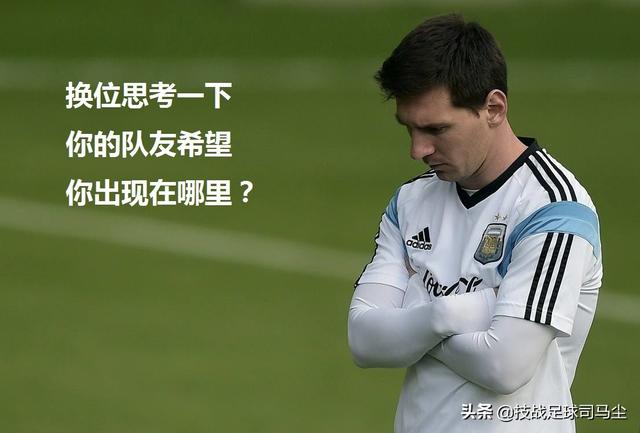
After you have thought about this problem, you should already know where you should be – avoid the defensive player's passing route.
In fact, many players understand where they should be, but whether they can reach that position in a timely manner is another matter. This is on the one hand subjective factors, on the other hand, there are interference from defensive players.
After you confirm the position you should be in, if you really want to get the ball, you should quickly move to that position – in fact, even if you don't want to get the ball, you should be in that position, because this can increase the passing points and make it more difficult for the opponent to defend, but it will consume your energy.
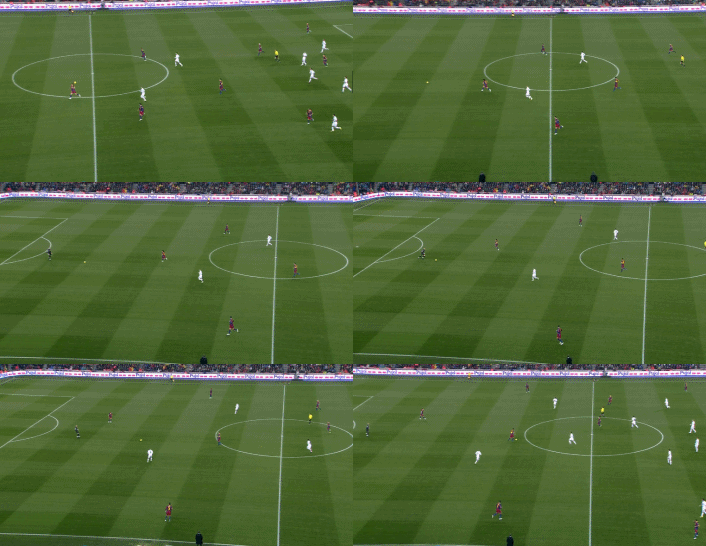
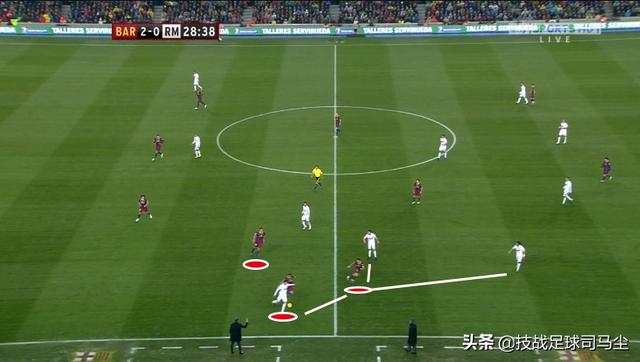
Correct demonstration
During this defense, Puyol after passing the ball back to Baldes did not stop, he used a sprint action to pull away from behind Benzema, providing a passing point for the teammate. Similar practices were also adopted by Abidal and Pique, they quickly pulled to the sidelines, which made Busquets have 4 passing points after receiving the ball, while Real Madrid only had 2 defensive players. In this way, it is difficult for Real Madrid to cut off the ball.By quickly surrounding the opponent's passing route and trying to break through, to improve the success rate, they would also arrange one 'free man' on the outer perimeter of the defensive zone when the opponent barely pushed the ball out. This free man would snatch the ball rights when the opponent barely pushed the ball out. Therefore, it is easy to find that when the attacking and defensive sides are thinking quickly, assist becomes a very interesting game.
When facing a player who is good at observing, you may need to do 'feint runs' to distract him. When you succeed, you will experience the satisfaction of off-ball movement.Conclusion