Do 3 Exercises at Home to Easily Relieve Waist Pain and Restore Comfort
In the previous section, we mainly introduced the first method of prone and supine positioning exercises. In this section, we will further teach you the second supine positioning exercise and three standing positioning therapy methods, which will surely help you relieve waist pain.
Method 1: Flexion and Rotation to Relax
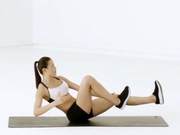
The patient lies on their back. The therapist stands beside the patient, using one hand to support the patient's heels and fix them, and the other hand touches the patient's bent knees. Then, the patient's waist is rotated around the hip joint, maintaining for 30-50 seconds. At this time, if the patient has adverse reactions, it indicates that the flexion-rotation body position time is too long, and the time can be appropriately shortened.
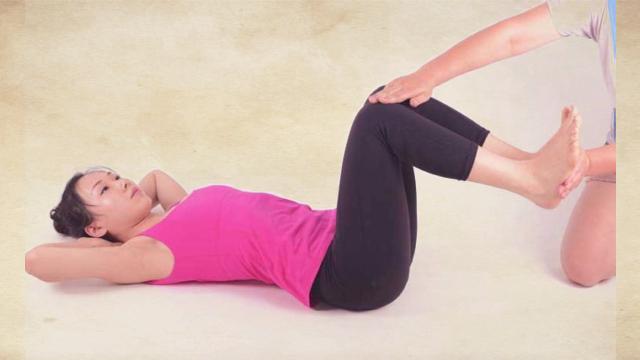
The patient lies on their back, the therapist stands beside the patient, one hand supports the patient's heels and fixes them, and the other hand touches the patient's bent knees. Then, the patient's hip is rotated and shaken.
Standing Position Exercise
Method 1: Lateral Extension
This method is mainly used to treat waist displacement syndrome and stretching impairment syndrome. The patient takes a standing position, with their feet apart wider than their shoulders, their palms together behind their back, their fingertips pointing upwards, inhale to turn their head backwards to stretch, then exhale to let their upper body approach the side of the right leg, maintaining for about 10 seconds, relaxing their body and head, repeating 10-15 times.
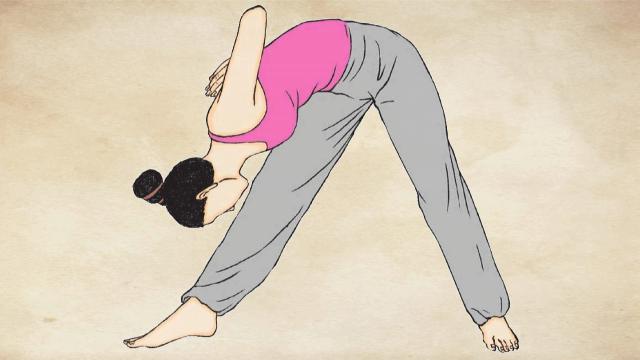
Take a standing position, with feet apart wider than their shoulders, palms together behind their back, fingertips pointing upwards, inhale to turn their head backwards to stretch, then exhale to let their upper body approach the side of the right leg.
Method 2: Leg Lifting in Standing Position Flexion
This method is used to treat spinal curvature and asymmetry-induced waist pain. The patient takes a standing position, left leg supports their weight, right foot is placed on a stool to make the right leg's hip and knee joints bent approximately 90 degrees, and the right hand is placed on the right knee. Then, the upper body leans to the right side, and the left hand arm extends upwards to the right, stretching the left waist to the limit, keeping the head slightly raised, looking at the right palm, maintaining for 5-10 seconds and then returning to the starting position, alternating sides.
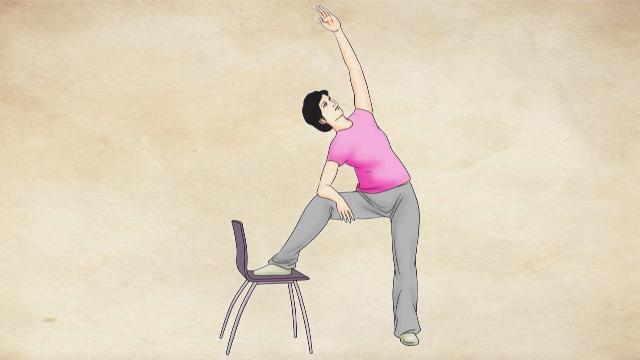
Take a standing position, left leg supports their weight, right foot is placed on a stool to make the right leg's hip and knee joints bent approximately 90 degrees, and the right hand is placed on the right knee. Then, the upper body leans to the right side, and the left hand arm extends upwards to the right, stretching the left waist to the limit, keeping the head slightly raised, looking at the right palm.
Method 3: Lateral Shift Correction of Chest and Pelvis
This method is mainly used to correct or alleviate spinal deformity, should be used under the guidance of a doctor. The patient takes a standing position, with their feet apart the same width as their shoulders, the therapist and the patient stand back to back, their arms crossed, the therapist bends their waist and uses their waist and sacrum to lift the patient's shifted pelvis, letting the patient's waist lean back on the therapist's back, the neck and head are slightly raised, and at the same time, another person holds the patient's lower leg to exert a downward force, to increase the traction force of the patient's pelvis, doing it rhythmically for 10-15 times.
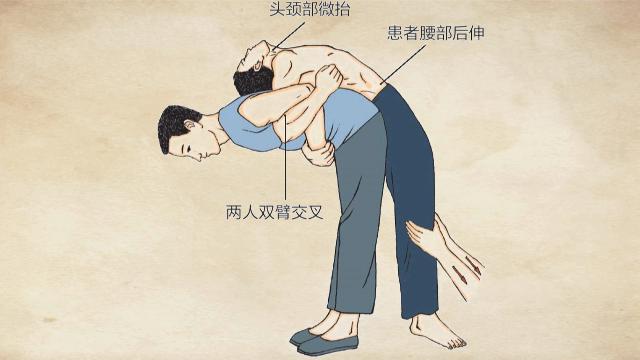
The patient and the therapist stand back to back, the therapist bends their waist and uses their waist and sacrum to lift the patient's shifted pelvis, another person holds the patient's lower leg to exert a downward force, to increase the traction force of the patient's pelvis.
This Section's Vocabulary
Standing Position Exercise
All standing position exercises are simple and convenient, and do not require limited site requirements, patients can complete them synchronously during their work breaks or when watching TV at home, making work and fitness two in one.