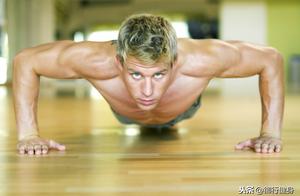
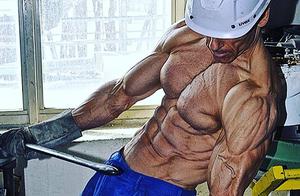
How to Do Push-Ups Effectively: Learn to Use This One Muscle to Boost Your Results 5x
During the fitness process, a part that people most often use but is easily neglected is the one that maintains the coordination of many muscles, connects the movement of the arms and the trunk –the shoulder blade
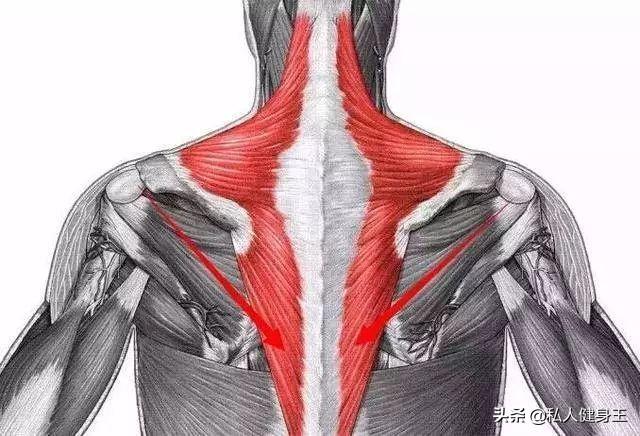
The shoulder blade attaches to the posterior of the chest cavity, which can involve every direction of movement. Any malfunction of the shoulder blade function or lack of stability of the shoulder blade in the appropriate posture will cause serious direct consequences to the shoulder joint. Therefore, understanding the shoulder blade mechanics in functional training is very necessary for fitness people.
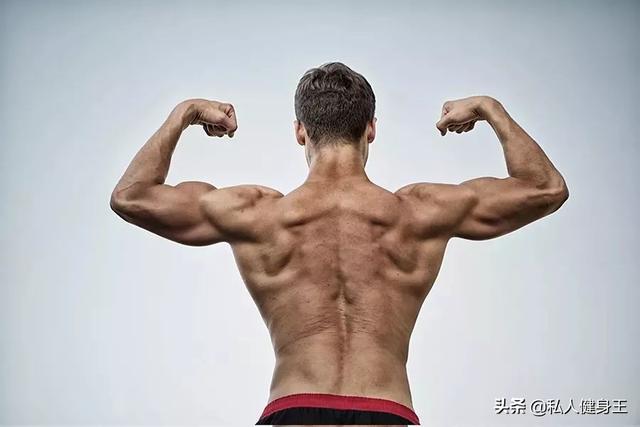
Below we introduce the optimal shoulder blade mechanics for functional vertical and horizontal movement modes in detail. Note that no matter how the pattern is executed, the shoulder blade must remain in contact with the ribcage (retraction).
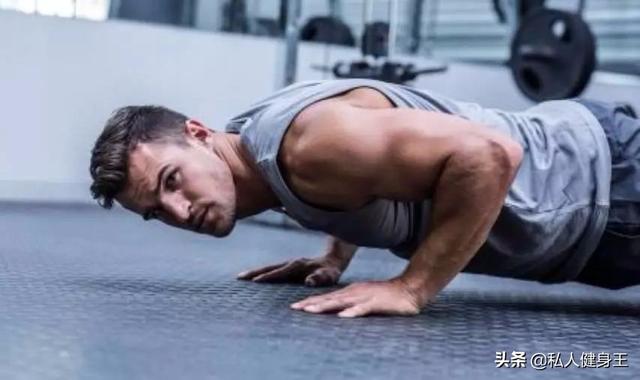
Horizontal pushing mode
(such as push-ups, dumbbell or cable chest presses)
- Concentric phase:The shoulder blade should surround the ribcage with expansion (the shoulder blade away from the spine), and end in a neutral or slightly upward rotation at the center of the shoulder socket.
- Eccentric phase:The shoulder blade should be controlled to surround the ribcage with contraction, ending at the neutral starting position.
Vertical pushing mode
(such as overhead presses)
- Concentric phase:The shoulder blade surrounds the ribcage with expansion, tilts backward and upward rotation, reaching the center of the shoulder socket.
- Eccentric phase:The shoulder blade should retract, maintain backward tilt and downward rotation, return to the neutral starting position.
Horizontal pulling mode
(such as dumbbell and cable rows)
- Concentric phase:The shoulder blade should be slightly retracted, but not reach the midline of the spine, must maintain neutral position alignment.
- Eccentric phase:The shoulder blade should surround the ribcage with expansion and maintain contact with the ribcage, should not overexpand, must maintain neutral position alignment.
Vertical pulling mode
(such as pull-ups and cable rows)
- Concentric phase:The shoulder blade should tilt backward, slightly retract and downward rotate to return to the neutral shoulder blade position. Should not over-retract or squeeze the shoulder blade together, patients should not be prompted to 'pull back'.
- Eccentric phase:The shoulder blade should maintain backward tilt, slight expansion and upward rotation. During the entire movement, the shoulder blade should remain flat and surround the ribcage.
Below we introduce the key performance of the horizontal pushing mode –push-upsas an example
Push-ups provide training stimulation for the entire shoulder complex, chest and spine-pelvic-hip complex. For patients with poor shoulder blade stability, injury rehabilitation or low strength level, inclined push-ups are a good starting point.
Push-up series key performance
In each progressive stage, the patient activates the deep cervical flexor muscles, anterior serratus muscle and deep abdominal wall muscles, and maintain this activation. When the body faces the hand down, bend the elbow. As the arm extends, return to the starting position. The body should remain straight throughout the pattern.
–Inclined push-ups–
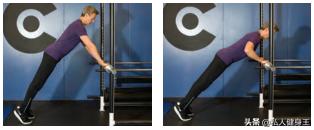
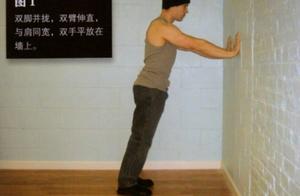
- At the beginning, grasp the bar or place the hands on the plane, with the distance between the hands slightly wider than the shoulders.
- The head, chest, spine and pelvis must remain in neutral position, and always maintain in the middle of the pattern.
- Activate the anterior serratus muscle and the core, and maintain this activation.
- Slowly lower the trunk to the bar, the floor or device, while maintaining the straight posture and activation pattern.
- Push off from the bar, floor or device, return to the starting position.
Note:The shoulder blade should remain stable throughout the movement, in the concentric phase (lifting) slight expansion (the shoulder blade away from the spine), in the eccentric phase (downward) slight retraction (the shoulder blade close to the spine).
–Floor push-ups–
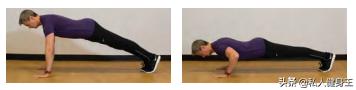
As the patient's progress, just lower the height to increase the challenge. The Smith machine with a dumbbell or the squat rack is an ideal choice for patients to perform the lower level movement. The floor push-ups demonstrate a higher requirement than inclined push-ups. Throughout the entire movement, make sure the spinal position is neutral and the anterior serratus muscle and core activation.
–Balance ball push-ups–
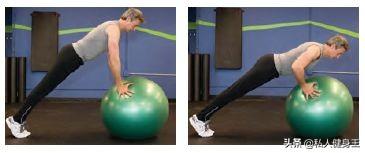
Ensure that you can perform basic push-ups, as the strength and stability improve, you can perform push-ups on a medicine ball or balance ball to increase the challenge.
–Balance ball push-up series (alternate repetitions)–
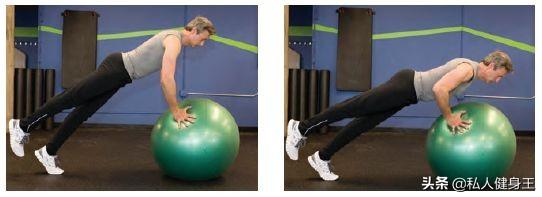
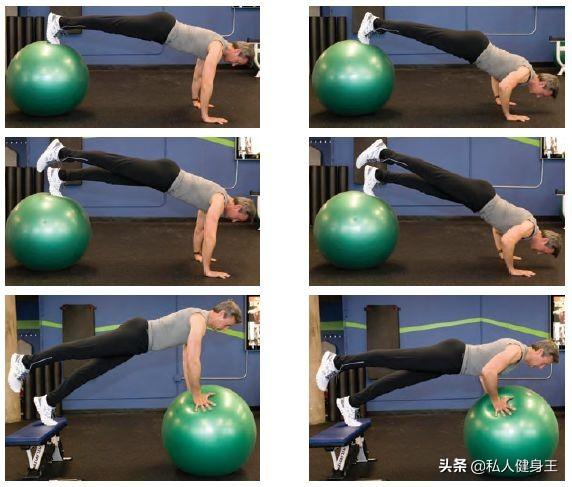
For individuals with superior core stability and upper limb strength, you can also use alternating quadruped mode, lift the body or lift the legs to increase the and stability challenge.
The above content comes from
Shoulder Joint and Hip Joint Movement Functional Impairment Correction Training Guide

Authorized by People's Post and Telecommunications Press to publish, translation must retain the copyright information of the book: Title, cover, publisher