Weighing in the morning is much lighter than the evening, can sleeping really burn fat?
Hello everyone! I am Fu Dad, a licensed physician, specializing in weight management and disease nutritional therapy for over 20 years. I hope my articles are helpful to you.
Most people who lose weight have a habit of weighing themselves in the morning after emptying themselves, and they find that the weight is reduced compared to the weight before going to sleep. Although some stool is discharged, it's not much, right? So how can you sleep and lose fat? That's a really wonderful thing if you can sleep and lose fat!
Thinking about it is quite reasonable, losing weight is not easy. But the fact that the weight decreases noticeably in the morning is true. Generally, the weight on an empty stomach is a more accurate weight. It is usually recommended for people who are losing weight to take this as a reference. So why does the weight decrease so much in the morning?
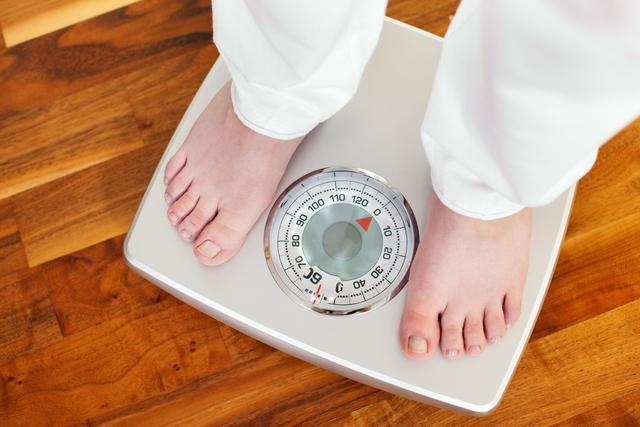
First, let's understand how weight is measured. Our bodies are made up of skin, subcutaneous fat, internal organs, muscles, bones, blood, various organs, and the contents of empty cavities. All these components make up the weight we measure on the scale. We can measure our weight on the scale, but we cannot know the specific amount occupied by each component of the body.
However, it doesn't matter, although we cannot know the specific weight of each component, but know the basic metabolic laws, can roughly know the weight will change. For example, people often have a bowel movement, after a bowel movement, the weight will naturally decrease by one or two kilograms. But someone will say, 'I didn't have a bowel movement in the morning, but my weight still decreased a lot.' Don't be impatient, let Fu Dad tell you slowly.
The largest component inside the body is water, which accounts for 60-70% of an adult's body weight. Men have a higher water content than women. Yes? It's true that men have more muscle and less fat, while muscle contains a lot of water, and fat contains very little water. Let's go back to the topic. The water in the body is not constant, but maintains a dynamic balance. The metabolism requires a large amount of water, and about 1200-2000 ml can be ingested through drinking water and food each day. The body also generates hundreds of milliliters of water through metabolism, which is then discharged outside the body through various channels. The main one is urine, then the respiratory tract, the skin, and the stool, and other ways are negligible.

So how does the body maintain a dynamic balance of water? Of course, through the regulation of the complex endocrine system, including the electrolyte balance. Here is too complicated, omitted one ten thousand words. Simply put, the water and sodium chloride in the body need to maintain a stable concentration, water more drain sodium chloride, water less drain sodium, water more maintain. The stable concentration of sodium chloride is 0.9%, and the physiological saline used in hospitals is at this concentration.
The basics have been explained, let's take a look at the changes in the body at night.
Water discharged through breathing
Most people don't think that breathing will discharge much water, in fact, this is a misunderstanding. The lungs need a humid environment, so the gas discharged from the lungs each time contains a lot of water. Try to breathe into a cool mirror, and soon you will see fog and small water droplets. Just a small, insignificant fog, for a day, can discharge 400-500 ml of water through breathing, which is about one pound of water. In one night, three to four ounces of water will be discharged through breathing.
Water discharged through skin
Everyone knows that sweating will discharge water, but when you don't sweat, the skin will also continuously evaporate water. This is related to the surrounding temperature and humidity, as well as the body type and age. About 400-600 ml can be discharged per day. This calculation results in three to four ounces of water discharged through the skin in one night.

Water discharged through urine
The water discharged through breathing and skin is small, and the kidneys regulate the water level. The body needs a lot of water to dissolve metabolic products, and then through the kidneys to form urine. At the same time, the kidneys are also the main organs that regulate the electrolyte balance. At night, the body's metabolism is still ongoing, and a lot of urine is formed and discharged outside the body. The following two cases are particularly many urine.
If you eat a lot of salt the night before, there is a lot of salt in the body, and you will feel thirsty, and you will drink a lot of water to restore the concentration of sodium chloride in the body. When you sleep at night, the body will discharge excess sodium and water through the kidneys, and the urine will be a lot, naturally, the weight will decrease significantly.
If you eat very little salt or don't eat at all the night before, the concentration of sodium chloride in the body will decrease, and the kidneys will maintain sodium chloride, and more water will be discharged to increase the concentration of sodium chloride in the body. As a result, the urine will increase. Many people who are dieting start to see a significant weight loss in the first two or three days, because they are eating little salt during the diet, so the body will discharge excess water. So, dieting's rapid weight loss is not fat loss, but water loss.
Therefore, the difference in weight in the morning and evening, if not considering the bowel movement, is mainly due to water changes. Generally, the weight fluctuation is between 500 grams and 1500 grams, which is considered normal.

As for fat, Fu Dad tells you good news: fat is also consumed at night. Because when you sleep, the body still consumes heat. The base metabolism everyone has heard of. Good news said, then tell a bad news: fat is also continuously synthesized in the night! Yes, the food eaten during the day will be absorbed into the body, and the excess glucose and fatty acids will be continuously converted into fat and stored in fat cells. The key is whether the decomposition speed is fast or the synthesis speed is fast. So, to lose weight, you have to control your diet. As long as you eat reasonably, even sleeping can be weight loss.
I am@FuDadNutrientslicensed physician, specializing in weight management and disease nutritional therapy for over 20 years. If you think what I said is correct, please follow me, here are many practical and interesting nutritional and health knowledge.