Can't Build Thick Shoulders Without Equipment? Master Demonstrates Bodyweight Shoulder Exercises - This Exercise is Worth Challenging
Push presses are a cornerstone of shoulder training and a key element in building an impressive shoulder physique. Before the rise of bodybuilding, push presses were the standard for measuring upper body strength, with athletes proudly boasting their ability to lift heavier weights.
Even today, push presses are far less popular than bench presses in gyms, and our enthusiasm for them is not as high. However, this does not diminish the significant functional advantages of push presses, especially compared to bench presses.
Among the three major exercises, squats and deadlifts are performed while standing, with the power chain starting from the ground and transmitting power upwards through the body. These two exercises are closely related to our daily habits, such as bending down and lifting heavy objects from the ground.
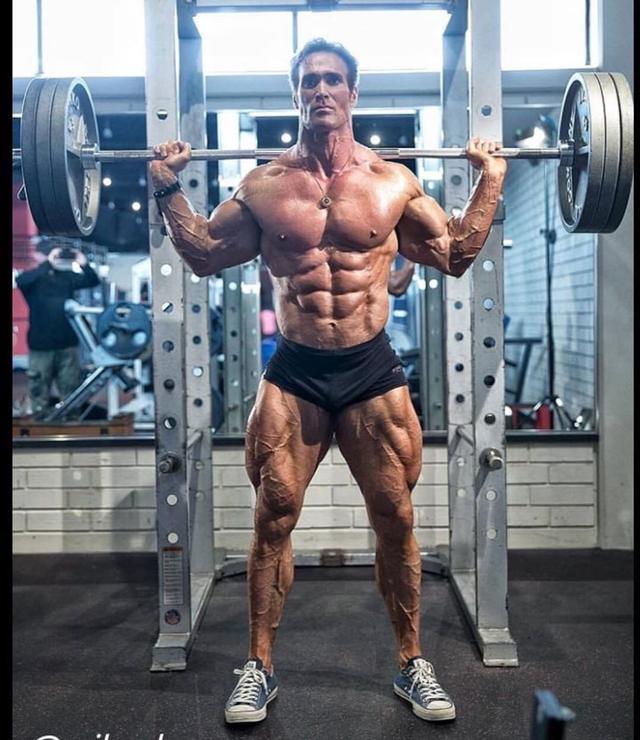
In contrast, bench presses are performed while lying on one's back, pushing the weight upwards with the back as the fulcrum. This has limited practical applications in everyday life.
Compared to bench presses, push presses involve lifting weight vertically within the sagittal plane, primarily targeting the shoulder and arm muscles. However, our abdomen, back, and legs are also integral parts of this power chain, ensuring stability. In daily life, 'lifting' is more common than 'pushing': lifting a champagne bottle, lifting a girlfriend, lifting our hands…
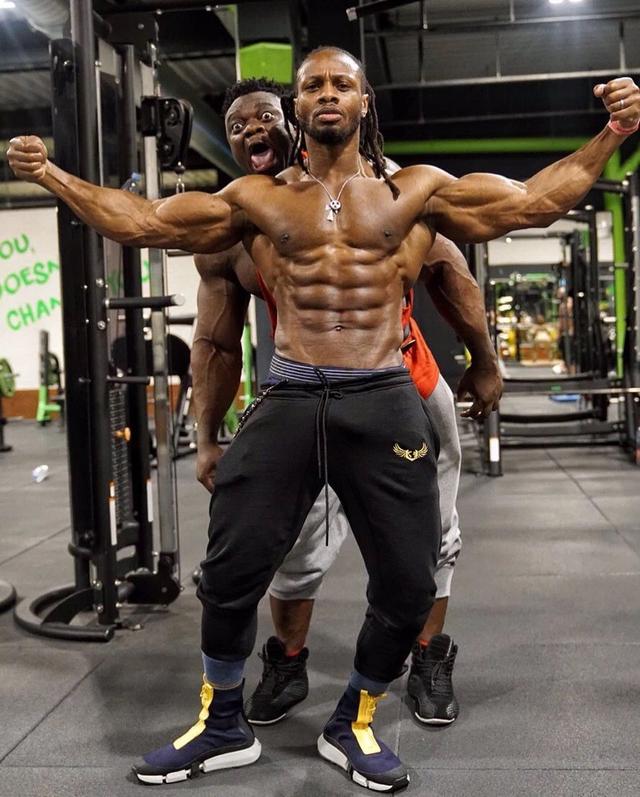
Therefore, whether from shoulder training, aesthetic appearance, or functionality, push presses cannot be ignored.
Today we introduce this bodyweight shoulder exercise, which is not easy, but for those without equipment, it is an easy exercise to make progress.
Action details
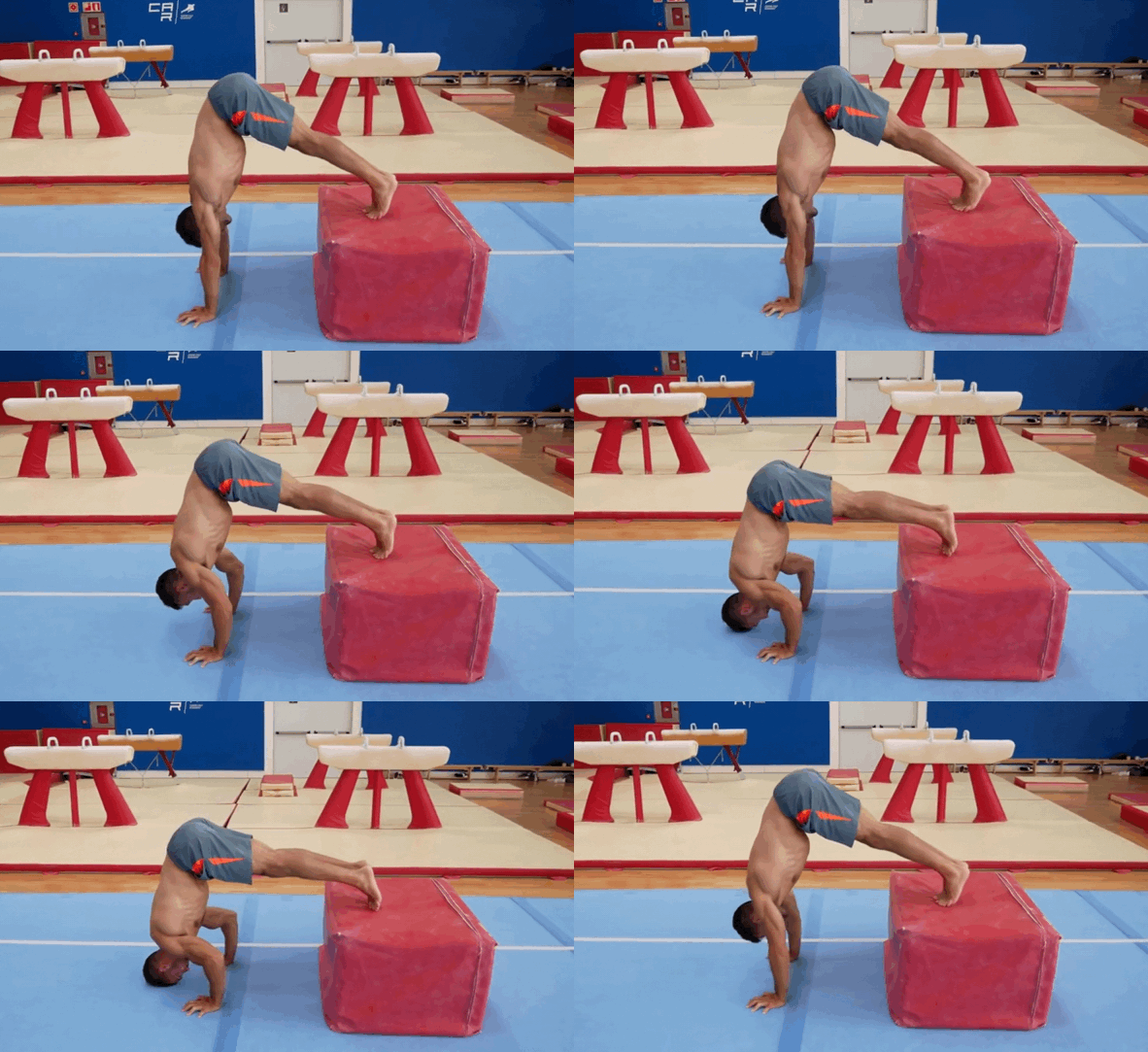
- Choose a wall position, with your arms at shoulder width and your hands 1-1.5 times your shoulder width apart.
- Extend your legs and support them against the wall, forming a 90-degree angle between your body and the ground. Tighten your waist and back muscles, and move your legs along the wall upwards, choosing the height of your feet according to your ability.
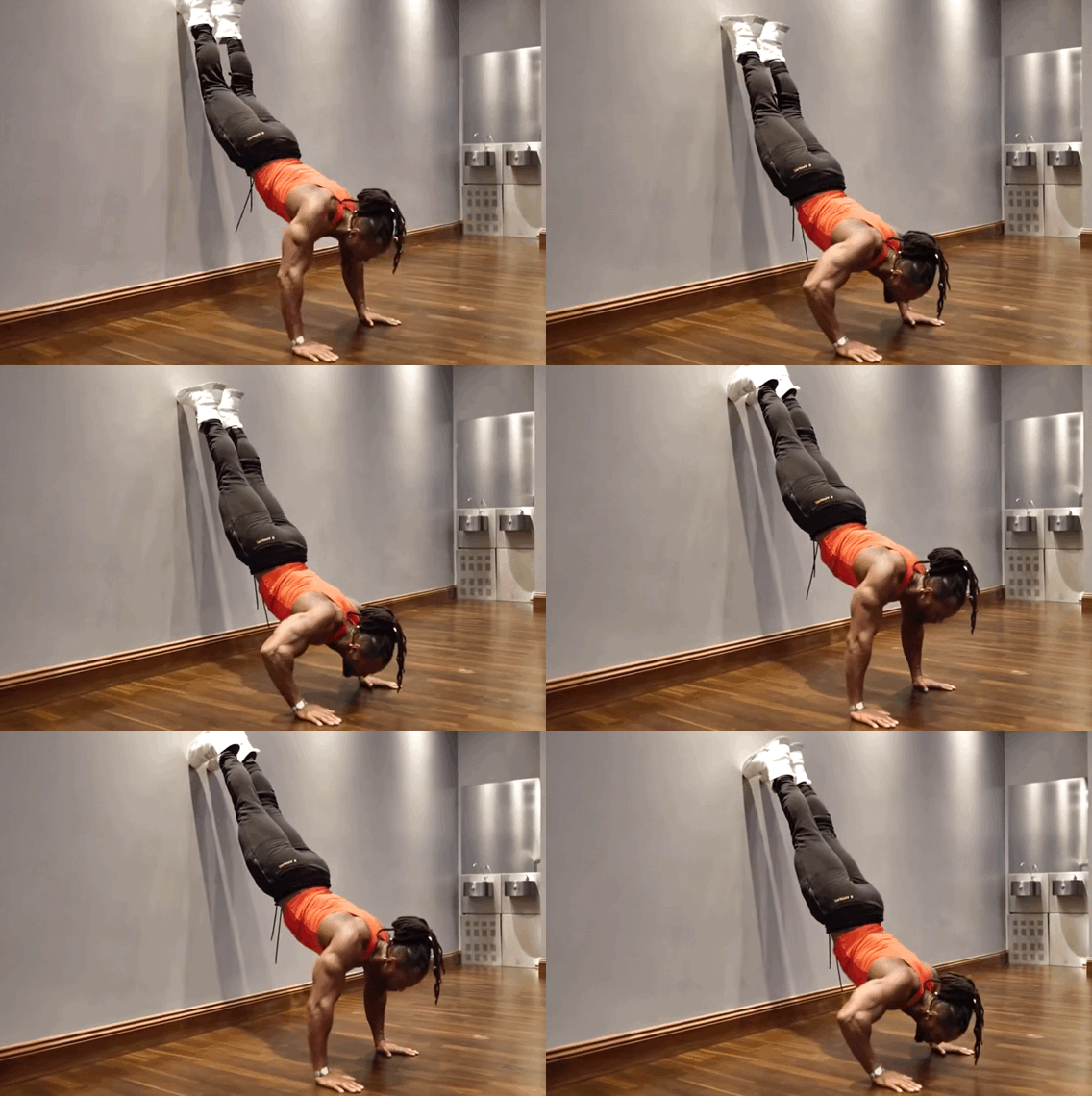
- Take a deep breath, bend your arms, and slowly lower your head to stop at the position closest to the ground.
- Feel the activation of your shoulders, and exhale while pushing against the force of gravity to straighten your body.
Training precautions
Movement trajectory:
To do this exercise well, you first need to understand the movement trajectory. Our body is not directly up and down, which makes the movement range very short and cannot stimulate the anterior deltoid muscles.
Therefore, our little arms should be as vertical as possible when supporting the ground, so that when we lower the body, the body moves forward at an oblique angle, and when we lift it up, the body moves to a more oblique rear position.
Breathing rhythm
Breathing rhythm affects muscle activation, especially in inverted positions, trainers should pay more attention to adjusting breathing. During the exercise, remind ourselves to inhale when lowering the body and exhale when rising.
Action rhythm
When doing an inverted support, the movement should be ‘slow down when lowering and fast when rising’, that is, the body should slow down when lowering and speed up when straightening.
‘Slow down’ is to strengthen stability and safety, because letting the force of gravity drop is dangerous; ‘fast up’ is to increase our muscle burst power and ensure the completion of the action.
Action difficulty
Just as the relationship between downward push and downward push, inverted support and push press are two sisters. However, the popularity of inverted support is far less than downward push, I think this is mainly due to the following reasons:
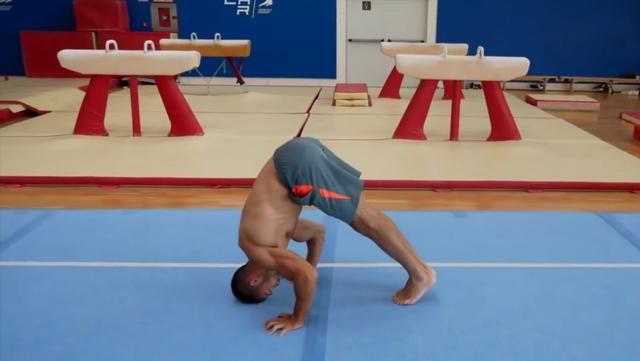
1. The inverted posture is very difficult.Inversion requires high balance, flexibility, and strength of the body. We need to use arm strength to support our body, and also use the core muscles to control the stability of the body, so it is more difficult to enter than downward push.
2. The movement range is short and the power feeling is insufficient.When using a barbell or dumbbell to push press, our arms have no space limitations when pushing upwards, but when doing inverted support, our head is lowered to the lowest point on the ground, which shortens the movement range.
Progressive training
Considering the above, for friends who want to practice shoulder muscles with bodyweight, you can start with these three exercises and gradually increase the difficulty.
1. Wide-grip push-ups.With your hands wider than your shoulder width, the angle between your arms and body is larger, and you don't need to mobilize the anterior deltoid muscles.
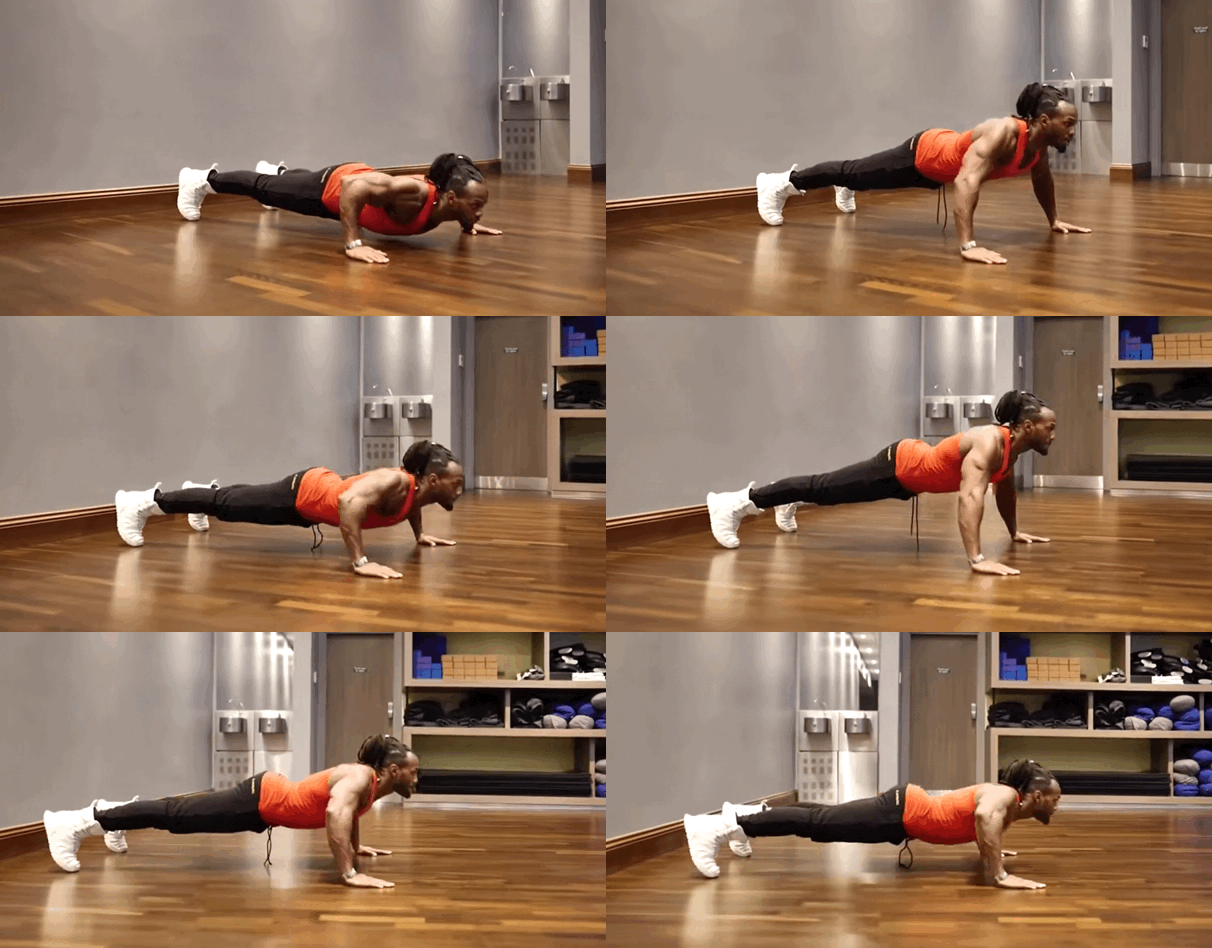
Compared to inversion, downward push is in a horizontal plane, which puts less pressure on the shoulder joint, and also tests our core muscle stability, which is very suitable for beginner training.
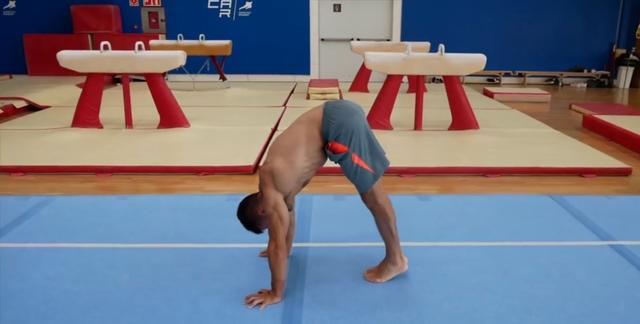
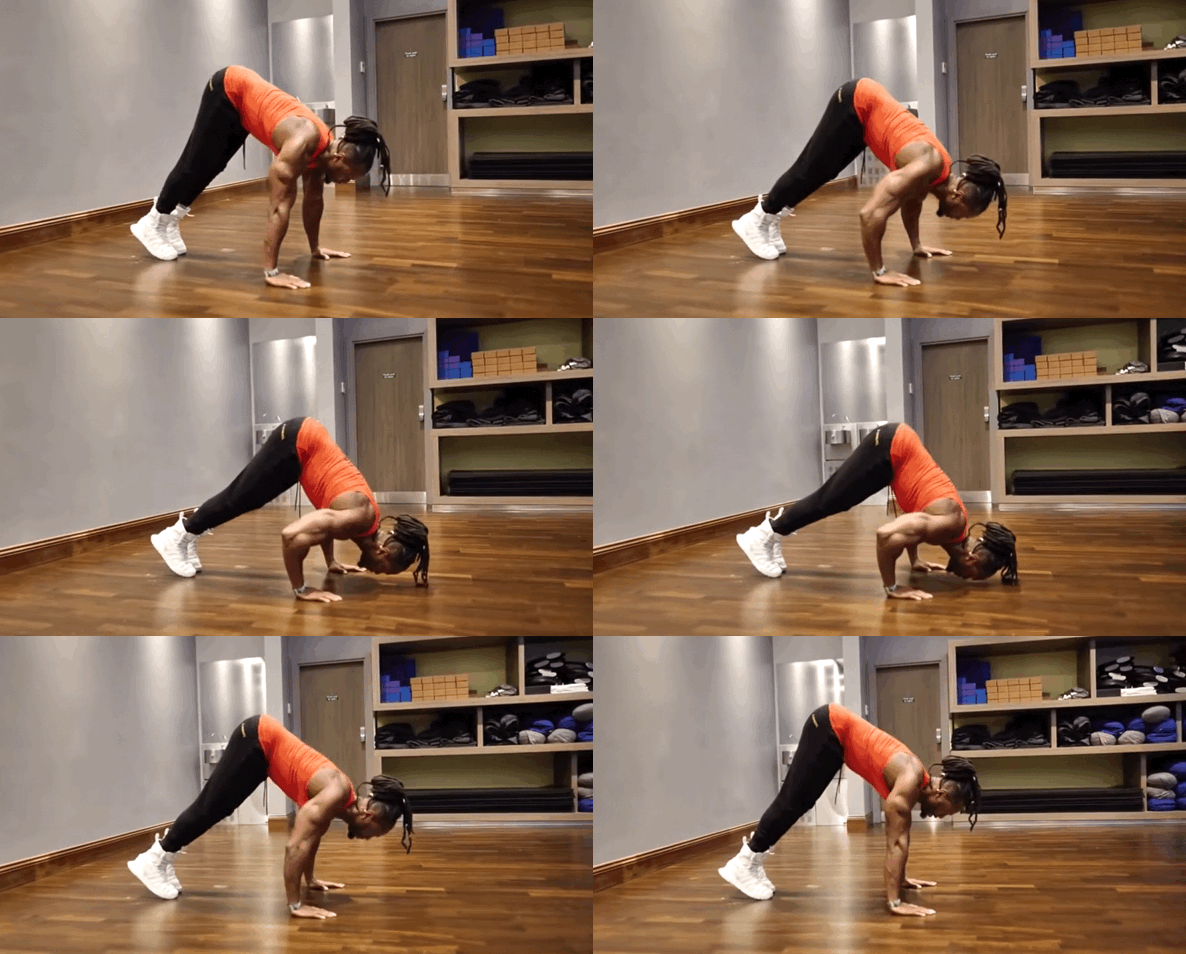
2. Knife inverted support.The power mode is the same as inverted support, you don't need to invert your body, the difficulty is reduced a lot, but you need good hip joint flexibility, it is recommended that everyone stretch first before doing the exercise.
3.,
~