Golden Eagle
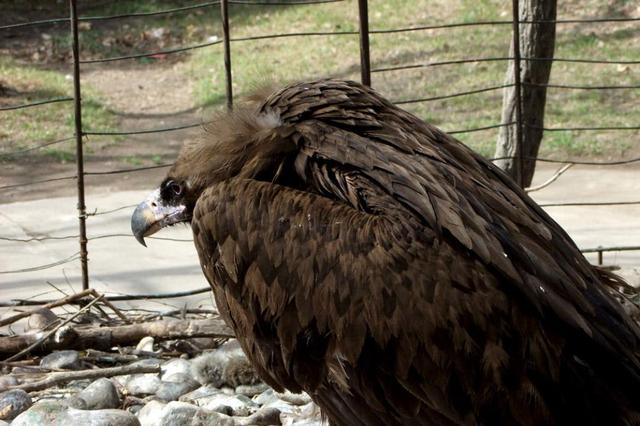
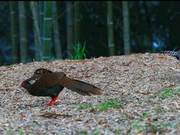
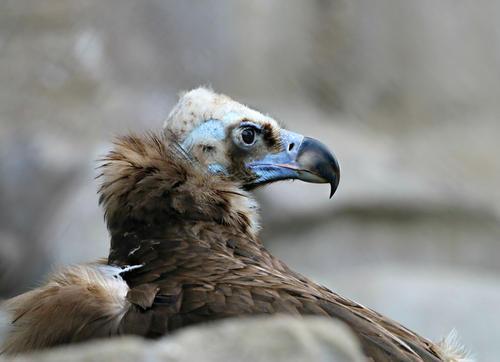
Golden eagle (scientific name: Aegypius monachus): A large bird of prey, with a body length of 108-120cm. The plumage is generally dark brown, with a bare head, only with short dark brown and mottled brown downy feathers on the neck, and the base of the neck is completely bare with long black or pale brown-white feather tufts. Young birds are lighter in color than adults, with a more bare head, and it is easy to identify.
Mainly inhabits low mountains, plateaus and mountains with forests, with barren rock grasslands, mountain valleys, streams and forest edges. It often acts alone, occasionally in small groups of 3-5 individuals, especially in areas with abundant food. It feeds on the corpses of large animals. It often soars over open and relatively barren mountain lands and plains, observing animal corpses. It occasionally flies low along the mountain edge, actively attacking small to medium-sized mammals, amphibians, reptiles and birds, and sometimes attacks livestock.
Distribution in northwestern Africa, southern Europe, Spain, southern France, Romania, the Balkan Peninsula, eastwards through the Lesser Caucasus, North Arabia, Central Asia, Iran, Afghanistan, the Himalayas, eastern Turkey, Tajikistan, the Altai, down to the south of Siberia.
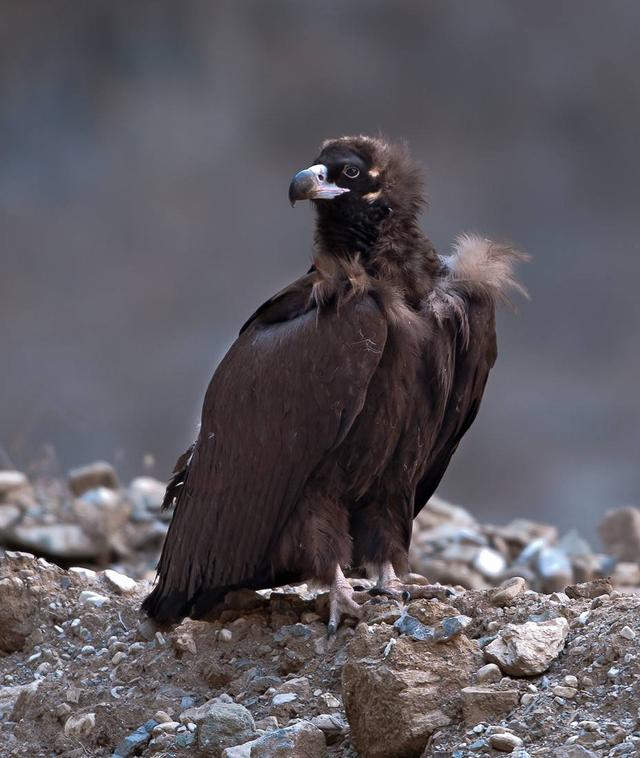
The eagle has a large body and is the largest bird of prey on the plateau. When its two wings are spread, the wingspan is about 2 meters long and 0.6 meters wide (larger individuals can exceed 3 meters). Adult eagles have dark brown downy feathers on the head and back, with a long and dense head, the feather color is also lighter, the sides of the head, cheeks and ear areas have sparse dark brown-colored short feathers, the eyes have dark brown feathered feather tips, the neck above is bare and blue-gray, the base of the neck has long pale brown to dark brown feather tufts, some of which are decorated with white. The bare head can easily penetrate the belly cavity of the corpse; the base of the eagle's neck has a long feather, which is like a napkin, can prevent it from getting dirty when eating corpses.
The upper body is covered with dark brown feathers from the back to the tail, the tail is slightly wedge-shaped, dark brown, the feather shaft is black, the primary flight feathers are dark brown with metallic luster, the feathers on the wings are dark brown, and the wing tips are slightly downward. The lower body is dark brown, with dense dark brown downy feathers on the front chest, and each side has a bundle of fluffy spear-shaped long feathers, and the abdomen is decorated with pale brown transverse stripes. The anal opening and tail feathers below are pale gray or brown-white. The legs are covered with dark brown to black feathers, the beak is strong, due to the need to feed on corpses, its hooked beak has become very powerful, it can easily peck and tear open tough cow skins and extract heavy internal organs; the nose is round. Young birds and adult birds are basically similar, but the color is darker, the head is more bare.
The iris is brown, the beak is black-brown at the tip, the wax membrane is aluminum blue, the tarsus and toes are gray, and the claws are black.
Among birds of prey, the golden eagle has relatively weak flying ability, it uses a method of conserving energy – gliding. These large-winged birds leisurely wander around on barren mountains and plateaus, using their unique senses to capture the invisible rising warm air currents. They rely on rising warm air currents to continue rising comfortably, so as to fly to farther distances. When they find a corpse on the ground, they fly to nearby and feed. When flying, their wings are stretched straight, and the primary flight feathers are spread out like fingers, the wing tips are slightly drooping downward. When resting, they often stand on prominent rocks, power lines or tree tops.
The golden eagle mainly eats the corpses of large animals and other decaying animals, which is known as the 'cleaner of the grassland'. It often soars over open and relatively barren mountain lands and plains, observing animal corpses. It occasionally flies low along the mountain edge, actively attacking small to medium-sized mammals, amphibians, reptiles and birds, and sometimes attacks livestock.
When feeding, the eagle's facial color and neck color undergo some interesting changes. Usually its face is dark brown, and its neck is blue-gray. When it is feeding on a corpse, its face and neck will turn a bright red. This is a warning to other eagles: quickly move away, don't come close. A strong and powerful eagle comes to compete for feeding, it cannot withstand it, it helplessly falls behind, and leaves the original position. At this time, its face and neck immediately turn from red to white. The victor triumphantly takes the food, and its face and neck also turn fiery red; the loser gradually recovers its original color. According to these color changes, people can know the strength of the eagle's physical condition.
“”
100
“”