Do Bats' Ultrasound Vision Work? Are They All 'Blind'?
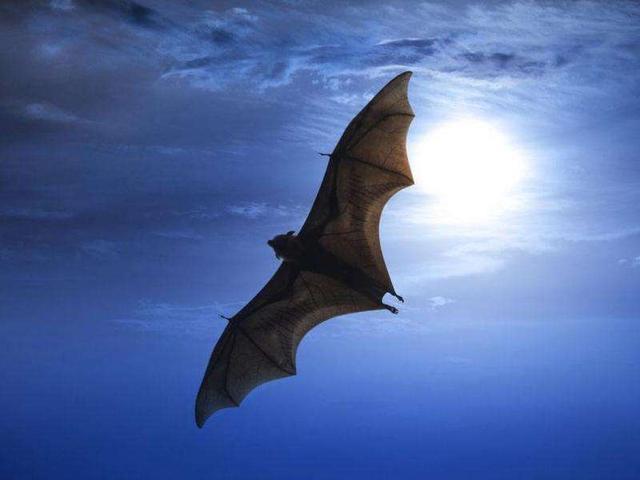
Bats, people are suddenly presented with an impression of darkness and mystery in their minds, due to the fact that bats frequently play the role of 'villains' in some films and animations, sometimes sucking blood, sometimes accompanying dark forces; also because they always hide from daylight, a dark world that humans are wary of; for many birds, it has become indistinguishable in terms of direction, so they only stop flying and rest in the black night sky. The bats freely soar and nest in the best habitat.
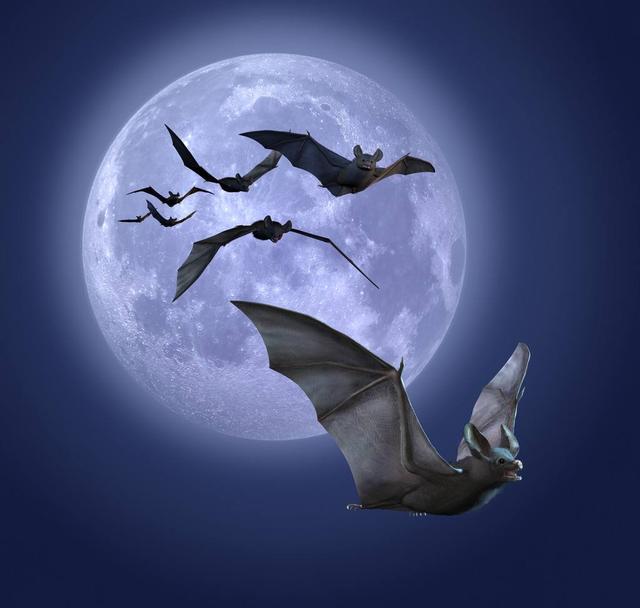
You may be very curious, exactly how bats manage to shuttle through the pitch-black night, freely roaming? Its amazing echo location system how was it established and how does it work? If the echo location system is so important for bats, do they not need glasses, are bats the so-called 'blind' ones? Let us take a series of questions, together into the 'mysterious world' of bats.
Bats' echo location sound
Eyes are extremely important for animals. Animals' mating, reproduction, predation and avoiding predators all depend on eyes. Relying on vision, animals' survival behaviors are all dependent on eyes.
In the study of vision in mammals, researchers based on the amino acid sequence of retinal photoreceptor pigments, divided retinal photoreceptor pigments into 5 parallel, genetically related groups: (1) RHl (violet pigment); (2) RH2 (similar to RHl); (3) SWSl (short-wave sensitive type 1); (4) SWS2 (short-wave sensitive type 2); (5) LWS/MWS (long-wave and mid-wave sensitive pigments). RHl pigments are usually expressed in rod cells, while the other four classes of photoreceptor pigments are usually expressed in cone cells. The function of these pigments is determined by their maximum absorption wavelength (max).
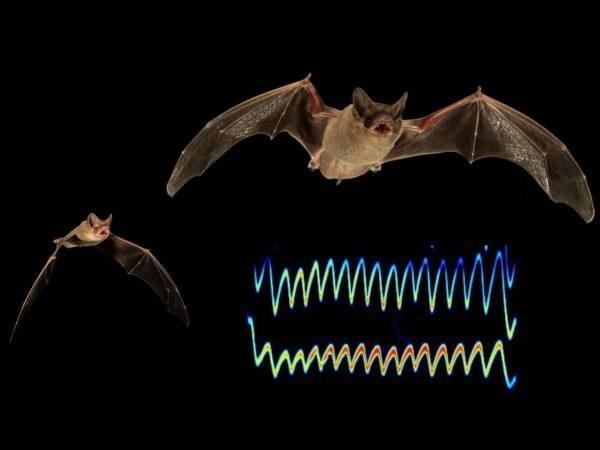
Bats emit pulses in a pulsed form, through a series of high-frequency short pulses to perform echo location. These pulses are emitted from the mouth or nose, divided into frequency-modulated (FM), constant-frequency (cF) and quasi-constant frequency (QCF).
Bats' sound waves propagate in three-dimensional space, its form is an axisymmetric cone with the extended point of sound emission as its axis. When sound waves hit objects in the environment, they return in the form of echoes, but the properties of sound waves have changed at this time. Through the reception and processing of echoes, bats can not only detect the presence, distance, direction and velocity of moving objects, but also judge the size, shape and structure of the target. Bats can also use this information to avoid obstacles, while simultaneously identifying and tracking prey during flight or while resting.
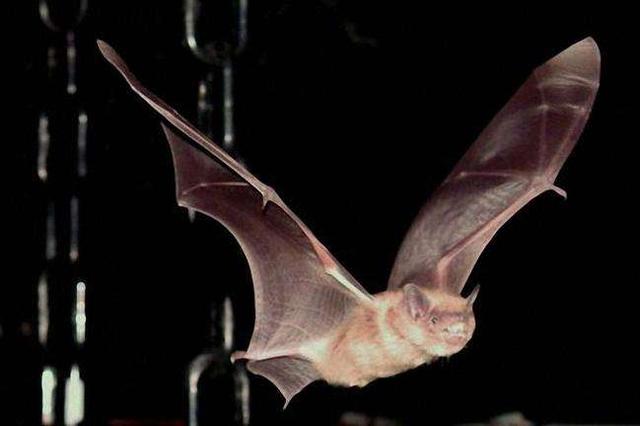
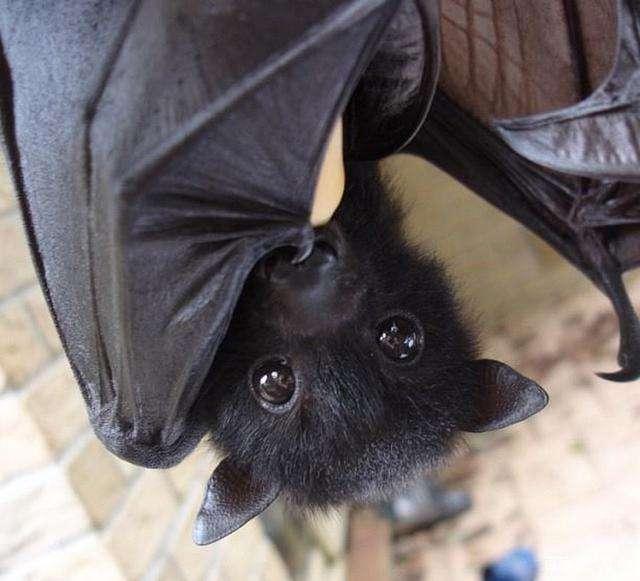
The order of winged animals is a particularly special group, its occupied nocturnal ecological niche, including the megabats and small bats, using different sensory modalities to perceive the surrounding environment. The megabats only include one family – Foxfinch family, this family species lacks laryngeal echo location ability, rely on smell or vision to find food, generally relies on well-developed eyes and visual pathways to activity at dusk, the typical Foxfinch has a highly developed visual system. For the small bat families, the eyes of small bats are usually very small, usually less than 2 millimeters in diameter, obviously not suitable for fine vision. Some studies have suggested that the retinal of small bats is all rod cells, rod cells are mainly used to perceive dark light, not for distinguishing colors, although they have vision, echo location ability is its main means of perceiving the surrounding environment, they usually activity at night, it has been considered that vision is not important for them. Recently, research has confirmed that vision plays a role in some small bat families in locating, the sensitivity of vision is comparable to that of rodents. Therefore, researchers are interested in it again, starting to study the components of bat light receptors using modern technology.
Scientists' research on bats' vision has new discoveries, some bats are totally colorblind, but some bats are dichromatic. For example, all bat families and sheath-tailed bat families, and some foxfinch families also have color vision based on cones (red light) and s cones (blue light). They are sensitive to red light, which may help them to identify fruits or other purposes in leaf litter. In leaf finch family, fruit and nectar animals usually rely on smell, vision or passive hearing when hunting, echo location is mainly used in chaotic habitat locating and flying. It is certain that bats are not the 'blind' ones we traditionally think.
5(1)RHl()(2)RH2(RHl)(3)1(SWSl)(4)2(SWS2)(5)(LWSMWS)RHl(max)RH2SWS2
1——2
UV()(uV)()

L()s()
“”