Why is a Snake's Tongue Called a 'Snake Whisker'? Why Do Snakes Frequently Eject Their Tongues?
A snake's forked tongue, typically protrudes to capture external information, such as food, the surrounding environment, and poor eyesight. It primarily relies on its tongue to gather information, which is why people call a snake's tongue a 'snake whisker'.
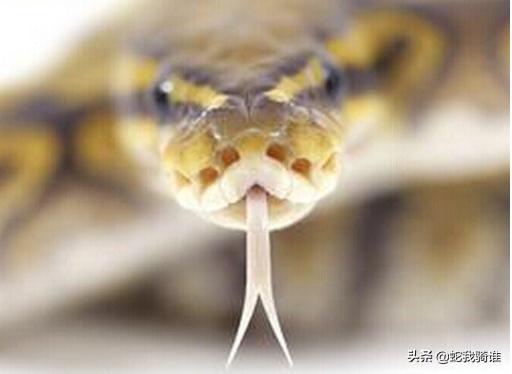
Vipers have poor eyesight and struggle to focus on stationary objects, but they excel at detecting moving objects. Snakes mainly collect scent particles from the surrounding air using their tongues.
First, they quickly extend their tongues into the air, and then retract them into their mouths. Inside their mouths, the two small forks of their tongues are inserted into openings on the palate, these openings are Jacobson's organs. While snakes can smell through their nostrils, their tongues and Jacobson's organs enhance their ability to sense smells.
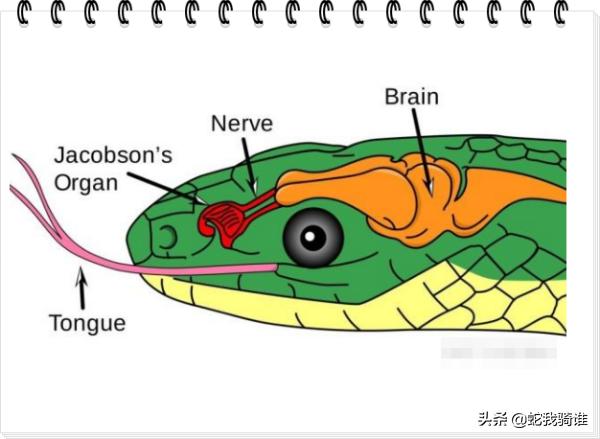
A snake's small, agile tongue is much more sensitive than a human's nose. The forked tongue allows snakes to have a stereoscopic sense of smell. It collects scents from different directions. When a mouse moves, its scent remains in the air, and the scent particles are collected.

Vipers press their tongue tips against a small hearing aid located above their mouths to identify and analyze gases, and then convert smells into accurate images.