Spring River Warmer, White-Eyed Ducks Know First! White-Eyed Ducks Meet in Changchun Nanxi Wetland's Itong River
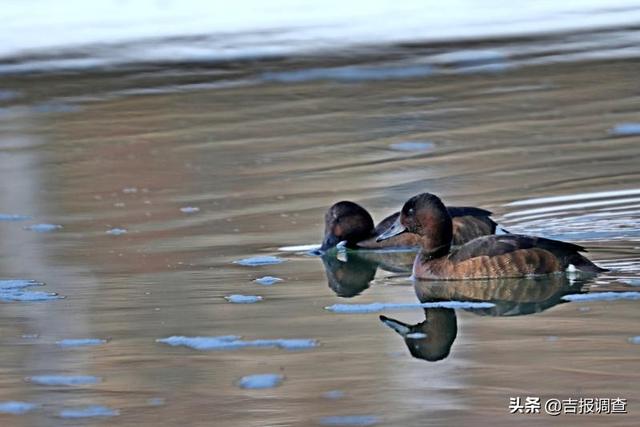
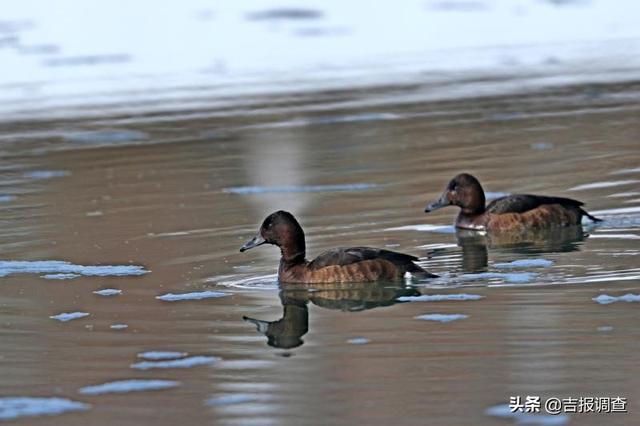
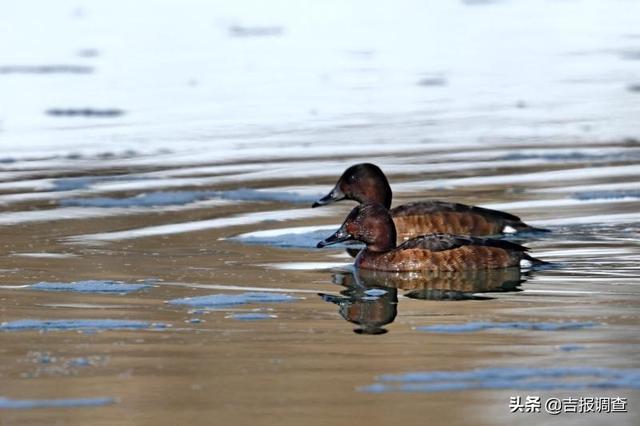
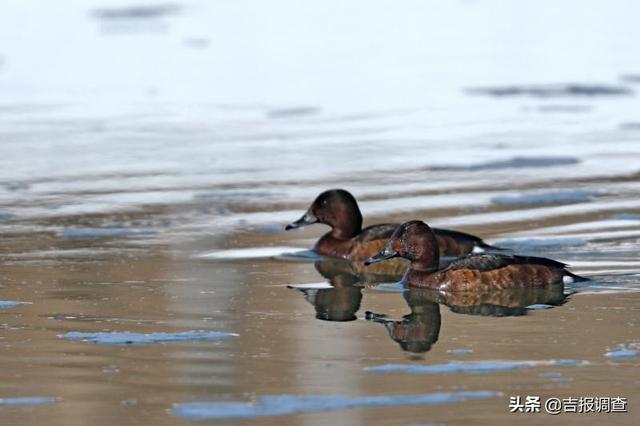
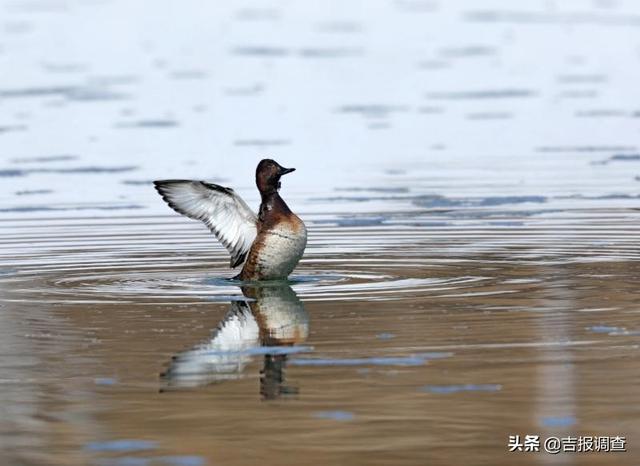
On March 2nd, photographer Wang Yue captured the white-eyed duck (Aythya nyroca) in the Itong River of Nanxi Wetland in Changchun.
It's a pity that the male duck didn't appear in the lens, only two female ducks were playing and foraging. However, Itong River has seen the first sighting of this white-eyed duck; the male white-eyed duck may be out foraging or searching for a nesting site. This indicates that the transformation of Itong River in Changchun has achieved results.
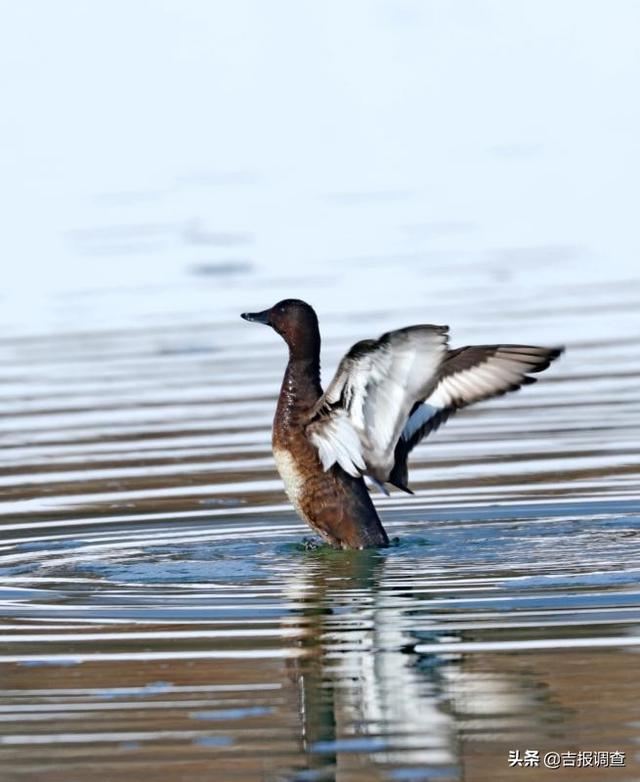
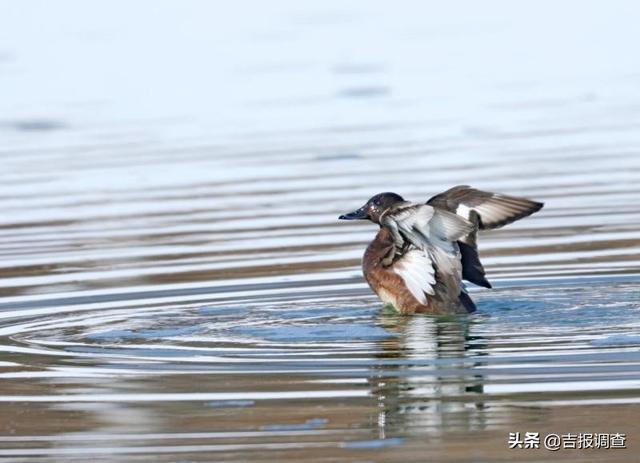
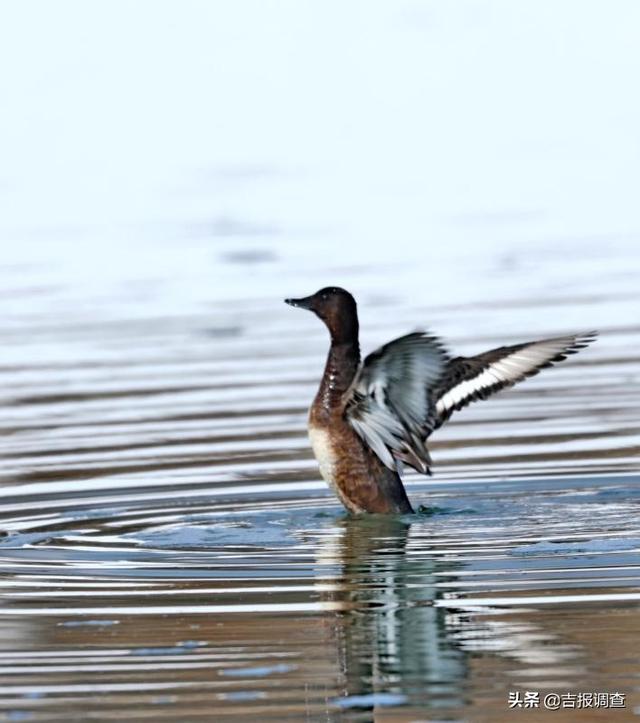
White-eyed duck (scientific name: Aythya nyroca) is a bird of the duck family, belonging to the Anatidae family. It has a round body, a large head, rarely makes noise, and is a deep-water bird, skilled at folding its wings to dive. It is omnivorous, primarily feeding on aquatic plants and fish, shrimp, and shellfish. The male bird has a triangular white spot on its chin, a prominent dark brown collar around its neck. The upper body is dark brown, with indistinct brown moth-like spots on its back and shoulder, or with brown edges. The secondary flight feathers and inner primary flight feathers are white with black edges, forming a wide white wing mirror and a dark brown transverse band on the outer edge of the wing mirror; the outer primary flight feathers have dark brown edges; the tertiary flight feathers are dark brown with a green sheen. The chicks and females are similar, but their sides and forenecks are lighter and have more yellow. The sides and upper body have pale feather edges. The iris of the male bird is silver white, and the iris of the female bird is gray-brown. The beak is black-gray or black, the foot-pad is silver-gray or black and olive green.
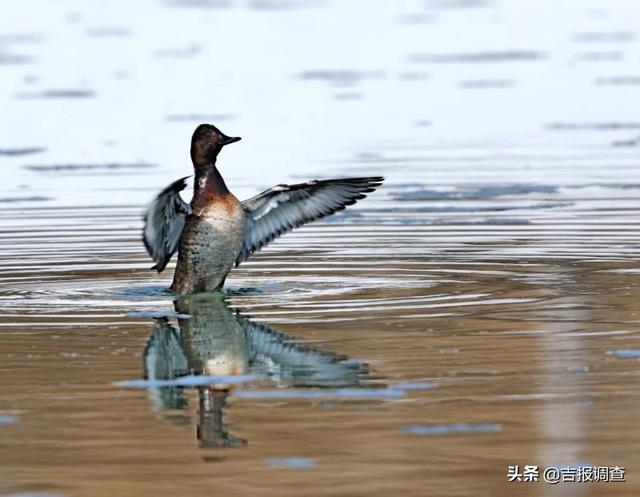
Size measurement: Weight 550-750g, 490-650g; Length 371-430mm, 330-410mm; Beak 37-40mm, 35-39mm; Wings 172-192mm, 167-187mm; Tail 30-32mm, 30-32mm; Foot-pad 47-62mm, 50-63mm.
It is a migratory bird. From April 4th to mid-April, it migrates to its breeding grounds. From mid-October to mid-October, it starts to migrate south from its breeding grounds. When migrating, it forms flocks, often from ten to several dozens of small flocks, and rarely hundreds of large flocks.
Listed in the 2012 Red List of Threatened Species of the International Union for Conservation of Nature (IUCN) ver 3.1 – Near Threatened (NT).
Listed in the 'National List of Wild Animals with Beneficial or Important Economic and Scientific Research Value' issued by the State Forestry Bureau on August 1, 2000.
Produced by Jilin Daily Newspaper.
Planned by: Jiang Zhongxiao.
Author: Bu Lifeng.Photographer: Wang Yue.Editor: Liu Ying