Migratory Birds' Passage Through Jihe Wetland, Shijiazhuang: Feeding and Play
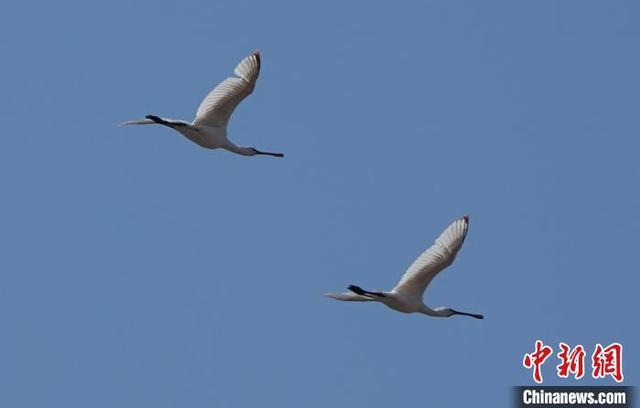
White spoonbills take flight.
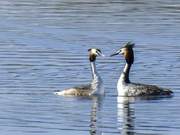
Xinhua News Agency, Shijiazhuang, Hebei Province, March 12th (Xiao Guangming, Zhang Fan) March is the peak season for migratory birds in the spring. On March 11th, the birds were ‘taking off and landing’ busily in the Jihe wetland in Shijiazhuang City, Hebei Province. Black-necked gulls, black swans, mandarin ducks, Chinese fall sand ducks, white spoonbills, and red-eyed gulls were here foraging and playing.
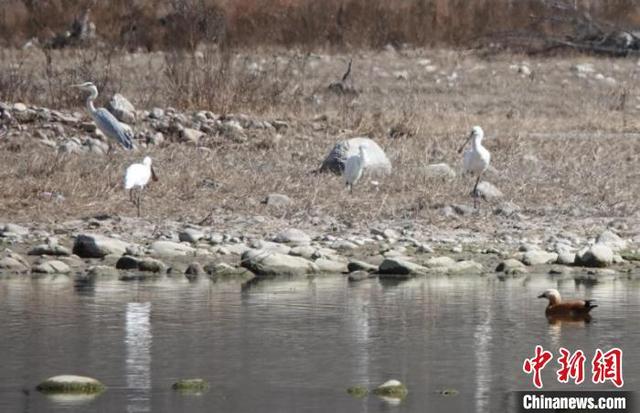
Migratory birds coexist harmoniously. Photo by Gaoqiong.
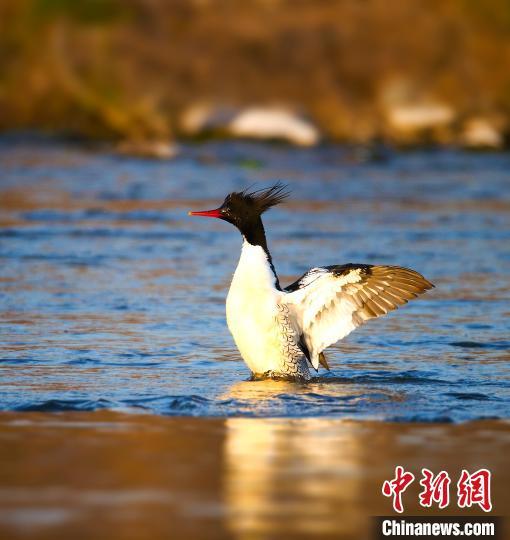
Elegant migratory birds. Photo by Gaoqiong.
According to Gaoqiong, the head of the Hebei Environmental Frontline Bird Survey Team, Jihe wetland has a variety of waterfowl, with nearly 70 species, most of which are migratory birds. Among them, many are national Grade I and II protected animals.
It is said that the most precious birds in Jihe wetland are black-necked gulls. Black-necked gulls have elegant figures, distinct colors, agile movements, and vigilant personalities, and are national Grade I protected animals. Because they are rare, they are called ‘bird pandas’. Because of the good water quality of Jihe wetland, it has attracted many black-necked gulls to inhabit here.
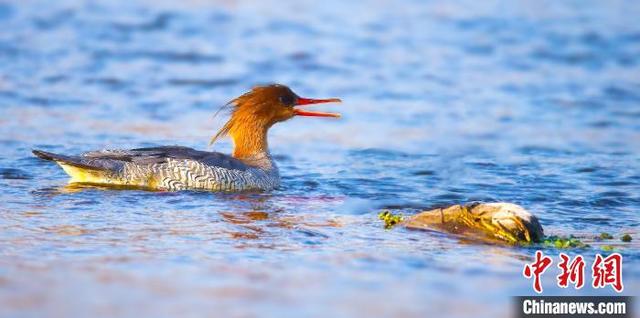
Photo of playing and foraging. Photo by Gaoqiong.
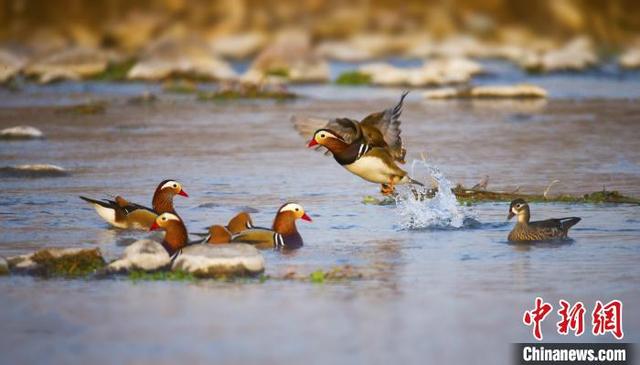
Mandarin ducks playing in the water. Photo by Gaoqiong.
Gaoqiong said that the Chinese fall sand ducks and mandarin ducks in the wetland came from Jiangxi Province, preparing to migrate to Changbaishan in Northeast China to supplement their energy during the migration. Currently, there is a group of wild ducks in the wetland, which reaches five or six thousand, and is expected to migrate north in about half a month. In addition, the first batch of over 500 red-eyed gulls has returned to the wetland, they migrate to southern China to winter in November every year, and return to the wetland in mid-March of the following year.
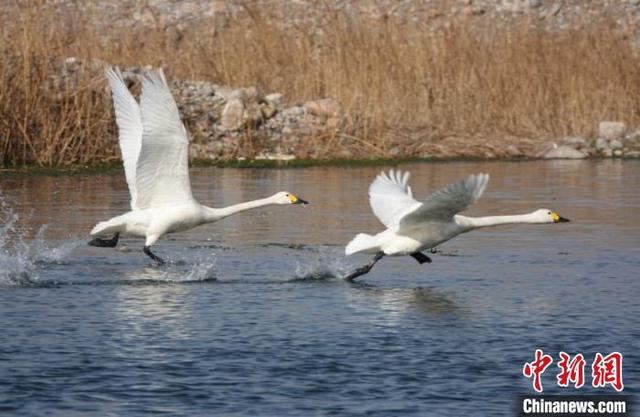
Migratory birds foraging and playing in Shijiazhuang Jihe wetland. Photo by Gaoqiong.
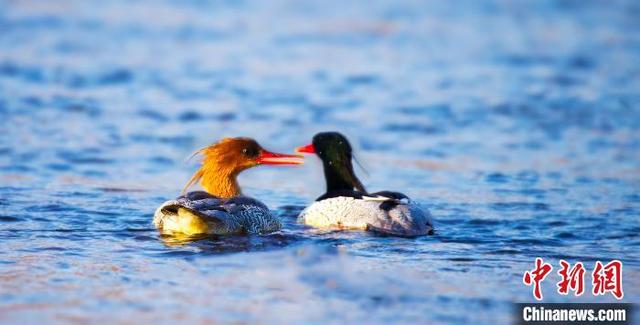
Chinese fall sand ducks form pairs. Photo by Gaoqiong.
Gaoqiong said that this pair of white spoonbills migrated from the north and passed through, staying here for the winter before departing north. ‘Observation shows that this pair of white spoonbills are all sub-adults, with gray feathers on their bellies. They came to Jihe wetland on their migratory route before the Spring Festival and stayed here, not migrating south. Now they are about to migrate north.’ (Completed) Source: China News Agency