Migratory Birds Utilize Inland China’s ‘Energy Replenishment’ for Safe Migration
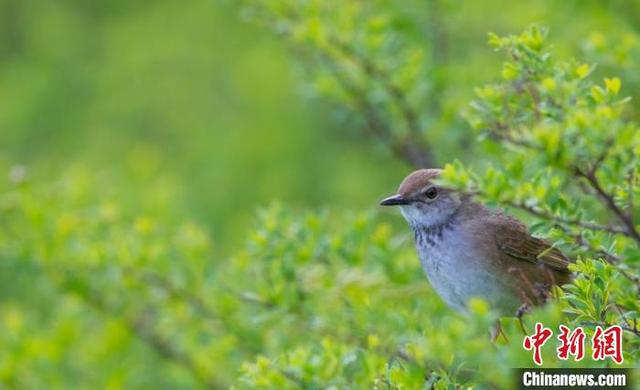
Shanxi Province sets new record for Northern Short-tailed Thrush. Liu Lulu's photo.
Chinanet Taian reported on March 21st: Title: Migratory Birds Pass Through Inland China 'Energy Replenishment' Ensures Migratory Birds' Flight.
Author Yang Pepe.
As the temperature gradually rises, China's inland Shanxi Province is experiencing the peak season for migratory birds. Every year at this time, a large number of migratory birds follow relatively fixed routes and times, resting, feeding, or sheltering in key wetlands along the Yellow River, River, Qin River, and Sanggan River. Shanxi, as a major migratory channel, provides them with 'energy replenishment' to ensure their safe migration.
On the 21st, flocks of White Storks were playing and foraging on the Qin River in Qin Yuan County, Changzhi City, Shanxi Province. White Storks are a globally endangered rare bird species and are listed as a national first-level protected animal. They are also known as 'bird pandas'. Shanxi Changzhi Qin Yuan Forestry and Grassland Bureau Party Committee Member Zhao Hongbing introduced that Qin Yuan County has more than 100 kilometers of Qin River basin, in addition to White Storks, there are also Grey Bitterns, Large White Storks, Green-headed Ducks, and Chinese Fall Sandpipers sheltering here.
Among them, Grey Bitterns are in large numbers, mainly inhabiting in Law Zhong Village, Fucheng Town, Changzhi City, Qin Yuan County. Local Party Secretary Sun Kaishang introduced that ten years ago, there were only two Grey Bitterns, and now the number of them staying here has reached more than 600 in a year. Local residents' awareness of protection is also constantly increasing, and everyone is a forest ranger, protecting them at any time.
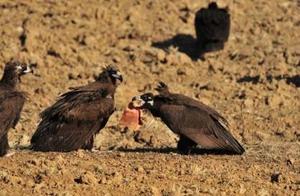
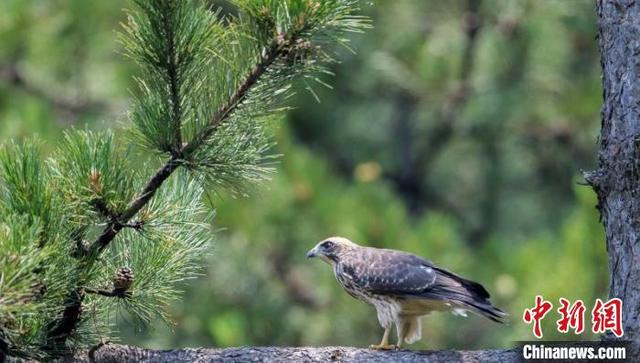 National Grade II Key Protected Bird Species Grey Faced Buzzard. Liu Lulu's photo.
 In addition, Qin Yuan County is located in the south of Shanxi Province, situated at the foot of the Tai and Shandong Mountains, which is China's key forest protection county, with a forest coverage rate of 56.7%, the highest in Shanxi Province. Therefore, bird species that mainly inhabit forests have seen their species and numbers increasing year by year.
Shanxi Changzhi Qin Yuan Forestry and Grassland Bureau Director Xu Jing introduced that National Grade II Key Protected Bird Species Common Buzzards, Red-footed Hawks, Grey Faced Buzzards, and other rare raptors reproduce here year after year. Only the endangered species Brown Thrush, which is found in remote Southeast Asia, migrates from here. There are also Shanxi Key Birds such as Cattle-billed Oxpeckers, Black Hooded Orioles, Small Tree Orioles, and Shanxi's new record bird species Grey-eared Grassling, Northern Short-tailed Thrush, and Red-vented Dotcutters, with spectacular breeding numbers.
Xu Jing said that every season, relevant departments in Qin Yuan County, along with 'Qin Yuan County Volunteer Bird Protection Team' and 'Qin Yuan County Bird Watching Association', organize various forms of bird protection and conservation activities, conducting fixed patrols in various key areas where migratory birds often rest, such as rivers, villages, and mountains, to ensure the safe passage of migratory birds, and to create a 'green channel' for bird migration.
In addition, the Sanggan River and River line is also a major 'birdway', with twenty-two or more bird species gathering along the line in the wetland and river. Sanggan River is a key water conservation area in Jing Ji, with a total basin area of 16767 square kilometers in Shanxi, flowing through,, and .
Recently, the Shanxi Tongming National Wetland Park welcomed a group of 'messengers of spring', such as White Storks, Geese, Grey Cranes, and Green-headed Ducks. The same welcomes a large number of migratory birds to in Shanxi's.
Previously, the Shanxi Forestry and Grassland Bureau required relevant departments to do well in the protection and monitoring of migratory birds during the migration period, to strengthen wild patrols and rescue, to promptly rescue individual birds with injuries and illnesses, to release them after recovery, and to supplement food shortages in time to ensure the safe migration of migratory birds. (Completed)