Australian Wild Dogs' Ancestors Were 9900 Years Ago Domestic Dogs from Southern China
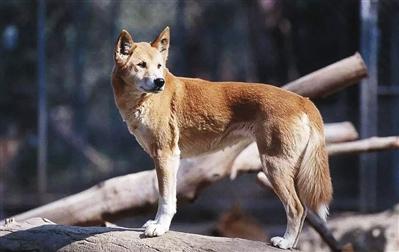
Dingo of Australia
Tech Daily News (reporter Zhao Hanbin) The dingo is a native wild animal of Australia. However, its whole genome research has been a blank before. Recently, a team led by Academician Zhang Yapeng of the Kunming Institute of Zoology, Professor Mao Bingyu and Professor Peter Savolainen of the Royal Institute of Technology in Sweden cooperated to study the origin and feralization process of dingoes, which revealed its origin and feralization mechanism, and a historical record of ancient human migration.
The Zhang Xiaojie research team of the Kunming Institute of Zoology belongs to the genus Canis, the gray wolf species, and the dingo subspecies from a taxonomic perspective. Although it lives in Australia, which is not connected to other continents, it is not a native species here. Based on Australia's special geographical location, the dingo is likely to be what humans brought with them when they migrated to Australia, therefore, studying the population history of dingoes can also reflect the migration process of ancient Australians. In addition, it was originally domesticated by humans, but after arriving in Australia, it went wild again, and has been feralized for at least 5000 years. Because Australia has not had other canine species for a long time, the dingo has not been interbred with wolves or domestic dogs, which makes it a good model for studying feralization.
Based on whole genome evidence, the research team proved that the ancestors of dingoes were domesticated dogs in East Asia, who departed from southern China about 9900 years ago, and arrived in Australia about 8300 years ago, and quickly feralized in Australia.
According to previous studies, human history has seen the famous 'Southern Island Migration' process, which refers to the migration of Southern Island people from Fujian Province in China, which originated about 5600 years ago, first migrated to Taiwan, and then spread to the entire Pacific Ocean and the Indian Ocean. Its distribution range is rare in the world. Researchers found that the time when domesticated dogs from southern China migrated to Australia did not match the 'Southern Island Migration' time, so it may be an earlier and unknown ancient human migration that brought them to Australia.
The research team used the dingo model to study feralization, and discovered many interesting feralization genes, which are mostly related to neurodevelopment, immunity, reproduction and digestive metabolism. These functions are closely related to the adaptation and survival of domesticated dogs in the wild.
Finally, the research team analyzed the feralization pattern of dingoes, and found that compared with domesticated dogs, some gene regions of dingoes were more like wolves, which may be because dingoes originated from early domesticated dogs that had not been fully domesticated.
Through the analysis of dingoes' feralization, the research team deduced its feralization pattern, which provides new ideas for future human migration and feralization research. Recently, this research result was published in the journal 'Nature Communications'.