When Turtles Enter Winter Dormancy, Knowing the Timing of Feeding is Crucial
Spring is coming soon, and the climate in the two Guang regions is warming up, with areas south of it experiencing consecutive days of temperatures breaking 25℃. The turtles in this area have already woken up from hibernation and started moving. Experienced breeders have already cleaned and disinfected the outer pools a few days ago to prepare for the turtles' hibernation and transfer to the outer pool for feeding. What conditions can turtles be fed after hibernation? What should be paid attention to when feeding?
(Please add a circle card to view on the Today's Headline client)Turtle hibernation depends on temperature! Generally, when the temperature reaches 18℃ or above, most turtles will gradually wake up from hibernation (if some don't wake up, they will either die or be sick, breeders should pay attention to distinguishing), and at this time the temperature conditions are relatively low, so the turtles' physical functions are not yet fully restored, so it is not appropriate to immediately feed the turtles, but to wait for the turtles to move for a few days, then according to the local temperature conditions to decide whether to feed. Generally, the best feeding temperature conditions are water temperature reaching 25℃ or above (below 32℃), and this temperature condition should last for at least 3 days (with weather forecast, you can check the future climate), which is beneficial for turtles' digestion.It is important to note that if the daytime and nighttime temperature difference is large, such as 27-8 degrees Celsius during the day and 12 degrees Celsius at night, it is not recommended to feed turtles. Because turtles digest food through intestinal temperature, a large temperature difference will cause the turtles' digestive function to be delayed, which is easy to cause problems, such as food accumulation in the intestines, which cannot be easily excreted, increasing the risk of inflammation and reducing the rate of metabolism. Therefore, it is correct not to feed turtles at this time. (Of course, the water temperature standard is just a reference value, in fact, many turtles can eat normally at water temperatures of 22-23 degrees Celsius, but for safety reasons, it is better to combine the theoretical standard with the practical operation).
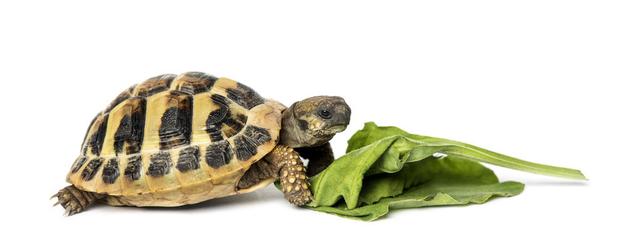
When the turtles wake up, what should be paid attention to when feeding? Under the condition that the water temperature meets the feeding standard, there are three points to be noted when feeding turtles:
First, the feeding amount.Because the turtles have been through a long hibernation period, and they haven't eaten during hibernation, so some people worry that the turtles who haven't eaten for a long time will be hungry, so after waking up, a large amount of food should be fed to them, which is not advisable.Generally, no matter when, the principle of feeding turtles is to feed less than to feed more!To give everyone a reference, combining theoretical research, the feeding amount is quantified, and the feeding amount is no more than 3% of the turtle's weight.
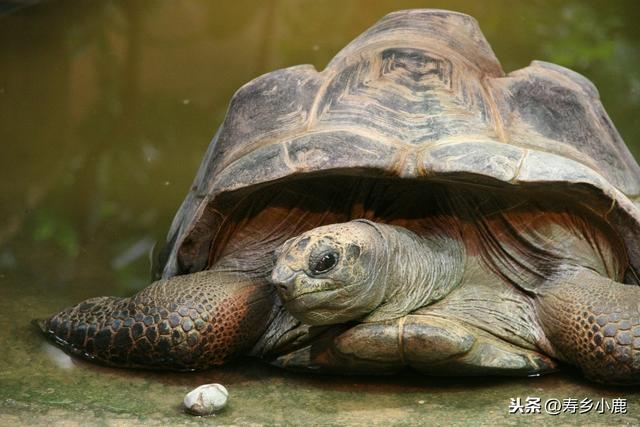
Second, the feeding frequency.Normally, three meals a day, two meals, or one meal, or two to three days a meal can be fed. If the feeding frequency is high (three meals a day), the feeding amount can be reduced, and the turtles' digestive burden will be reduced accordingly. If the feeding frequency is low (one or two meals every two or three days), the feeding amount can be more than the feeding frequency, which can ensure that the turtles' basic nutritional needs are not missed.
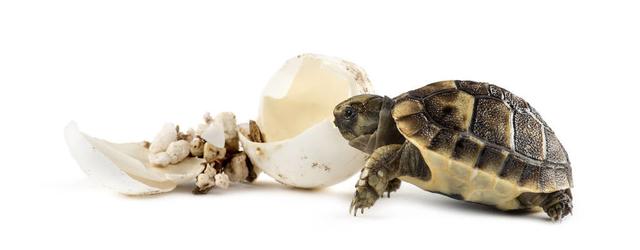
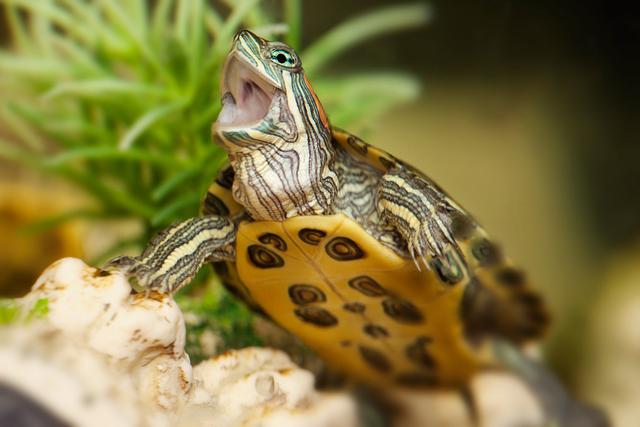
Third, the food combination.Each turtle species has corresponding food species needs, and vegetarian turtles, such as Asian Giant Softshell Turtles, Marginated Softshell Turtles, Flame Softshell Turtles, and Red-Eared Sliders, can choose vegetables, and the dishes can be adjusted, and occasionally some meat can be added, but vegetarian is the best (preferably red amaranth), non-vegetarian turtles, such as Three-Horn Softshell Turtles, can feed on fish meat, shrimp meat, animal organs, etc.
0
0% 0 0% 0 0% 0 0% 0 0% 0 0% 0 0% 0 0%