Hangjin Banner in Inner Mongolia Welcomes Nearly 10,000 Migratory Waterbirds
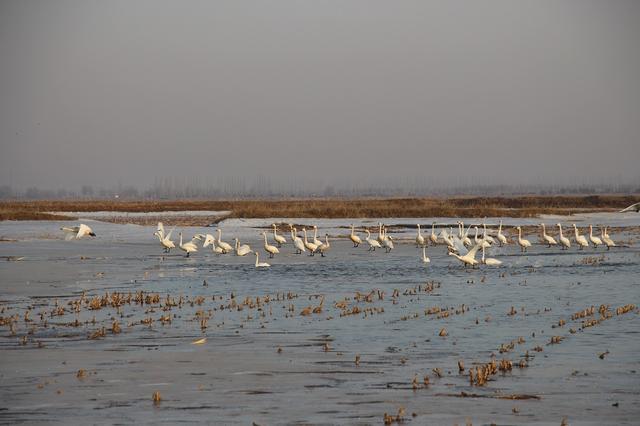
February 23, migratory swans frolic in the Hangjin River Nature Reserve in Huhongqi, Inner Mongolia. Photo provided by respondents.
Xinhua News Agency, Hohhot, Inner Mongolia, February 23 (reporter Zhu Wen Zhe) reporters from Inner Mongolia Ordos Huhongqi Forest and Grassland Bureau learned that in recent days, the Hangjin River Nature Reserve in Huhongqi has welcomed nearly 10,000 migratory waterbirds, including white pelicans and swans.
Huhongqi Forest and Grassland Bureau’s Nature Reserve Center Director Li Jin introduced that with the gradual improvement of Huhongqi’s ecological environment, a large number of migratory birds will fly to the Hangjin River Nature Reserve to stay and rest in the spring every year.
“The weather has warmed up earlier this year, and the migratory birds have arrived about a month earlier than in previous years. We have also discovered national grade II key protected animals, white pelicans and swans among these migratory birds,” Li Jin said. “Currently, the number of migratory birds staying in Huhongqi has reached nearly 10,000, and last year there were more than 100,000 birds, including black storks, oriental white storks, golden eagles, and lesser black-backed gulls, here breeding and resting.”
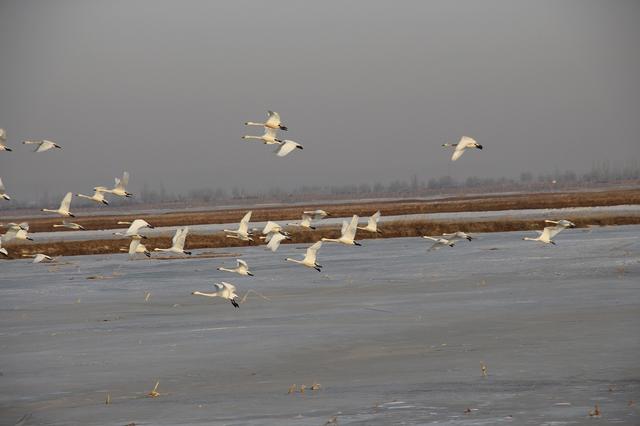
February 23, migratory swans frolic in the Hangjin River Nature Reserve in Huhongqi, Inner Mongolia. Photo provided by respondents.
In recent years, Huhongqi has taken a series of effective measures to continuously increase its ecological protection efforts, the Kubuqi Desert ecological zone along the Yellow River has been effectively improved, the desert oasis area has increased year by year, and the ecological environment has been significantly improved, attracting rare protected animals to reside.
It is reported that the Hangjin River Nature Reserve is a comprehensive natural reserve for the protection of the Yellow River coastal wetland ecosystem and the Kubuqi Desert north edge grassland ecosystem. It has a large number of birds staying and breeding from mid-March to early November every year, and some birds also stop over for the winter.