How Humans are Saving the Endangered Giant Pandas
Without a doubt, pandas are one of the cutest animals on Earth, due to their endangered status and low birth rate, making panda cubs the most precious young animals in the world. They are the darling of the animal kingdom, adored from the moment they are born. Do you know how these 'black and white fluffballs' grow up? To save these endangered pandas, humans have made efforts, and the BBC documentary 'Panda Cubs' tells you why the giant pandas at the Chengdu Panda Breeding Base have such a high survival rate.
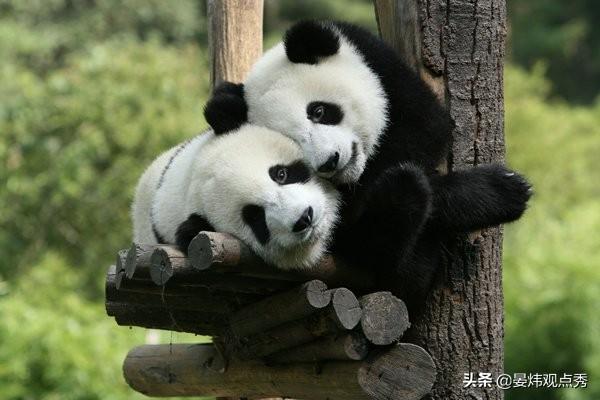
In the deep mountains of Sichuan Province, the three world-renowned Panda Research Centers are working hard to save these ‘most adorable creatures’. At the Bingqiao Gorge Panda Cubs Care Center, the cubs received meticulous care like human babies; as they grew older, they would be sent to the Dujiangyan ‘Panda Kindergarten’ to learn social skills; and as they got even bigger, they could go to Wuluong to learn how to survive in the wild. Here, the national treasures enjoy their ‘privileges’.
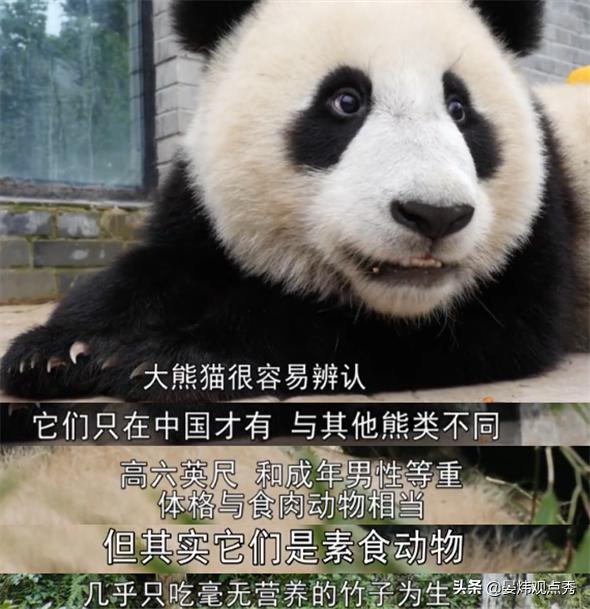
As of today, there are only about 1,600 wild pandas, and they are endangered. The Bingqiao Gorge Panda Cub Care Center is at the forefront of panda protection, a top-level panda nurturing and breeding center. Want to ‘adopt’ a panda? Come here, there are plenty of pandas, more precisely, over 130. With so few wild pandas, here they have successfully bred more than 30, what’s the secret?
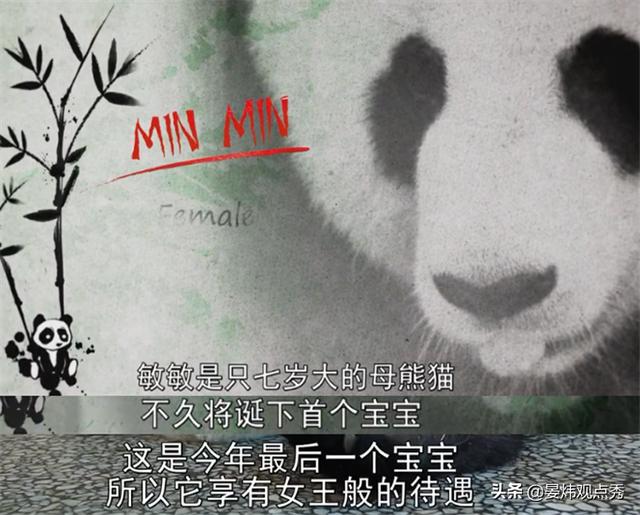
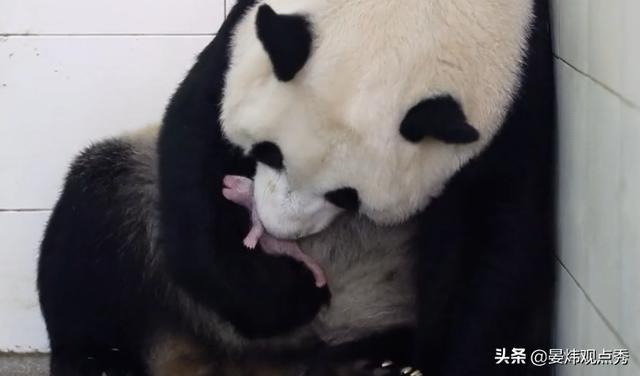
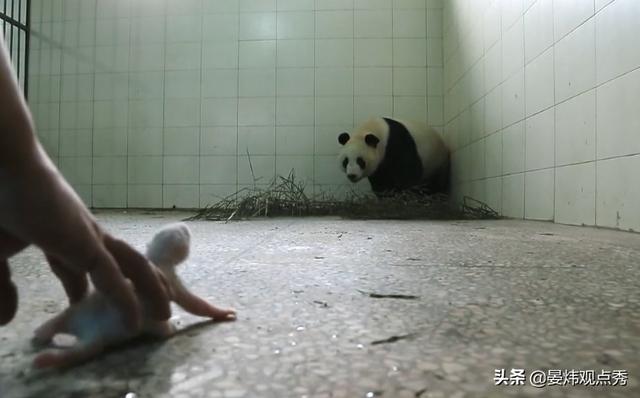
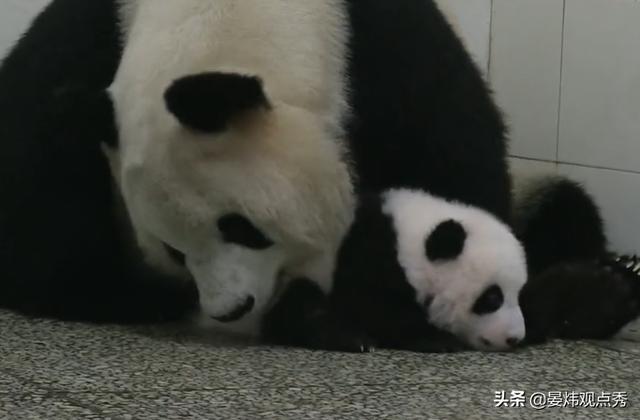
Panda reproduction is quite ‘peculiar’ because you cannot determine if it is pregnant until just before giving birth. However, there are some methods to identify it, such as the panda’s appetite suddenly increasing, equivalent to the appetite of two or three pandas, which indicates that it may be carrying twins. For this little girl, she has a decreased appetite and even uses bamboo to build a nest, which indicates she is about to give birth. As the panda gets more and more labor pains, it's dangerous for the workers to intervene, so they can only watch anxiously. So, after three days, the panda still hadn't given birth. After another two hours, her situation became more serious. Giving birth pandas are extremely dangerous, and staff cannot intervene, only watching helplessly. Finally, after three days, the panda gave birth to a healthy daughter. However, it was a ‘giant baby’ that was twice as big as the average cub, it’s no wonder the panda had such a ‘difficult’ birth of three days. The panda's baby is back with her mother, but the baby is covered in other smells, so the mother panda may ignore the daughter. The staff put the baby in front of the mother panda to see if she would react, but it ignored them. The little guy cried for his mother to pick him up, and it still ignored the helpless baby. The zookeepers came in and comforted the panda, and then they tried again. This time, the panda’s maternal instinct was finally triggered. It gently picked up the baby, and the mother and daughter were reunited.
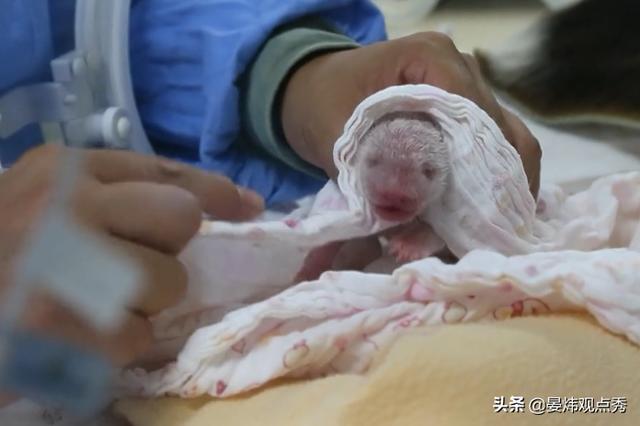
It is worth mentioning that wild pandas that give birth to twins generally raise only one, and the other one will be abandoned by the mother panda, who will keep the stronger one to survive. Artificial breeding will at least double the survival rate of panda cubs. If the panda cubs are born twins, both will survive. So the question is, what will the abandoned baby eat? Will it eat the mother panda’s milk, but the staff ‘borrowed’ it from the mother panda when feeding the baby. When the mother is feeding the baby, they would use honey to attract the baby, and then squeeze out the milk, because everyone loves honey.
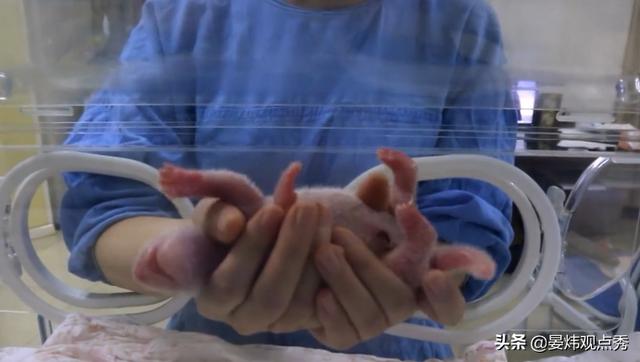
After the zookeepers used honey to distract the panda, they began to squeeze out the milk, just like with other mammals, panda milk is rich in nutrients and antibodies, which can stimulate the baby’s immune system and prevent infections. While enjoying the honey water, the panda mother still has to watch the baby, with a certain degree of caution. This is a great test for the zookeepers. Once the honey is finished, they must quickly evacuate. Fresh milk is transported to the nursery and mixed with a formula. All artificially raised panda cubs, from birth to three months old, have been cared for by ‘nurses’ without fail. Just like human babies, they need to be fed regularly and get plenty of sleep to help their little bodies grow up quickly. After 40 days of birth, the newborn cubs open their eyes and weigh five times more than when they were born. Bamboo is the 99% food source for pandas, and they love to eat 25 kinds of bamboo, so a large-scale collection is needed. A panda has an extra 'finger' called ‘panda finger’ to hold bamboo. They have evolved teeth to chew bamboo stems. Each panda eats 30 to 70 catties of bamboo every day, so everyone is busy.
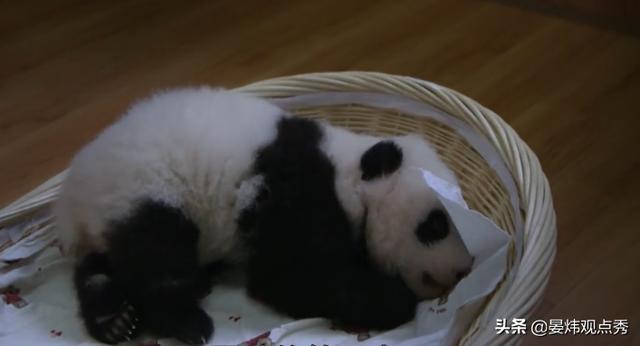
Cherry, a three-month-old female panda, was abandoned by her mother a few days after birth, and then she began to enjoy the pampering of the zookeepers. To determine if a panda is healthy, it is necessary to weigh and measure it regularly. When artificially raising panda cubs, zookeepers must, like a panda mother, including encouraging them to urinate and defecate, in the wild, they can't complete when they can't, mothers usually use licking to stimulate the baby to defecate. How do the zookeepers teach the baby to use the toilet? Gently patting their butts is the best choice. So don't think that the staff can every day to hold a happy panda, you look at a panda after eating, they all have to be ‘nursed’ to clean up their poop, burp, it's more tiring than taking care of human babies. After one day, the babies finally fell asleep.
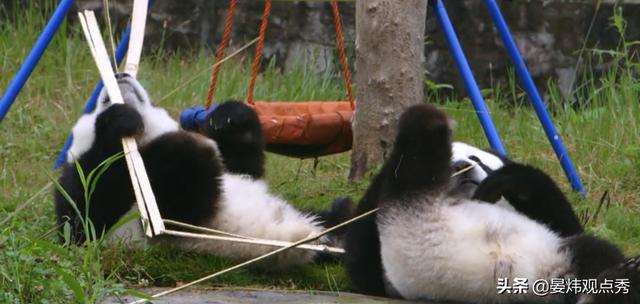
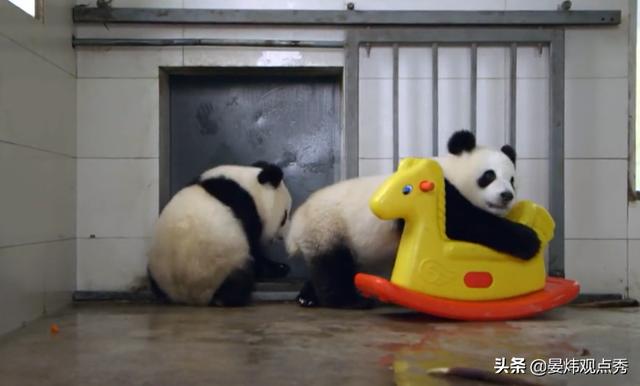
The Dujiangyan Panda Rescue and Breeding Center is a place where pandas make friends and learn social skills. One-year-old cubs come here to familiarize themselves with each other. Wild pandas usually prefer to live alone, only socializing during the breeding season, and scent marking is an important part of panda social communication, allowing them to recognize each other. At Dujiangyan, the interaction between cubs helps them to detach from humans and adapt to panda life, which is very important for their growth.
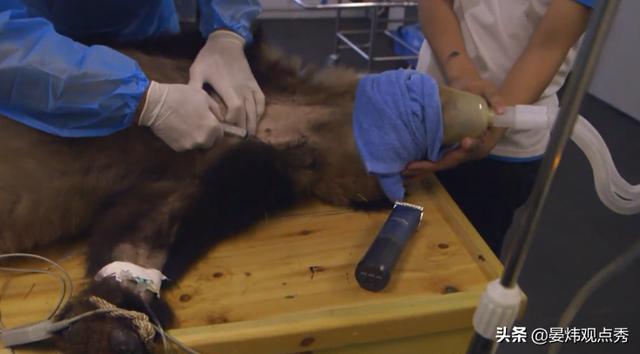
However, this panda didn’t have such luck. It was discovered and delivered by nearby villagers, and its condition was very poor. The rescue team immediately took it to the hospital. After it stabilized, the staff found that this panda lacked muscle in its leg, had lost its left eye, and had slight cataracts in its right eye, with swelling in its abdomen, indicating that its stomach was full of fluid. The next step was blood sampling and X-ray examination… As a national protected animal, one cannot be left behind, so the staff will do everything possible to save it.
Compared with this unlucky panda, Grandpa Pan Pan is simply a star panda in the panda world. He is already a dad to 130 panda cubs. Today is Grandpa Pan Pan’s birthday. In the wild, it’s rare for pandas to live more than 20 years, but Grandpa Pan Pan has broken the record, it’s no wonder this old gentleman has so many fans, it’s not only the most successful panda, but also the oldest. Genetic differences are the key to the survival of all species. Since Grandpa Pan Pan was rescued from the wild, his genes are particularly valuable. So his genes are spread across one-third of the center’s pandas, and he is also the grandfather of both baby pandas. His genetic stability is very stable, and his family is also very healthy. Therefore, Grandpa Pan Pan not only has a full family and can be rewarded, he’s a ‘winning panda’ all the way.
The Wolong Panda Protection Base is located in a natural protection area with 200,000 hectares surrounded by mountains. Two-year-old pandas are about to detach from humans and start training wild skills. The zookeepers only take care of cubs for two years, and then they have to rely on themselves. When the cubs grow up, they enter neighboring wild protection areas for living, don’t worry, they are not unattended, the tracking collar will always track their movements, the information helps the staff judge when to intervene and help them.
13020“”
202
“”……