Scarlet Ibis
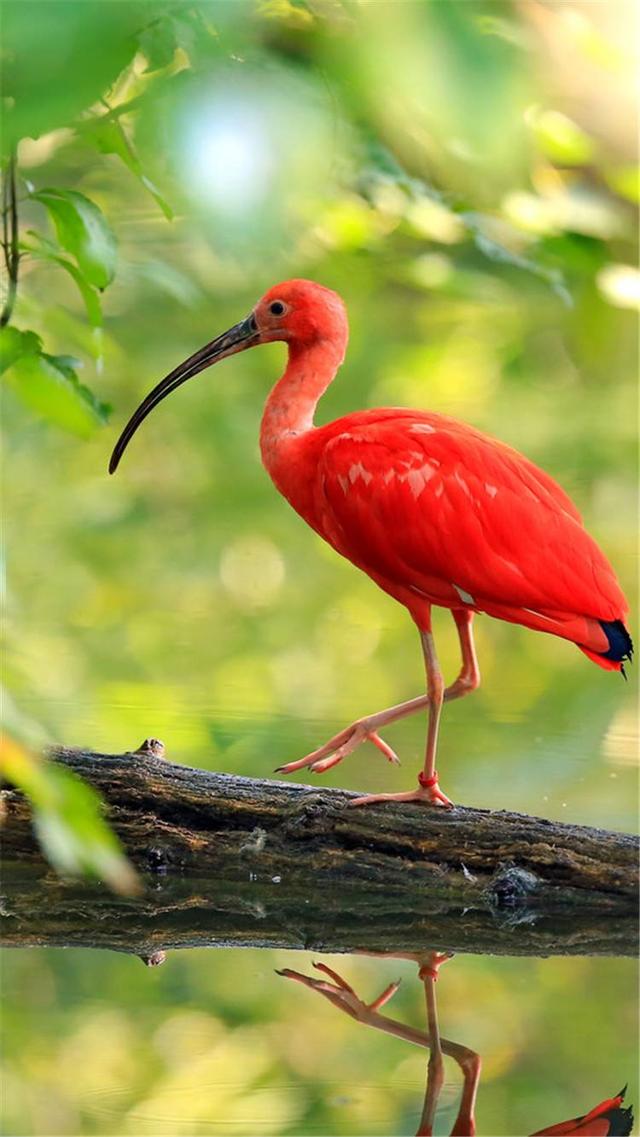
The Scarlet Ibis (scientific name: Eudocimus ruber) is characterized by its vibrant red plumage, they are always in flocks in beaches, salt lakes, mangrove forests and swamps, and together they spend the night in the swamps on the trees, thus appearing very conspicuous. Their beaks are long and curved, feeding on crabs, mollusks and small animals such as fish, frogs and insects in mud flats. Their calls are high-pitched and mournful. When flying, their silhouette is like a bundle of jumping flames, fiery and passionate, except for the long beak which is gray-black, the whole body including legs and toes is vibrant red. It is a heron that resides in tropical South America and Trinidad. They are the national bird of Trinidad and appear together with the Rose-breasted Parrot in the emblems of Trinidad and Tobago. They have high ornamental value.
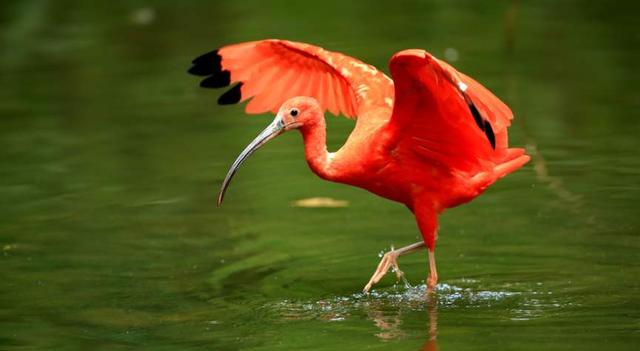
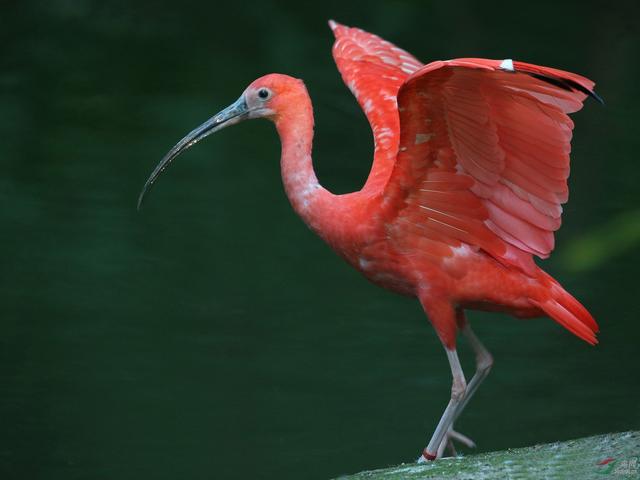
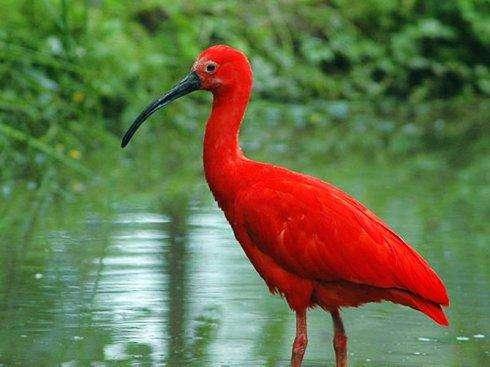
The Scarlet Ibis body length is 56-61cm, wingspan 101cm, weight 772-935g. The most striking feature is the overall plumage which is red, the wing tips have a blue-black sheen. The whole body is reddened, it is one of the reddest birds in the world. Besides the long beak which is gray-black, the whole body including legs and toes is vibrant red. The irises are orange-red, the mouth is black, the base of the mouth and the exposed part of the head is red, the ankle, claw and lower part of the tibia are also exposed red. The female and male are similar, the male is slightly larger in size. The chicks have fluffy down on their cheeks, the rest of the face is bare, the orange yellow. The primary flight feathers are brown-black, the feet are pale brown, the irises are pale yellowish-brown. As they grow, red spots appear on the feathers, until two years later they fully reach the color of adult birds.
Like herons and cranes, herons have long beaks, but they are thinner and more agile than those of cranes and herons, and their forebeaks are curved downwards, which are useful tools for digging up fish and shellfish. When they stand still, they have almost no tail – the short tail is hidden in the folded wings. When they fly in the air, their necks and long legs try their best to stretch out, and their tails open like fans, their wings beat slowly up and down, a graceful and elegant shape, no one can match it. They have a pair of long legs, the bases of the feet are connected by membranes, which do not sink into the mud when feeding in the swamps. The Scarlet Ibis is one of the rare and precious birds in the world, and also one of the most endangered birds, its whole body is red, it is one of the reddest birds in the world. Besides the long beak which is gray-black, the whole body including legs and toes is vibrant red.
They often form large flocks, when the Scarlet Ibises rise up together, it is like a red cloud floating, the scene is very spectacular!
Scarlet Ibises are now distributed only in the coastal areas of Colombia to Brazil from the eastern and western coasts, the whole body is red, they feed on small fish and shellfish.
The Scarlet Ibis body length is 56-61cm, weighs 650g. They are all red, there is a black point at the wing tips. They build nests in September, and lay eggs from the beginning of November to the end of December. They feed on crustaceans and small aquatic animals. The chicks are gray and white, and they eat red crabs in the swamps, as they grow, their feathers become red. The lifespan of Scarlet Ibises in the wild is about 15 years, and 20 years when kept in captivity.
They mainly eat crustaceans and small aquatic animals, such as fish and shellfish. The chicks are gray and white, and they eat red crabs in the swamps, as they grow, their feathers become red. The Scarlet Ibises' lifespan in the wild is about 15 years, and 20 years when kept in captivity. Their calls are monotonous and dull because their larynx does not have a syrinx and vocal membranes.
They build nests in September, and lay eggs from the beginning of November to the end of December. The mating period is 5-6 days after which the first egg is laid, they lay 3-5 eggs per nest, the incubation period lasts 19-23 days, the chicks' feathers become plump after 35 days of incubation, they can become independent after 75 days.
The female and male take turns to take care of the chicks, like other herons, their chicks are late-maturing, that is, they don't come out of the shell and move to feed like chicks, they take half-digested food from the throats of their parents, like pigeons.
911125-63-519-233575