Which five animals make up the 'Big Five' of Africa?
What are the five animals that make up the 'Big Five' of Africa?
1 Rhinoceros
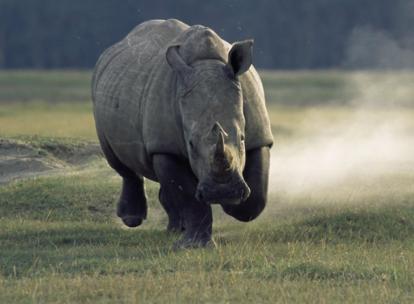
Black Rhinos are not black; the difference between them and white rhinos mainly lies in their mouths. Black rhinos have a sharp, protruding mouth suitable for feeding on tender branches, leaves, tubers, and herbaceous plants. They stand between 1.40—1.60 meters tall and are found in Kenya, Tanzania, and Uganda, known for being irritable and reckless. Their gestation period is 485—550 days. White rhinos are not white; their name comes from their wide and flat mouths, similar to 'white', so they are called white rhinos. They stand between 1.65—1.80 meters tall and have a much larger body size, mainly eating grass. They are sociable and gentle, not easily excited, and their gestation period is 547—578 days. Both are severely nearsighted, thick-skinned, and timid, but have a keen sense of smell.
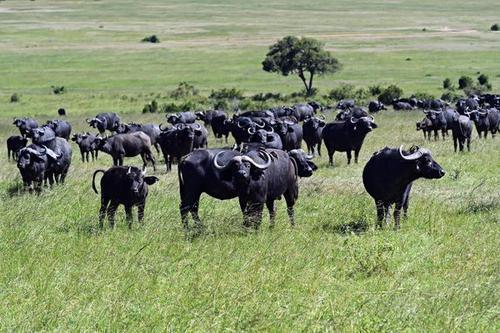
2 Buffalo
They stand between 1.47—1.65 meters tall and are found in Kenya, Tanzania, and Uganda, with a huge number. Older buffaloes often live alone or in small groups. Their gestation period is 300—330 days.
3 Lion
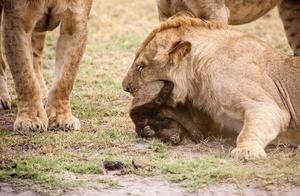
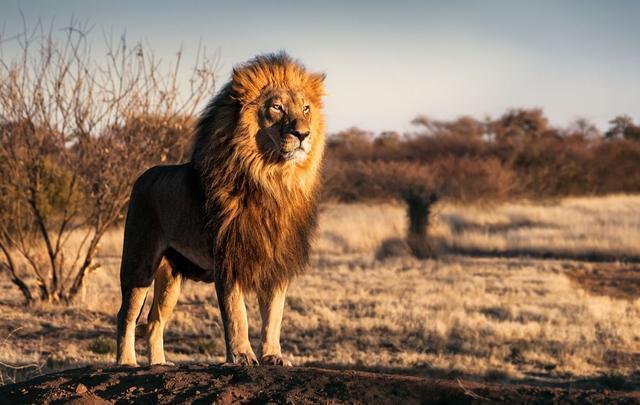
Their shoulder height is 0.8—1.12 meters. Young lions have spots distributed on their ribs, abdomen, and legs, which usually persist until they mature. The length and thickness of a male lion's mane vary depending on age and region, and they are found throughout East Africa, hunting migratory animals, even including giraffes, hippopotamuses, and young cheetahs, and occasionally hunting rabbits, mice, birds, and insects. They are also scavengers. Their gestation period is 100—113 days. They spend most of the day sleeping and resting, and mothers complete hunting and feeding young lions. Males only play a deterrent role.
4 Cheetah
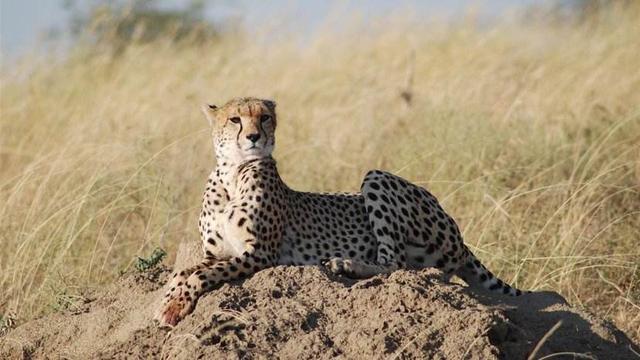
They usually stand 71 cm tall. They are found throughout, and their spots form a golden shape similar to the domestic golden leopard. After hunting, they usually take their prey to a tree branch to feast. They are solitary and usually consist of a mother and her child, and sometimes with a mating partner. They are the fastest runners in the natural world, reaching a speed of 146 km per hour in short distances and an average hunting speed of 112 km per hour. They have a gestation period of 90—95 days, weighing about 50 kg, with their tail almost as long as their body, adjusting their direction like a rudder during the hunt. They are the only cats in the cat family that cannot retract their claws.
5 Elephant
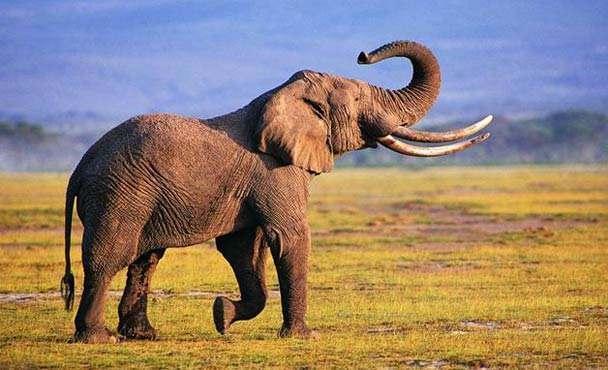
They stand about 3.5 meters tall, with African elephants' large ears, carrying distinctive protruding thick earlobes, and curved tusks extending forward. They live in groups, eating 150—225 kg of plants a day. A female elephant gives birth to her first calf around 10 years old, the calf becomes independent at 4—9 years old, and ceases to reproduce at 35 years old, living to 60 years old. This is when their molars have fallen out. Male elephants are usually driven out at 12 years old to live with other bachelors.